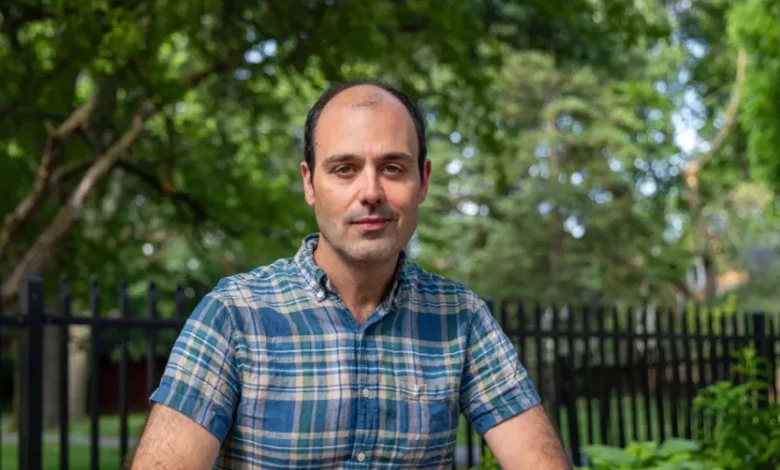
A federal court has delivered a decisive victory for free speech, ruling that a critic of Immigration and Customs Enforcement (ICE) cannot be prosecuted or threatened by the federal government for sending an impassioned, critical email to a top agency official. United States District Judge Rudolph Contreras issued a preliminary injunction blocking ICE from taking punitive action against David Streever, concluding that the agency’s intimidation tactics violated foundational First Amendment protections. The ruling addresses a rising tension between the federal government’s efforts to ensure law enforcement security and the constitutional right of American citizens to voice harsh political dissent against public officials.
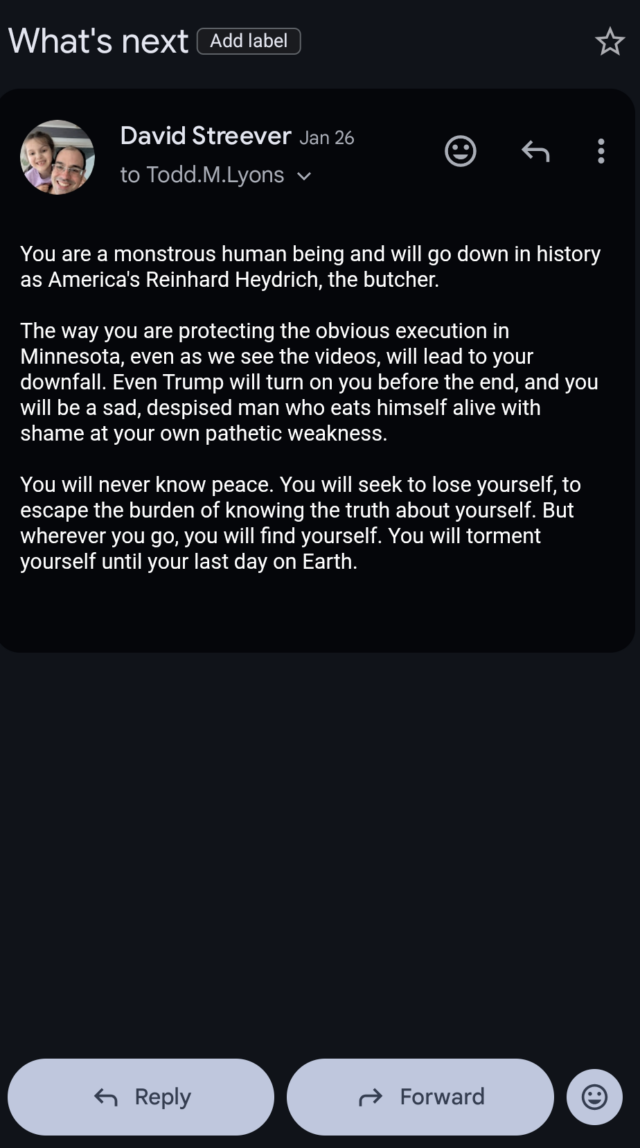
The controversy originated in January when David Streever, deeply angered by the killings of two Minnesota protesters, Renee Good and Alex Pretti, directed a scathing three-paragraph email at then-acting ICE Director Todd Lyons. The fatal encounters in Minnesota had sparked nationwide outrage and localized protests over law enforcement accountability and immigration enforcement tactics. Disturbed by Lyons’ public defense of the officers involved in the incidents, Streever lashed out in an unvarnished digital message.
In the email, Streever described Lyons as a monstrous human being, predicting that he would eventually consume himself with shame for defending officers who shot unarmed individuals posing no immediate threat. In a particularly provocative historical comparison, Streever wrote, "You are a monstrous human being and will go down in history as America’s Reinhard Heydrich, the butcher. You will never know peace. You will seek to lose yourself, to escape the burden of knowing the truth about yourself. But wherever you go, you will find yourself. You will torment yourself until your last day on Earth." He further suggested that even the political administration of Donald Trump would eventually turn on Lyons for defending the slayings of American citizens.
Chronology of an Escalating Federal Conflict
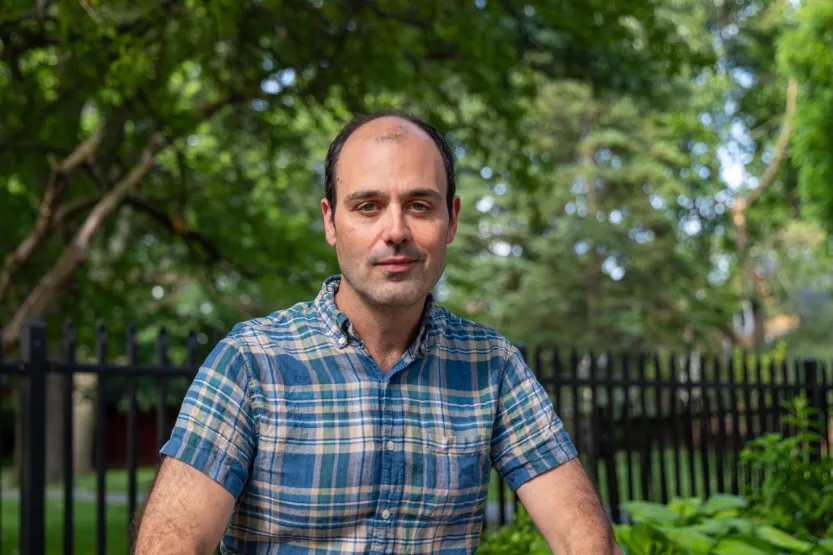
Following the transmission of the message in January, ICE initially took no immediate administrative or legal action. Months passed without formal communication, leading Streever to believe the matter had concluded. However, five months later, the situation escalated dramatically when federal agents arrived at Streever’s home to serve a formal warning notice. The document alleged that his email constituted a criminal threat of violence—a classification typically reserved for individuals communicating explicit threats of assault, kidnapping, or murder against public officials.
Because Streever was absent during the initial home visit, federal agents took the additional, alarming step of tracking him down at a hotel. According to legal representatives from the Foundation for Individual Rights and Expression (FIRE), this aggressive pursuit profoundly alarmed Streever and his family, forcing him to explain to his young daughter that federal authorities might detain him. Fearing ongoing government retaliation, Streever engaged in self-censorship for months, retreating from public political discourse and limiting his commentary on social media platforms.
In July, as the free speech battle intensified, Streever spoke publicly about the chilling effect the investigation had on his daily life. "I cherish our right to speak openly about issues of public concern," Streever noted at the time. "I hope others will not be discouraged from peacefully expressing their views, even when those views are critical of the government."
Legal Arguments and Judicial Findings
Represented by FIRE, Streever filed suit to challenge the government’s coercion. During the subsequent legal proceedings, ICE defended its actions by pointing to a reported 946 percent increase in threats directed against ICE officials between 2024 and 2025. The agency argued that the dramatic spike in hostile communications created an unprecedented security environment, forcing personnel to evaluate critical emails as potential safety risks requiring deterrent intervention. Furthermore, ICE lawyers contended that policing aggressive correspondence was essential for maintaining law enforcement capabilities and preventing potential crimes.
Despite these defense arguments, ICE’s legal team notably refrained from contesting the core constitutional argument. Judge Contreras emphasized in his ruling that the government "wisely do not contest that Mr. Streever’s January email constitutes protected expression or that similar speech would be protected."
In his comprehensive written opinion, Contreras dismantled the government’s justification for threatening prosecution. He noted that political discourse directed at government officials occupies the absolute highest tier of First Amendment protection. "Streever’s email addressed salient political decisions to a government official, an arena where the First Amendment’s speech protections reach their zenith," Contreras wrote. While acknowledging that the message was harsh, profoundly insulting, and unproductive, the judge affirmed that it fell far short of a "true threat of violence" that would forfeit constitutional protection.
The court also scrutinized the contradictory communications issued by the Department of Homeland Security (DHS). Although ICE asserted during litigation that it had internally dropped the investigation within a month of sending the warning, it never officially notified Streever. Instead, a DHS spokesperson published a statement on the social media platform X warning that anyone threatening law enforcement would face consequences. Contreras noted that this statement was reasonably interpreted by Streever as confirmation that the probe remained active, thereby maintaining an ongoing climate of fear and self-censorship.
Broader Implications for Free Speech and Dissent
To prevent irreparable harm, Judge Contreras’s preliminary injunction immediately halts ICE from enforcing the warning notice, acting on past threats, or issuing similar warnings while the underlying litigation moves forward. Contreras found that Streever demonstrated a high likelihood of success in proving that the defendants either coerced him into abandoning his First Amendment rights or retaliated against him for exercising them.

Describing the psychological and constitutional toll of the government’s actions, Contreras wrote that Streever’s injury stemmed from "the loss of his freedom to engage in political speech now because the threat of such an investigation or prosecution looms over him like the sword of Damocles." He stressed that citizens maintain an absolute right to express political views through non-threatening speech, regardless of how degrading or offensive that language might be.
Legal experts have hailed the ruling as a crucial boundary marker for federal agencies dealing with public criticism. Adam Steinbaugh, a senior attorney at FIRE, celebrated the outcome as a robust defense of constitutional liberties. "Ominous letters warning people their speech might land them in prison are meant to coerce people into silence, and that’s not how the First Amendment works," Steinbaugh stated. He expressed confidence that the court’s rigorous constitutional analysis would withstand potential appellate review.
For his part, Streever expressed profound relief following the judicial decision. "I’m deeply relieved that the court affirmed what I knew all along: that I am permitted to speak my conscience in the United States of America, including when I criticize government officials," he said.
While the preliminary injunction successfully restores Streever’s immediate right to participate in public debates and express political opinions without fear of immediate federal prosecution, the broader litigation continues. The case underscores ongoing challenges within federal law enforcement agencies as they attempt to balance officer safety and institutional security against the robust, unyielding protections guaranteed to public critics under the First Amendment.