Peter Rosenberg on the Music Industry, Antisemitism, and the Complex Intersection of Hip-Hop and Middle Eastern Politics

The intersection of the American music industry, cultural identity, and geopolitical conflict has increasingly become a fraught space for artists, executives, and media personalities. In recent years, long-standing industry norms regarding public speech, political advocacy, and artist management have undergone seismic shifts. These tensions came to a head following heightened military escalations in the Middle East, most notably the events of October 7, 2023, and their subsequent ripple effects across global entertainment circuits. Long-running debates over free speech, state-sanctioned violence, and rising antisemitism have increasingly permeated sectors of the entertainment business that historically prided themselves on progressive alignment and multicultural coalition-building.
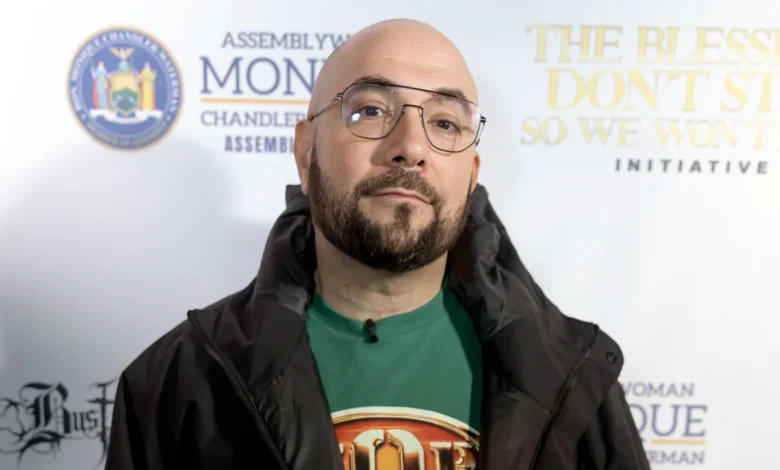
Amid this climate, veteran media personality Peter Rosenberg—best known for his work on Hot 97 and co-hosting the Ebro Laura Rosenberg Show—has found himself navigating the delicate boundary between his Jewish identity, his deep-rooted ties to the hip-hop community, and his critical perspectives on foreign policy. Rosenberg’s career, alongside industry figures like Eminem’s longtime manager Paul Rosenberg, represents a generation of Jewish professionals who built credibility within an historically insular and unforgiving genre. However, the modern media landscape has introduced new complexities, transforming cultural expression into an administrative and public relations battlefield.
Tour Disruptions and the Clash Over Onstage Political Speech
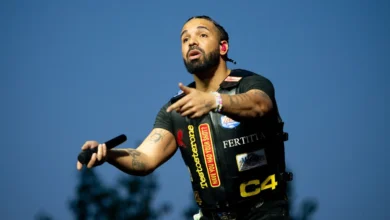
The fragility of contemporary tour management was recently underscored by high-profile disputes involving major international pop acts. Pop superstar Ed Sheeran found himself at the center of a geopolitical firestorm during his extensive Loop Tour. The controversy erupted after his opening act, Macklemore, utilized concert stages in the United States to voice support for the Free Palestine movement, drawing sharp criticism from venue operators and public figures.
The conflict escalated rapidly when Robert Kraft, owner of the New England Patriots and proprietor of Gillette Stadium, publicly condemned Macklemore’s onstage remarks, classifying them as hate speech. This intervention triggered a chain reaction: Macklemore stood by his commentary regarding civilian casualties in Gaza, leading to secondary walkouts among supporting musicians and tour personnel. The sudden polarization of a standard arena tour highlighted a growing corporate intolerance for unscripted political commentary, while simultaneously forcing headlining acts to choose between contractual obligations and ideological solidarity.
Industry analysts have noted that the incident reflects a broader systemic shift in how live entertainment venues handle political speech. Historically, concert stages served as platforms for counter-cultural expression. In the current climate, however, heightened corporate risk aversion and intense polarization have transformed venues into battlegrounds where ownership groups actively police ideological expression.

A Historical Precursor: The Rise of Public Antisemitism
To understand the current hostility within the media and music industries, observers must examine the precedent set by prior high-profile controversies. Prior to the October 2023 escalations, the music industry grappled with a significant wave of open antisemitism, most notably stemming from public statements made by artist Ye (formerly Kanye West). Ye’s prolonged public commentary, which included expressions of admiration for Adolf Hitler and the distribution of extremist rhetoric, fundamentally altered the social media environment for Jewish professionals in entertainment.
Media figures, including Rosenberg, noted a measurable and visceral shift in online discourse following these events. Anonymous accounts, automated bots, and fringe commentators increasingly weaponized traditional antisemitic tropes, utilizing digital platforms to harass Jewish figures across sports, journalism, and music. Industry insiders argue that this normalization of vitriol laid the groundwork for the more volatile political polarization that followed later that year.
The Failure of Nuance in the Digital Age
The outbreak of violence in Israel and Gaza on October 7, 2023, further intensified cultural divides within Western media institutions. The immediate aftermath was characterized by an acute polarization of public discourse, leaving little room for multi-layered perspectives. Analysts tracking digital communication note that social media algorithms inherently reward extreme positioning while punishing nuanced analysis.
For many within the Jewish and Israeli communities, the initial pain stemmed from what they perceived as a lack of empathy for civilian casualties resulting from the Hamas-led attacks on the Nova Music Festival and surrounding kibbutzim. Conversely, critics of Israeli foreign policy argued that international focus quickly pivoted away from the subsequent, highly destructive military campaign launched by the Israeli government in Gaza.
Rosenberg and other cultural commentators have frequently pointed out that modern discourse demands binary alignment, effectively erasing the capacity to simultaneously condemn the massacre of Israeli civilians and the state-sanctioned devastation of Palestinian populations. This forced dichotomy has left moderate voices isolated, while polarizing extremes dominate public narratives.

The Changing Definition of Zionism and Political Discourse
The discourse surrounding political identity has also seen a fundamental restructuring of terminology. Terms such as "Zionism," once discussed primarily within geopolitical and theological frameworks, have taken on vastly different connotations across generations.
Older generations of Jewish Americans often experienced Zionism through the lens of post-World War II displacement, survival, and the creation of a sovereign sanctuary. However, younger demographics and critics of Israeli state policy increasingly define the term through the realities of territorial occupation, displacement, and geopolitical conflict. This generational divergence has created profound ideological friction within families, cultural organizations, and professional networks.
Furthermore, public figures who attempt to balance a cultural affinity for Israel with rigorous criticism of its current administration frequently face accusations of betrayal from both ends of the political spectrum. This dynamic illustrates a broader crisis of representation within diaspora communities, where unified institutional leadership no longer reflects the diverse and often conflicting viewpoints of everyday individuals.
Implications for the Future of Entertainment and Advocacy
As the music and media industries continue to grapple with the fallout of these geopolitical tensions, long-term implications are beginning to emerge. The erosion of traditional boundaries between art, commerce, and state politics suggests that artists and executives will face mounting pressure to navigate ideological minefields with increasing caution.
Moreover, the alienation of moderate voices from mainstream discourse signals a challenging road ahead for cross-cultural dialogue. When institutions respond to political dissent through censorship, cancellation, or blanket condemnation, they risk deepening the very divides they seek to manage. Ultimately, the ongoing friction within the entertainment sector serves as a microcosm of a global society struggling to reconcile competing historical narratives in an interconnected, hyper-digital age.