Beyond the Box Office: How Laika’s Wildwood Reshapes the Future of Stop-Motion Animation

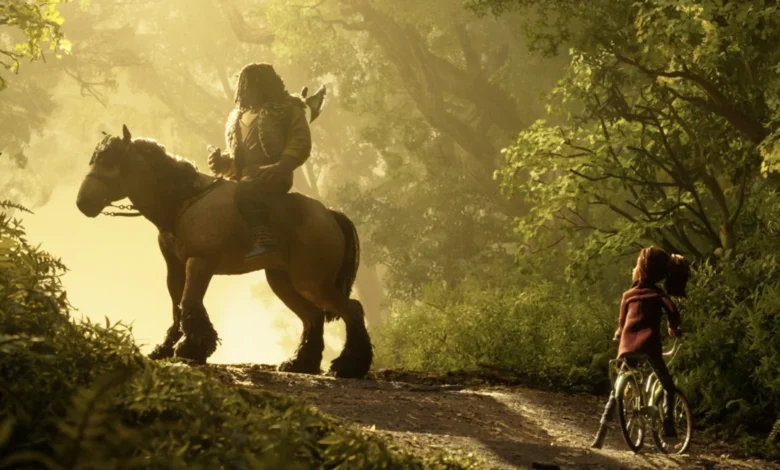
The domestic box office debut of Laika’s long-awaited stop-motion feature Wildwood carried immense weight, transcending traditional box office metrics to serve as a vital referendum on the future of the celebrated animation studio. Released seven years after the studio’s previous feature, Wildwood represents the most ambitious undertaking to date for director and studio executive Travis Knight. Operating out of Portland, Oregon, the studio has long maintained a reputation for prioritizing artisanal craftsmanship and uncompromising artistic vision over conventional Hollywood financial models. Consequently, the film’s opening weekend performance was scrutinized not merely for its immediate commercial returns, but as a critical indicator of whether high-end, stop-motion animation can still command a viable theatrical footprint in a shifting media landscape.
A Seven-Year Hiatus and the Evolution of Laika
The path to Wildwood’s theatrical release has been exceptionally protracted, building anticipation among animation enthusiasts for years. Founded by Travis Knight and backed by his father, Nike co-founder Phil Knight, Laika established itself as a premier force in stop-motion animation with the 2009 release of Coraline. While Coraline was not an immediate juggernaut upon its initial theatrical run, it demonstrated remarkable staying power, eventually cementing a legacy that defined the studio’s brand.
Following Coraline, Laika systematically released a series of critically acclaimed yet financially modest features, including ParaNorman (2012), The Boxtrolls (2014), Kubo and the Two Strings (2016), and Missing Link (2019). While films like Kubo and the Two Strings achieved modest global success—grossing $76 million worldwide—Missing Link underperformed significantly upon its 2019 debut, opening to just $5.9 million domestically and finishing its run at $17 million. That stumble prompted a lengthy operational pause, making Wildwood the studio’s first offering in seven years. During this hiatus, the studio not only refined its stop-motion techniques on an unprecedented scale but also laid the groundwork for future diversification, including an impending expansion into live-action cinema.
Box Office Performance and Comparative Analysis
In its opening weekend, Wildwood grossed $12.2 million domestically, landing at No. 3 at the box office behind DC Studios’ reboot Clayface and You Can See Everything. The film also pulled in an additional $2.9 million across a select group of international markets, bringing its early global tally to over $15 million. With a reported production budget hovering around $100 million, mainstream financial analyses have naturally questioned the film’s immediate profitability, pointing to the inherent financial risks of high-cost, hand-crafted animation.

However, industry analysts note that evaluating Laika projects through standard blockbuster lenses ignores the studio’s unique operational philosophy. When compared against the studio’s historical output, Wildwood’s performance represents a distinct improvement over Missing Link, doubling that film’s opening weekend figure. Furthermore, Wildwood’s domestic launch closely mirrors that of 2016’s Kubo and the Two Strings, which opened to $12.6 million on its way to a $48 million domestic finish and a $76 million global total. It also aligns with recent original animated releases, such as DreamWorks’ Forgotten Island, which debuted to $13 million earlier in the year.
The Crucial Metric: Multiples and Word of Mouth
The long-term financial viability of Wildwood will depend heavily on its theatrical legs. Historically, Laika’s catalog has relied on strong box office multipliers driven by exceptional word-of-mouth and sustained audience engagement. Past releases achieved notable domestic multiples, including Coraline at 4.5x, ParaNorman at 4.1x, and Kubo and the Two Strings at 3.8x. Applying a conservative 3.8 multiple to Wildwood would project a domestic final gross of approximately $46.3 million.
Early indicators suggest the film is well-positioned to meet or exceed these projections. Wildwood earned an A CinemaScore from audiences, near-universal acclaim on Rotten Tomatoes with a 99 percent approval rating, and highly favorable recommendation metrics from PostTrak. Furthermore, the film demonstrated robust per-screen averages across 395 Premium Large Format (PLF) screens and select Dolby Cinema locations, performing exceptionally well in regional markets such as Portland, where the story is both set and spiritually rooted.
Exhibition Support and Strategic Distribution
Buoyed by strong initial reception, distribution partners are already moving to expand the film’s footprint. Dave Burke, Laika’s Chief Marketing Officer and an executive producer on the film, noted that the positive performance data has opened conversations regarding screen additions. Following an initial launch across 2,940 locations, theater chains such as Alamo Drafthouse—which initially programmed the film on 11 screens—are actively working to allocate additional auditoriums to the title.
This rollout marks a significant milestone for Fathom Entertainment, representing one of its first truly wide theatrical releases for an original film following successful repertory re-releases of Coraline. The collaboration between Laika and Fathom highlights an evolving exhibition strategy aimed at capturing specialized audiences through targeted event-style programming and extended theatrical windows.

Audience Demographics and Thematic Maturity
Wildwood deliberately defies traditional family-animation tropes. Based on the middle-grade novel by Colin Meloy, frontman of the indie folk band The Decemberists, the film embraces a darker, more mature tone. Marketed openly as a PG-13 feature aimed at general audiences rather than young children, Wildwood features intricate, intense puppetry sequences and a sprawling third-act conflict reminiscent of high-fantasy war epics.
Despite its mature themes, exit polling indicates a diverse demographic turnout. The film attracted a strong contingent of viewers under the age of 34, alongside families with older children and tweens. The parents’ guide platform Common Sense Media awarded the film a five-star rating, validating its appeal across generational lines. Cultivating this broader demographic is essential as Laika seeks to bridge the gap between its legacy animation fanbase and its upcoming slate of diversified projects.
Implications for Laika’s Corporate Future
As Laika navigates the weeks following its release, the studio’s leadership remains focused on maximizing the film’s cultural resonance and long-term legacy. The success of Wildwood serves as a stress test for the viability of independent, artisan-driven animation within a studio system increasingly dominated by intellectual property reboots and digital shortcuts.
By proving that an audience exists for uncompromising, meticulously crafted original storytelling, Wildwood has reinforced Laika’s standing in the industry. Whether the film ultimately achieves theatrical profitability or relies on its ancillary life to balance its considerable budget, its reception ensures that the studio enters its next phase—featuring live-action expansion and future animated endeavors under Travis Knight—with the goodwill and enthusiasm of a deeply dedicated global fanbase.
Related posts: