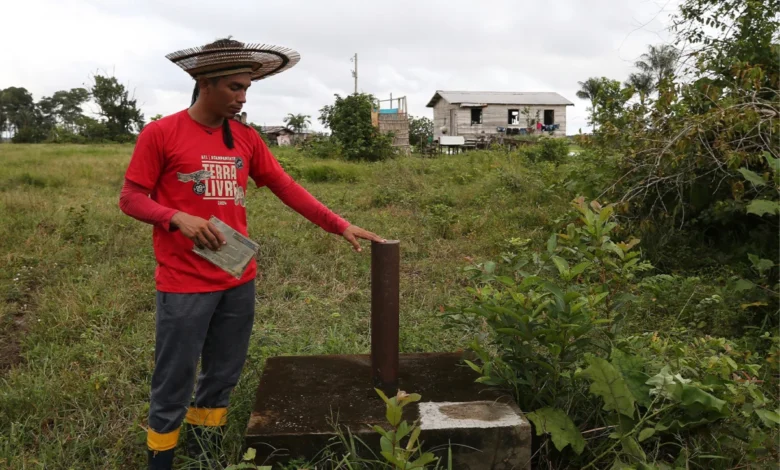
The construction of an expansive access road for the controversial Potássio Autazes mining project in Brazil’s Amazonas state has triggered a humanitarian and environmental crisis, with Indigenous Mura leaders reporting the irreversible desiccation of sacred water springs. The project, operated by Potássio do Brasil—a subsidiary of the Canadian firm Brazil Potash Corp.—has long been a flashpoint for legal and social conflict. As heavy machinery continues to clear-cut vast swaths of forest, the Mura people assert that the physical alteration of their ancestral landscape is not merely a development issue, but a spiritual and existential erasure of their community.
The Mura community of Lago do Soares, situated at the epicenter of the project, describes a profound sense of loss as the local hydrology shifts. According to the community, the destruction of these springs represents the departure of the spiritual guardians of their land, an event they believe strips the soil of its fertility and the forest of its life-sustaining vitality. While the company maintains that its inspections found no evidence of disruption, the friction between corporate industrial objectives and the preservation of Indigenous territory underscores a broader, decade-long struggle over resource extraction in the Amazon Basin.

A Decade of Controversy: The Chronology of Conflict
The Potássio Autazes project has been mired in litigation and social unrest since its inception nearly ten years ago. The following timeline outlines the key milestones of this contentious development:
- 2016-2020: The project faces multiple court-ordered suspensions as federal prosecutors challenge the adequacy of environmental impact assessments and the lack of proper consultation with the Mura people.
- February 2024: The Federal Regional Court of the 1st Region (TRF1) issues a pivotal decision allowing state-level environmental licensing to proceed, effectively bypassing earlier federal injunctions.
- April 2024: The Amazonas Environmental Protection Institute (IPAAM) officially grants installation licenses to Potássio do Brasil, authorizing the construction of the mine, a processing facility, and a dedicated port.
- May 2024: The Federal Public Prosecutor’s Office (MPF) files a formal lawsuit against the IPAAM-issued licenses, citing severe irregularities, including the failure to uphold the rights of the Mura people under international law.
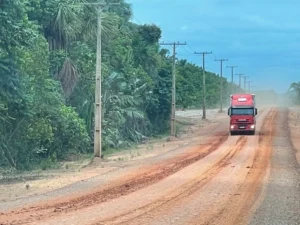
- October 2026: Indigenous leaders report the drying up of multiple sacred springs following the completion of a 13.7-kilometer (8.5-mile) access road. The company conducts a technical inspection and denies any causal link to their construction activities.
The Economic Drivers and Strategic Interests
The Potássio Autazes project is framed by its proponents as a strategic asset for Brazilian national security. Brazil is the world’s largest importer of fertilizers, and the agricultural sector—the backbone of the national economy—remains heavily dependent on international suppliers. According to company data, the underground mine is projected to supply approximately 20% of Brazil’s total potash demand.
The geopolitical landscape has added urgency to these mining ambitions. Following the 2022 invasion of Ukraine, global supply chains for agricultural inputs were severely disrupted. In 2025, Russia remained a critical supplier, accounting for roughly 45% of Brazil’s potash imports. The agribusiness lobby in Brasilia has exerted significant pressure to accelerate domestic production to mitigate reliance on foreign powers. However, the Federal Public Prosecutor’s Office (MPF) argues that this economic rationale does not supersede constitutional protections or international obligations, such as the International Labour Organization (ILO) Convention 169, which mandates free, prior, and informed consent for Indigenous communities affected by major infrastructure projects.

Environmental and Social Risks: The MPF Perspective
The Federal Public Prosecutor’s Office has been vocal regarding the flaws in the current licensing process. In joint assessments, prosecutors have highlighted several "serious risks" that they claim were overlooked by the Amazonas state agency, IPAAM. These risks include:
- Hydrological Contamination: The potential for mine tailings and waste to cause salinization of groundwater and surface water, which would render local water sources undrinkable and toxic to aquatic life.
- Social Instability: The influx of a large, non-local workforce into isolated Indigenous territories is statistically associated with increased rates of crime, substance abuse, and sexual exploitation of minors.
- Consultation Deficit: The MPF maintains that the Soares community was never meaningfully consulted, violating the fundamental tenets of the Brazilian Constitution regarding Indigenous land rights.
"The environmental studies submitted for the licensing process are incomplete and flawed," stated a group of prosecutors involved in the case. "None of the identified social and environmental factors were adequately addressed, and the required good-faith consultation simply never took place."
The Spiritual and Cultural Toll
For the Mura people, the loss of water is an indicator of a deeper rupture. In their traditional cosmology, the natural world is managed by encantados—spiritual entities that hold the history and collective memory of the people. When a spring dries, it signifies that the encantado has been forced to leave, taking with it the "blessings" of the region.

"Our territory is our body; our territory is our home," says Milena Mura, coordinator of the Mura Indigenous Women’s Organization (OMIM). "When it is destroyed, our own bodies are, in a sense, destroyed as well." The community reports that the disruption of the springs has already begun to impact local food security. The fish, which serve as the primary source of protein for the community, spawn in these specific water systems. With the flow of water altered, residents report a decline in fish populations, threatening the traditional diet and the transmission of ancestral knowledge related to riverine subsistence.
Corporate Response and Future Outlook
In response to inquiries regarding the environmental damage, Potássio do Brasil issued a formal statement. The company confirmed that it conducted a technical inspection on October 8, 2026, and found "no signs of the mentioned spring drying up." Furthermore, the company stated that it found no evidence that the construction of the internal access road had altered the local hydrology. The firm pledged to continue monitoring the situation and stated it would conduct further verifications as requested by stakeholders.
However, the situation remains precarious. The ongoing legal battle, coupled with the slow but steady progress of the mining project, creates a climate of extreme uncertainty for the Mura people. The Indigenous Affairs Agency (Funai) has officially requested the suspension of all licensing, citing the fact that the project overlaps with lands currently in the process of official demarcation. As these demarcation processes advance, legal scholars note that mineral exploration in the area will face increasingly stringent limitations.

Broader Implications for the Amazon
The conflict in Autazes serves as a microcosm of the tension currently defining the Amazon region: the push for industrial expansion to feed a hungry global market versus the urgent need to protect the biocultural integrity of the forest. The case highlights the limitations of state-level environmental oversight, where local agencies are often under immense political pressure to prioritize rapid industrial development over the rights of traditional inhabitants.
As the legal appeals from the MPF remain pending, the physical landscape of the Amazon is undergoing permanent change. If the allegations of the Mura people are confirmed by independent audits—a demand currently being pushed by activists and legal experts—the damage to the local ecosystem may prove irreversible. The outcome of this dispute will likely set a significant precedent for future mining projects in the Amazon, determining whether the rights of Indigenous peoples will remain a peripheral concern or become a central pillar in the environmental governance of the world’s largest tropical rainforest. For the Mura, the fight is not just about a mine or a road; it is a battle for the continuity of their existence as a distinct, sovereign people in their ancestral homeland.