Massachusetts Pioneers Vehicle-to-Grid Technology to Stabilize Electric Infrastructure and Lower Consumer Costs

The state of Massachusetts has officially entered the vanguard of the energy transition with the launch of a landmark vehicle-to-grid (V2G) pilot program designed to transform electric vehicles from mere consumers of power into active contributors to the electrical grid. A coalition of industry leaders, including utility giants Eversource and National Grid, alongside technology providers EnergyHub, Sunrun, and The Mobility House, announced the initiative this week. The program aims to integrate thousands of electric vehicle (EV) batteries into the regional energy ecosystem, offering a dual-benefit solution that compensates drivers while fortifying the power grid against the escalating demands of the 21st century.
Under this new framework, Massachusetts utility customers can enroll in the existing ConnectedSolutions program, which historically managed residential battery storage and smart thermostats. By expanding this program to include V2G technology, utilities can now "tap" into the substantial energy reserves stored in EV batteries during periods of peak demand, such as extreme heat waves or cold snaps. This shift marks a significant evolution in how the United States approaches grid management, moving away from centralized power generation toward a decentralized "virtual power plant" (VPP) model.
The Mechanics of Bidirectional Charging and Demand Response
At the heart of the Massachusetts initiative is the concept of bidirectional charging. Unlike standard EV chargers that only move electricity from the grid to the car, bidirectional chargers allow for a two-way flow. When the grid experiences a "demand response" event—a period where electricity consumption threatens to outpace supply—the utility sends a signal to participating vehicles. These vehicles then discharge a small portion of their stored energy back into the home or directly into the grid, reducing the need for utilities to fire up expensive and often carbon-intensive "peaker" plants.
The scale of this untapped resource is immense. A typical passenger EV battery holds approximately 60 to 100 kilowatt-hours (kWh) of energy, which is roughly six times the capacity of a standard stationary home backup battery like the Tesla Powerwall. When hundreds or thousands of these vehicles are aggregated, they form a massive, mobile battery array. Chip Silverman, director of grid services at Sunrun, noted that the "magic" of the system lies in aggregation. By patching together a large number of batteries, utilities can draw a negligible amount of power from each individual unit, ensuring the driver still has ample range for their daily commute while collectively providing a significant surge of power to the community.
A Chronology of Grid Evolution and V2G Development
The path to the Massachusetts pilot began over a decade ago with early research into "smart charging" or V1G, where utilities could remotely throttle the speed of EV charging to prevent local transformers from overloading. However, the transition to true V2G required significant advancements in hardware and international communication standards.
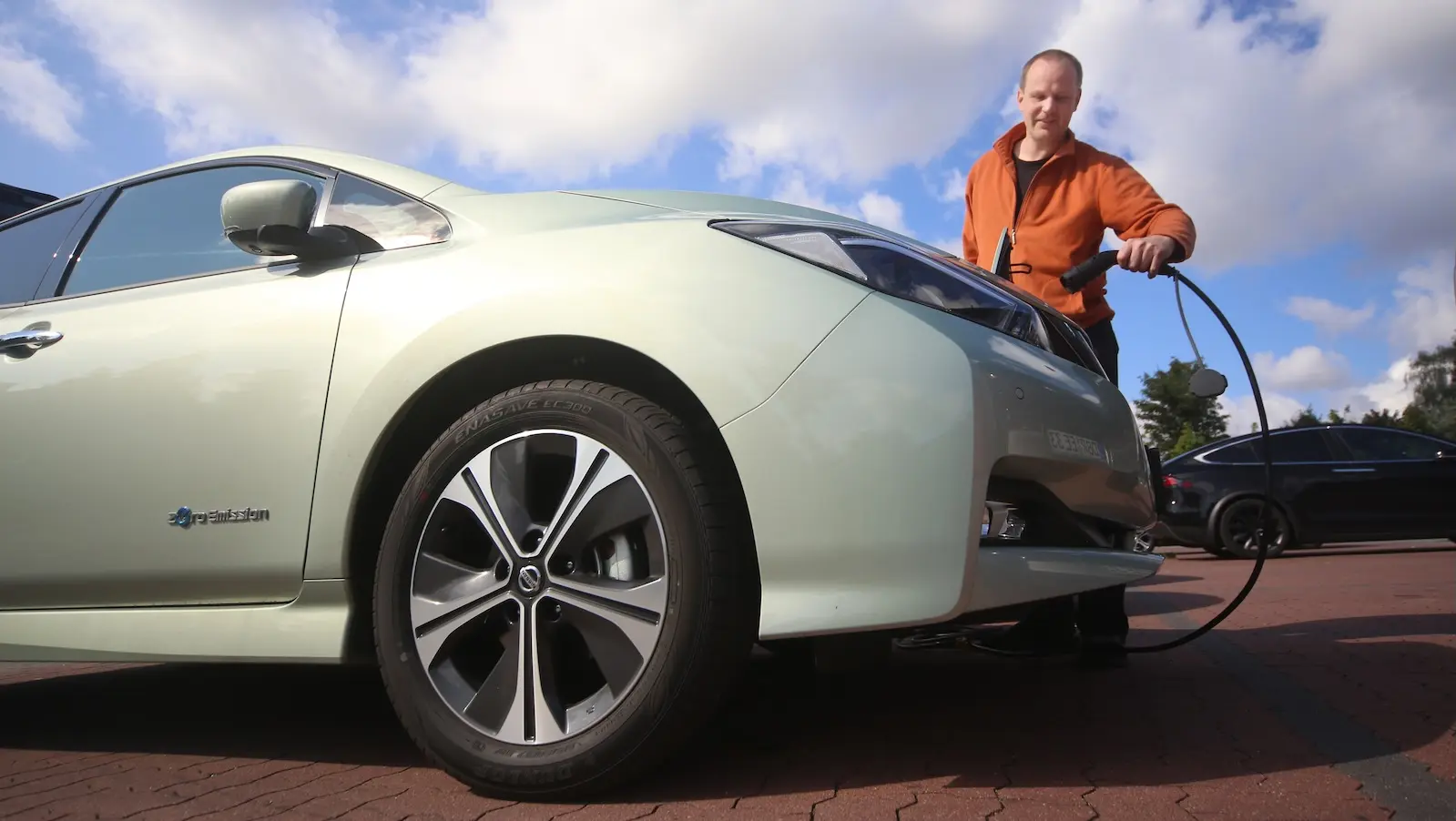
In 2022, the industry saw a major breakthrough when the ISO 15118-20 standard was finalized, providing a universal language for bidirectional power transfer between vehicles and chargers. Shortly thereafter, automotive manufacturers began announcing V2G-ready models. While the Nissan Leaf has long been a pioneer in this space using the CHAdeMO charging standard, newer models like the Ford F-150 Lightning and upcoming General Motors Ultium-based vehicles are increasingly incorporating bidirectional capabilities using the Combined Charging System (CCS) or the North American Charging Standard (NACS).
The Massachusetts pilot represents the commercialization phase of this timeline. It moves the technology out of isolated laboratory tests and into the hands of everyday consumers. This rollout coincides with a period of unprecedented stress on the American electrical infrastructure. According to the Department of Energy, 70% of U.S. transmission lines are over 25 years old, and the grid requires an estimated $2 trillion in upgrades by 2035 to meet decarbonization goals and the rising power needs of data centers and heat pumps.
Economic Implications for Utilities and Consumers
The economic argument for V2G is compelling for both the utility provider and the end-user. For the driver, participating in the ConnectedSolutions program creates a passive revenue stream. Utilities pay participants for the energy they provide during peak events, effectively lowering the "total cost of ownership" for the electric vehicle. In some regions with similar pilots, EV owners have earned several hundred to over a thousand dollars per year simply by leaving their cars plugged in when at home.
For the utility, V2G is a cost-avoidance strategy. Building new physical infrastructure—such as substations, transmission lines, and massive stationary battery farms—is a multi-billion-dollar endeavor, the costs of which are eventually passed down to all ratepayers through higher monthly bills. By utilizing the "batteries on wheels" that consumers have already purchased, utilities can defer or eliminate the need for some of these capital-intensive projects.
"It’s the cheapest cost of flexible energy storage that will be available for the grid," said Russell Vare, vice president of vehicle-grid integration at The Mobility House North America. By leveraging existing assets, the cost of electricity can be kept lower for everyone, including those who do not own an electric vehicle.
Addressing the Challenges of Intermittency and Demand Growth
The urgency of the Massachusetts pilot is underscored by the state’s aggressive climate mandates, which include a requirement for all new passenger vehicle sales to be zero-emission by 2035. As the state ditches fossil fuels in favor of wind and solar, it faces the challenge of intermittency. Solar panels do not produce power at night, and wind turbines are subject to the whims of the weather.
V2G provides the "bridge" needed to make renewables viable on a mass scale. It allows the grid to store excess solar energy generated during the day within car batteries and then retrieve that energy in the evening when the sun sets and residential demand spikes as people return home.
To ensure that drivers are not left with empty batteries when they need to travel, the program utilizes "active managed charging." This software-driven approach staggers the charging times of vehicles throughout the night. Instead of every EV on a street beginning to charge at 10:00 p.m., the system creates a schedule that smooths out the demand curve, ensuring the grid remains stable while every vehicle is fully charged by the time the owner specifies in a mobile app.
Stakeholder Reactions and the Road Ahead
The coalition behind the Massachusetts project views this as a blueprint for national adoption. Seth Frader-Thompson, president of EnergyHub, emphasized that as hardware costs for bidirectional chargers decrease and installation becomes more streamlined, the technology will become a standard feature of the American home.
Environmental advocates have also praised the move, noting that V2G-enabled fleets—particularly school buses—offer a unique opportunity. School buses have massive batteries, often 200 kWh or more, and they sit idle during the hottest parts of summer afternoons when the grid is under the most significant strain from air conditioning use. Utilizing these municipal fleets could provide a massive boost to urban grid resilience.
However, challenges remain. The primary hurdle is the current cost and availability of bidirectional home chargers, which are currently more expensive than standard Level 2 chargers. Furthermore, some consumers remain concerned about the impact of frequent discharging on their vehicle’s battery longevity. Industry experts counter these concerns by pointing out that demand response events occur only a few dozen hours per year, representing a tiny fraction of the battery’s total cycle life.
Conclusion: A New Paradigm for Energy Participation
The Massachusetts V2G pilot is more than a technical experiment; it is a shift in the philosophy of energy consumption. It transitions the ratepayer from a passive consumer to an active participant in a circular energy economy. As the planet continues to warm and the demand for cooling increases, the ability to store and redistribute energy becomes a matter of public safety and economic stability.
If successful, the lessons learned from the Eversource and National Grid partnership will likely trigger a wave of similar programs across the United States. By turning the millions of EVs expected to hit the roads this decade into a collective "superpower," the energy sector may have found its most effective tool yet for building a cleaner, more reliable, and more affordable grid for the future. The transition suggests that far from being a burden on the electrical system, the electric vehicle may ultimately be its savior.
Related posts: