Unlocking the Metabolic Secrets of Mulberry: How Ancient Medicine is Informing Modern Gut Microbiome Research

The mulberry tree, long celebrated in ancient traditional pharmacopeias and cherished across generations for its sweet, nutrient-dense fruit, is stepping back into the scientific spotlight. For centuries, healers in various cultures utilized different parts of the Morus genus—ranging from the roots and bark to the tender leaves and dark berries—to address a myriad of physical ailments. Modern science has largely focused on isolated extracts or individual molecules derived from these plants. However, a comprehensive new review spearheaded by researchers at Wroclaw Medical University is shifting the paradigm. Scientists are now investigating whether complex, whole-plant compounds found in mulberries can actively reshape the human gut microbiota and, by extension, profoundly influence systemic metabolism.
The findings, compiled by an interdisciplinary team from the Department of Dietetics and Bromatology, suggest that the therapeutic potential of mulberry is not a one-size-fits-all phenomenon. Instead, the physiological outcomes depend heavily on a complex matrix of variables: the specific mulberry species utilized, the precise part of the plant harvested, and the methods employed during processing and preparation. As metabolic disorders, obesity, and type 2 diabetes continue to surge globally, this deep dive into botanical interventions offers a timely lens through which to view future nutritional therapies.
The Gut-Metabolism Axis and Bioactive Botanical Compounds
To understand why researchers are so enthusiastic about the mulberry plant, one must look closely at the ecosystem residing within the human gastrointestinal tract. The gut microbiota—the trillions of bacteria, fungi, viruses, and other microbes inhabiting our intestines—does far more than merely assist in the digestion of food. Over the past two decades, landmark studies in gastroenterology and endocrinology have firmly established that gut microbial communities play a fundamental role in regulating host metabolism, immune system modulation, energy extraction from diet, and even neurological signaling.
Mulberry plants present a uniquely rich botanical laboratory in this context. They are naturally packed with bioactive compounds, most notably polyphenols and polysaccharides, which resist upper gastrointestinal digestion and reach the colon largely intact. Once there, they serve as substrates—essentially fuel—for resident microbial populations.
"The gut microbiota not only contributes to the functioning of the gastrointestinal tract but may also influence metabolism throughout the body," explains Anna Prescha, PhD, DSc, Professor at Wroclaw Medical University, from the Department of Dietetics and Bromatology. "Mulberry is particularly interesting in this respect because it contains numerous bioactive compounds, including polyphenols and polysaccharides, which may interact with gut microorganisms."
When beneficial microbes metabolize these specific plant polymers, they produce secondary metabolites known as short-chain fatty acids (SCFAs), primarily acetate, propionate, and butyrate. These SCFAs are critical for maintaining the integrity of the intestinal mucosal barrier, suppressing systemic inflammation, and regulating glucose and lipid homeostasis. Consequently, finding dietary compounds that selectively stimulate SCFA-producing bacteria has become a major objective in preventive medicine.
Botanical Diversity: Species and Plant Parts Matter
Not all mulberries are created equal, and botanical taxonomy plays a crucial role in determining the biochemical profile of any given preparation. Research to date has largely concentrated on white mulberry (Morus alba), a species native to China that has been cultivated for millennia, primarily to feed silkworms. However, black mulberry (Morus nigra), particularly its deeply pigmented fruit, has increasingly captured scientific interest due to its potent antioxidant properties.
The chemical constituents vary significantly depending on which anatomical part of the plant is harvested:
- Mulberry Leaves: The foliage is particularly renowned for containing 1-deoxynojirimycin (DNJ), a unique iminosugar that acts as an alpha-glucosidase inhibitor. By slowing down the breakdown of carbohydrates in the digestive tract, DNJ helps blunt postprandial blood glucose spikes. Additionally, the leaves are rich in diverse polyphenols and structural polysaccharides.
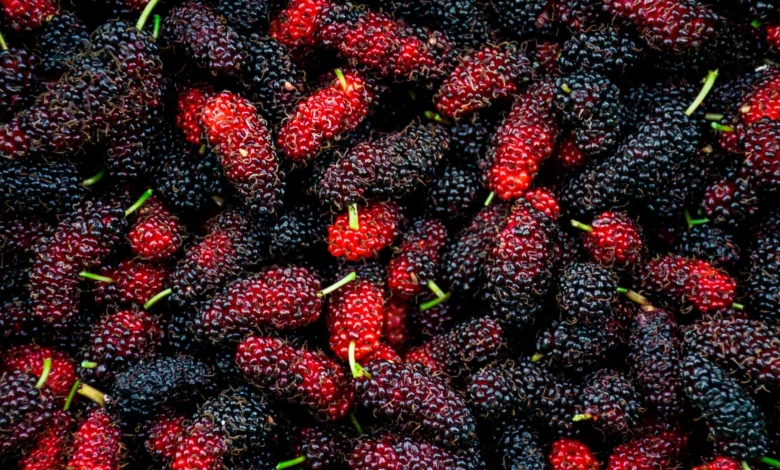
- Black Mulberry Fruit: The berries are exceptionally high in anthocyanins—the water-soluble flavonoid pigments responsible for their deep dark-purple or black hue—alongside considerable quantities of other phenolic acids and complex polysaccharides.
Beyond the raw botanical material, the processing techniques applied in the laboratory or commercial manufacturing floor are equally decisive. Industrial or artisanal steps such as drying, thermal processing, fermentation, and targeted extraction methods can drastically alter both the total concentration and the relative proportions of bioactive molecules. Two distinct extracts derived from the exact same batch of leaves can yield completely different chemical compositions—and, consequently, vastly different biological effects—depending on how they were processed.
Microbiota Modulation and the Quest for Standardization
In their extensive review of existing literature, the Wroclaw Medical University researchers observed that preparations derived from both mulberry leaves and fruit consistently demonstrated an ability to modulate the composition and metabolic activity of the gut microbiota. Across various experimental trials, administration of mulberry fractions led to favorable shifts in microbial populations, marked by an proliferation of beneficial bacterial taxa alongside elevated production of short-chain fatty acids.
Yet, consistency remains a formidable hurdle in botanical research. The review highlighted that outcomes varied widely based on extraction protocols and structural characteristics. For instance, studies investigating black mulberry fruit polysaccharides revealed that utilizing different extraction techniques produced distinct molecular fractions with varying degrees of microbial utilization. Specifically, fractions obtained through water extraction coupled with pectate lyase treatment exhibited the strongest prebiotic potential, suggesting that structural features like molecular weight and monosaccharide composition dictate which bacterial species can utilize the compounds.
Similar structure-function relationships were observed with polysaccharides derived from mulberry leaves. The specific architecture of these complex carbohydrates determines their accessibility to microbial enzymes, thereby dictating the precise metabolic output of the fermentation process. This variability underscores a major challenge for the nutraceutical industry: without strict standardization of raw materials and processing methods, replicating clinical outcomes becomes exceptionally difficult.
Synergistic Power: Insights from Animal Models
Some of the most compelling insights highlighted in the review emerged from controlled experiments examining complex, multi-compound preparations rather than isolated single molecules. In murine models where subjects were fed a high-fat diet designed to induce metabolic stress, researchers tested the efficacy of a combined fraction containing both polyphenols and polysaccharides extracted from white mulberry fruit.
The results were striking. The combined fraction produced significantly more favorable alterations in the gut microbiota than either isolated fraction administered on its own. Furthermore, these positive shifts in microbial ecology were mirrored by measurable improvements in systemic markers linked to metabolic syndrome, insulin sensitivity, and intestinal barrier integrity.
To definitively test whether the gut microbiota was driving these metabolic improvements—rather than merely changing alongside them—researchers conducted microbiota transplantation experiments. Fecal microbiota from mice that had received the combined mulberry fraction were transferred into recipient animals that had not consumed the plant extracts. Remarkably, these recipients also exhibited improvements in various metabolic disturbances. This elegant experimental design provided robust causal evidence that mulberry-induced modifications of the gut microbiome are directly responsible for systemic metabolic benefits.
"These findings suggest that what matters is not only the presence of an individual compound, but also the complex composition of the preparation, the proportions of its compounds, and their interactions," emphasizes Prof. Prescha. "Therefore, rather than searching for a single universal product, it is worth determining which combination of species, plant part, composition, and processing method produces a specific biological effect."
A Student-Led Initiative Inspires Interdisciplinary Collaboration
The genesis of this comprehensive review reflects a modern shift in academic research toward grassroots, student-driven inquiry. The project originated within the Nutri-Sfera Student Research Group, operating under the Department of Dietetics and Bromatology at Wroclaw Medical University.
The foundational topic was conceptualized by two ambitious students who have since earned their degrees: Marta Miszczak, an alumnus of the Dietetics program, and Karolina Kłosowska-Buryło, an alumnus of the Pharmacy program. By combining their respective academic backgrounds, the students bridged two traditionally distinct scientific domains—nutritional science and pharmaceutical chemistry—creating a holistic framework for analyzing how botanical agents interact with human biology.
"This fitted very well with the interdisciplinary nature of the study," Prof. Prescha notes. "It combined a perspective on mulberry as a plant material with a specific composition with an analysis of its potential effects on the microbiota and metabolism."
This collaborative spirit highlights a growing trend in academic institutions where early-career researchers and students are encouraged to challenge siloed thinking, paving the way for innovative approaches to chronic disease management.
The Road Ahead: Bridging the Animal-to-Human Gap
Despite the high level of enthusiasm generated by preclinical and in vitro data, the scientific community remains cautious. A major evidentiary gap persists: to date, rigorous human clinical trials directly examining the impact of standardized mulberry preparations on the human gut microbiota are conspicuously lacking.
Most current conclusions are drawn from animal models, primarily rodents, or laboratory-based cell cultures. While these platforms are invaluable for elucidating mechanisms of action, biological responses in mice do not always directly translate to human physiology due to inherent differences in gastrointestinal anatomy, transit time, and baseline dietary habits. Additionally, comparing historical studies is complicated by the scarcity of comprehensive chemical profiling; many published trials fail to provide a detailed breakdown of the exact phytochemical composition of the mulberry extracts they tested.
"The available findings are promising, but at this stage they do not allow us to determine whether the relationships observed in experimental models between mulberry preparations, the microbiota, and metabolism also occur in humans," Prof. Prescha points out.
Looking forward, the roadmap for mulberry research is clear. Future investigations must transition from exploratory animal studies to well-designed, randomized, double-blind, placebo-controlled human clinical trials. These trials will require meticulously characterized, standardized mulberry preparations to ensure reproducibility. Only through such rigorous methodologies can researchers definitively ascertain how different mulberry formulations impact the human microbiome, quantify the magnitude of those changes, and determine whether they translate into clinically meaningful health benefits for patients grappling with metabolic dysfunction.
As science continues to peel back the layers of traditional botanical remedies, the humble mulberry stands as a prime example of how ancient wisdom, when subjected to modern molecular scrutiny, may yet offer powerful new tools in the ongoing battle against metabolic disease.