Macklemore Launches Defiant Free Palestine Tour in Dublin Following High-Profile Removal from Ed Sheeran Lineup

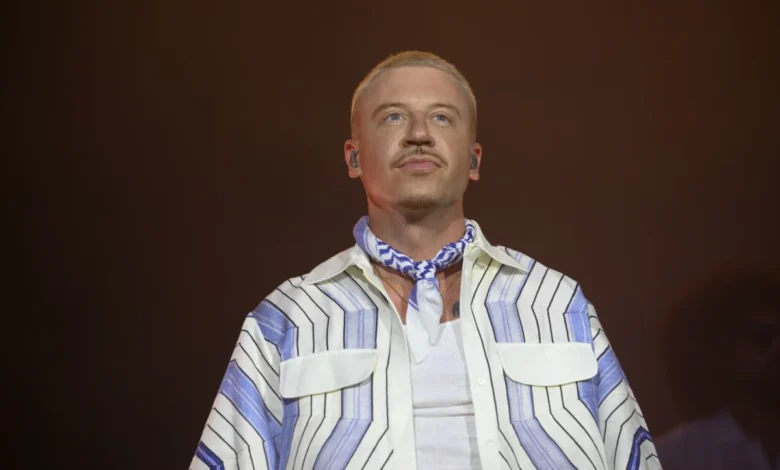
Weeks after a controversial on-stage speech ignited a fierce global debate regarding the boundaries of free speech and activism in the entertainment industry, Grammy-winning rapper Macklemore officially launched his targeted benefit trek in Dublin, Ireland. Billed as the Free Palestine tour, the highly anticipated three-date run kicked off to a packed house, featuring high-profile guest appearances and an impassioned defense of his prior remarks. The performance marks a pivotal escalation in a months-long flashpoint that has embroiled major music promoters, venue executives, global pop superstars, and hundreds of thousands of concertgoers across multiple continents.
The Dublin concert, hosted at a major venue and featuring surprise supporting sets from acclaimed Irish artists Hozier and hip-hop group Kneecap, served as both a musical gathering and a political rally. Taking to the stage following the intense backlash that led to his removal from Ed Sheeran’s sprawling North American stadium trek, Macklemore addressed the crowd directly regarding the phrase that triggered the crisis.
“Six weeks ago, it was two words. Two words is all that it took. Two words that are rooted in love and liberation,” Macklemore told the audience. Elaborating further on his intentions, the rapper emphasized that his message was neither divisive nor malicious, but rather an appeal for universal empathy. He noted that the phrases he used were aimed at recognizing shared humanity, demanding freedom, dignity, and the basic right to exist without the constant terror of violence.
The rapper’s three-city tour, which also includes upcoming stops in Paris and London alongside similarly curated special guests, has been organized with a strict charitable mandate. Organizers confirmed that 100% of the proceeds from the short-run trek will be funneled directly to humanitarian organizations providing relief in Palestine. This follows Macklemore’s earlier decision to donate his entire $1 million performance salary earned from the initial leg of Ed Sheeran’s tour to the same cause.
A Chronology of Controversy: From MetLife Stadium to Global Fallout
The origins of the current controversy trace back to early September during Ed Sheeran’s high-profile Loop tour stops at MetLife Stadium in East Rutherford, New Jersey. On September 4 and 5, Macklemore, serving as a primary supporting act, utilized his platform to address the ongoing humanitarian crisis in the Middle East. Standing before tens of thousands of fans, he delivered pointed political commentary before shouting, “Free Palestine!”
The rapper clarified during his September 5 performance that his statements were not intended as a critique of Jewish people as an ethnic or religious group, aiming to preemptively quell misinterpretations. However, the video clips circulated rapidly across social media platforms, drawing intense scrutiny from various advocacy groups and fellow musicians. Prominent pop artist Pink publicly addressed the fallout on social media, while the Israeli American Council (IAC) drafted a formal petition demanding Macklemore’s immediate termination from the remaining tour dates. The IAC argued that a global stadium concert series should not be co-opted as a platform for one-sided political demonstrations.
By September 14, the pressure exerted on tour promoters reached a critical threshold. The Messina Touring Group, responsible for producing Sheeran’s U.S. run, officially announced that Macklemore had been dropped from the lineup. Promoters stated that several host venues had issued explicit warnings refusing to allow concerts to proceed with Macklemore on the bill, warning that his continued presence would force complete event cancellations that would negatively impact hundreds of thousands of ticket holders and associated touring staff.
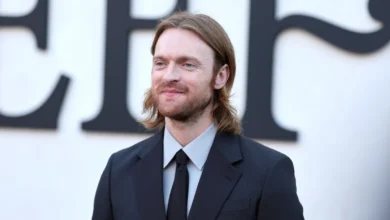
The dismissal triggered an immediate ripple effect throughout the tour’s infrastructure. In a notable display of solidarity, several other supporting acts on Sheeran’s lineup—including Finneas, Lukas Graham, and Aaron Rowe—as well as a majority of Sheeran’s backing band members, chose to withdraw from the remaining dates in protest of the decision.
Venue Politics and Financial Repercussions
The fallout expanded beyond standard tour logistics when Macklemore publicly claimed that Robert Kraft, owner of Gillette Stadium in Massachusetts, personally intervened to block his performance and pressured other major stadium executives to follow suit. Kraft and representatives for the venue countered these assertions by announcing a joint philanthropic initiative, revealing that Kraft and Ed Sheeran would jointly contribute $2 million toward humanitarian aid efforts aimed at mitigating the suffering in the region.
Amid mounting public scrutiny regarding his silence on the matter, Ed Sheeran issued an extensive public statement explaining his rationale for avoiding political commentary on stage. Sheeran emphasized that his decision to maintain neutrality stemmed from a desire to preserve his concerts as a safe, neutral space for diverse audiences, particularly children and families of various backgrounds.
“There is a reason I do not use my professional platform for politics — my audience includes young people, often children, of all backgrounds,” Sheeran wrote. “Those who come to my shows do not expect a political forum. I respect Macklemore’s strength of purpose to stand up and shout for what he believes. However, there is room for multiple approaches to the same end: peace.”
Despite this initial stance of strict neutrality, public opinion pressure shifted the dynamic further. Just days later, during a September 19 concert in Philadelphia, Sheeran altered his public posture and addressed the conflict directly. Acknowledging the complex pain felt on all sides, Sheeran described the October 7 attacks in Israel and the Nova Music Festival as horrific events compounding historical Jewish trauma, while simultaneously characterizing the scale of destruction and civilian casualties in Gaza as catastrophic, disproportionate, and unjustifiable. He also highlighted the systemic injustices occurring in the West Bank.
Broader Implications for the Entertainment Industry
The public collision of mainstream pop music, high-stakes touring economics, and geopolitical activism highlights a growing dilemma for contemporary artists and promoters. As global conflicts increasingly permeate public consciousness, performers face intense expectations from fans, advocacy organizations, and peers to either take definitive public stances or maintain strict neutrality.
Industry analysts note that stadium-scale tours represent massive financial investments involving complex webs of promoters, venue owners, corporate sponsors, and insurance underwriters. When artists introduce polarizing political discourse into these spaces, the resulting logistical friction—ranging from venue boycotts to artist walkouts—poses severe commercial risks. Conversely, suppressing an artist’s freedom of expression risks alienating socially conscious fan bases and sparking accusations of censorship and corporate cowardice.
Macklemore’s independent pivot—moving from a lucrative supporting role on a mega-tour to self-directed, charity-driven concert dates—reflects a broader trend of artists bypassing traditional corporate touring infrastructure to align their live performances directly with personal advocacy. By funneling 100% of his ticket revenues and previous tour salaries into Palestinian relief funds, the rapper has sought to weaponize his own economic independence to sustain a platform that major promoters ultimately found too volatile to manage.
As the Free Palestine tour moves forward with its remaining stops at major European venues in Paris and London, industry observers will be watching closely to see how security protocols, venue policies, and public reactions evolve. The episode serves as a watershed moment for the live entertainment sector, raising enduring questions about where the boundaries of free speech lie within commercial music venues and how the industry will navigate the intersection of art and geopolitics in the years to come.