Mass Artist Boycott Derails Ed Sheeran’s Loop Tour Following Macklemore’s Controversial Removal Over Pro-Palestinian Statements

Ed Sheeran’s high-profile Loop Tour has descended into a logistical and public relations crisis as a cascading wave of supporting acts, musicians, and guest performers have withdrawn from the trek in protest. The mass exodus was triggered by the contentious removal of rapper Macklemore, who was dropped from the tour following intense pressure from venue owners and pro-Israel organizations over his vocal support for Palestinians and pointed criticisms of Israel’s military campaign in Gaza.
The controversy has exposed deep divisions within the international music community regarding freedom of expression, political activism in pop culture, and the financial and structural power held by major venue proprietors and corporate promoters in the live entertainment industry. As multiple high-profile artists pull out of upcoming dates across North America and South America, the future of the massive arena and stadium tour remains uncertain, casting a long shadow over Ed Sheeran’s global enterprise.
The Catalyst: Macklemore’s MetLife Stadium Performances and Subsequent Ousting
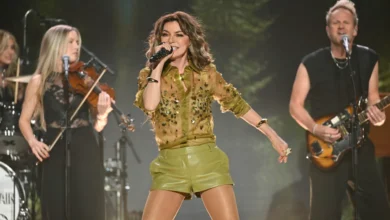
The sequence of events that fractured the Loop Tour began during a series of high-capacity performances by Ed Sheeran at MetLife Stadium in New Jersey. Macklemore, serving as a prominent supporting act, used his platform to address the ongoing humanitarian crisis in Gaza and the occupied West Bank. During his sets, the Seattle-born rapper chanted "Free Palestine," projected graphic imagery illustrating the devastation in Gaza onto the stage screens, and performed his viral protest track “Hind’s Hall,” a song written in honor of student demonstrators at Columbia University advocating for Palestinian rights.
While Macklemore’s performances resonated strongly with large segments of the stadium audience, the rhetoric drew immediate, sharp condemnation from pro-Israel advocacy groups and prominent venue stakeholders. Chief among them was Robert Kraft, billionaire owner of the New England Patriots and Gillette Stadium. According to statements released by Macklemore, Kraft spearheaded a coordinated pressure campaign, utilizing his influence over major stadium infrastructure to issue an ultimatum to tour organizers.
Macklemore alleged that Sheeran informed him personally of the ultimatum. “Ed told me that Kraft said I would not be allowed to perform in his stadium,” Macklemore stated publicly. “Ed also told me that Kraft had rallied some of the other stadium owners and collectively they gave him an ultimatum: if Macklemore stays on the tour, you will not be allowed to play in our venues.”
Faced with the prospect of losing access to vital performance venues capable of hosting tens of thousands of attendees, tour promoter Messina Touring Group made the executive decision to drop Macklemore from the lineup. The announcement was finalized on a Monday, immediately sparking widespread industry backlash and setting off a chain reaction of cancellations by remaining tour personnel.
Kraft later confirmed his decision to bar Macklemore from Gillette Stadium, though he did not directly address claims regarding his coordination with other venue operators. In an official statement, Kraft defended the ban by citing Macklemore’s stage actions, the material displayed during the New Jersey concerts, and what he characterized as a “broader history of antisemitic rhetoric and imagery that we believe has been deeply offensive and hurtful to the Jewish community.”
A Chronology of Cancellations and Artist Boycotts
The removal of Macklemore served as a tipping point for other artists scheduled to appear on the Loop Tour, who viewed the decision as an unacceptable restriction of artistic freedom and an act of censorship driven by corporate and billionaire interests. Within days of Macklemore’s ousting, a systematic withdrawal of supporting acts began to unfold across multiple digital platforms.
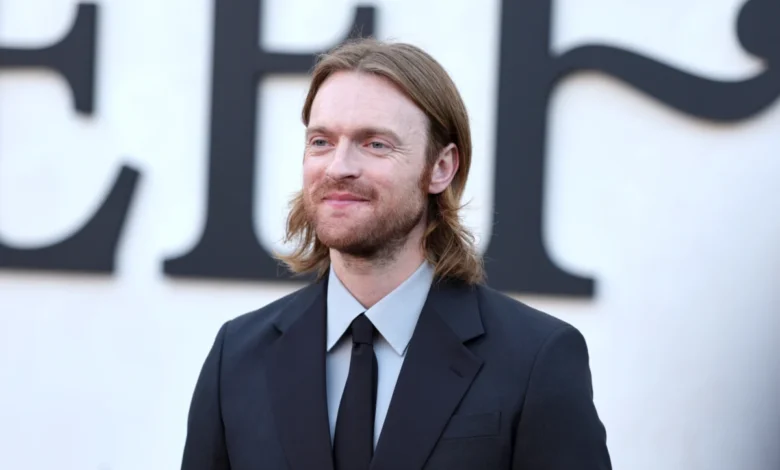
The first major blow to the international legs of the tour came from Grammy Award-winning singer-songwriter Finneas, best known for his collaborative work with his sister, pop superstar Billie Eilish. Finneas was slated to open for Sheeran on the upcoming South American leg of the Loop Tour, scheduled to commence in November. Rejecting the silencing of political speech, Finneas took to Instagram to announce his departure.
“Artists must not be silenced when they speak up for the oppressed,” Finneas wrote. “I have decided to withdraw from my upcoming tour dates with Ed Sheeran. I stand with Palestine and its people.”
Shortly thereafter, the remaining opening acts for the United States leg of the tour—Danish pop artist Lukas Graham and Irish singer-songwriter Aaron Rowe—followed suit, issuing respective statements condemning the exclusion of Macklemore and explaining their decisions to step away from the lucrative touring opportunity.
Lukas Graham expressed deep frustration over the suppression of dialogue regarding civilian casualties and international conflicts. “It’s hard to watch families in other parts of the world burying the people they love,” Graham wrote on Instagram. “We should be able to speak about war, about civilians being killed, about children who deserve to grow up. Wherever they live. Whatever flag flies over them.”
Graham emphasized that financial considerations should not dictate ethical boundaries or public discourse. “Money doesn’t give you the right to own the conversation. Nobody’s bank balance should decide who gets to speak or which suffering we’re allowed to acknowledge,” he added. While affirming his personal affection and gratitude toward Ed Sheeran, Graham concluded that carrying on with the tour had become untenable.
Aaron Rowe offered an even sharper critique, explicitly linking his withdrawal to his national heritage and historical perspectives on oppression. Drawing parallels between the Palestinian experience and Irish history, Rowe stated, “I cannot stand by and allow billionaires to use their position of power to silence the rightful voices of those who speak up against Israeli genocide and who highlight the savage.”
Rowe continued, noting that the decision was difficult given his professional relationship with Sheeran, but ultimately necessary. “As Irish people we know all too well about genocide, forced famine and violent occupation… I need to be true to myself and my ancestors who resisted colonization, and fought for a freedom that I enjoy today in Ireland.”
Adding to the roster of departures was Beoga, a traditional Irish folk band that regularly joins Sheeran onstage during his live sets to perform a curated run of collaborative tracks. The band released a joint statement identifying their departure as a direct response to the “silencing of Macklemore by zionist lobbies.”
Beoga confirmed that they had witnessed Macklemore’s performance at MetLife Stadium firsthand and fully supported his message, asserting that the majority of the audience shared that sentiment. As founding members of the Irish Artists for Palestine movement, the band members stated that playing in venues that actively suppress advocacy for Palestinian rights was fundamentally incompatible with their core values. They also drew attention to the broader humanitarian situation in Gaza, emphasizing that ongoing violence continues to claim civilian lives despite supposed ceasefires.
Ed Sheeran and Promoter Response Amid Rising Tensions
As the coalition of boycotting artists grew, primary headliner Ed Sheeran found himself caught in the crossfire between venue owners, corporate promoters, and his own supporting lineup. On Tuesday, Sheeran released a formal statement attempting to clarify his position, reiterating that the decision to remove Macklemore was not his own, but rather an administrative mandate executed by the Messina Touring Group under severe pressure from stadium proprietors.
“I have spent this week trying to build bridges, to find a solution and unfortunately, was unable to do so,” Sheeran wrote. Defending his character amid mounting online criticism, the British pop star added, “I know who I am, both as a person and as an artist, and those who know my heart know my values too.”
Despite Sheeran’s appeals for understanding, representatives for the artist have thus far declined to comment on the cascading departures of Finneas, Lukas Graham, Aaron Rowe, and Beoga. The silence from the primary camp underscores the complex legal, financial, and contractual liabilities surrounding modern arena tours when geopolitics intersect with live entertainment logistics.
Broader Industry Implications and the Intersection of Music and Politics
The unfolding crisis surrounding the Loop Tour highlights a growing friction point within the global entertainment industry regarding the boundaries of free speech, political expression, and corporate accountability. In recent years, artists across various genres have increasingly utilized their international platforms to address humanitarian crises, systemic injustices, and geopolitical conflicts. However, these efforts frequently collide with the commercial interests of corporate sponsors, venue conglomerates, and major stakeholders who control access to vital performance infrastructure.
The intervention of stadium owners like Robert Kraft in booking decisions demonstrates the immense leverage held by private real estate magnates over public-facing cultural events. When stadium proprietors exercise veto power based on the political or social commentary of an opening act, it raises fundamental questions about censorship in the arts and the extent to which commercial venues can regulate ideological content.
Conversely, industry analysts note that the rapid mobilization of supporting acts in solidarity with Macklemore signals a shifting paradigm among contemporary musicians. Rather than maintaining silence to protect commercial viability, a growing faction of prominent artists is prioritizing ideological alignment and solidarity over lucrative touring contracts. This dynamic threatens to complicate future concert scheduling, as promoters and venue managers must now weigh the economic benefits of hosting major pop tours against the potential for artist boycotts and public relations fallout.
As international human rights organizations and United Nations bodies continue to debate the legal definitions and humanitarian realities of the conflict in Gaza, the cultural fallout within the Western music industry shows no signs of abating. For Ed Sheeran and the remaining production teams of the Loop Tour, the immediate challenge lies in restructuring the live show amidst a depleted roster of performers, while managing a polarized public discourse that has irrevocably altered the trajectory of one of the year’s biggest concert tours.
Related posts: