The human cost of modern warfare has shifted dramatically and disproportionately onto women and girls, according to a landmark global assessment released by the United Nations. Marking a grim milestone in the erosion of international humanitarian protections, data compiled for the UN Secretary-General’s annual report on Women, Peace and Security reveals that female fatalities in armed conflicts have doubled as a percentage of total civilian deaths since 2021.
The findings, presented at UN Headquarters in New York, paint an alarming picture of modern combat zones where civilian infrastructure has become the primary battleground. Out of more than 37,000 civilian deaths recorded across global conflict zones last year, women and girls accounted for fully one in four victims. Translating these figures into a daily tragedy, the report calculates that at least 25 women and girls are killed every 24 hours in settings defined by active warfare.
This escalation in lethality is compounded by a staggering expansion in the geographic footprint of conflict. Today, an estimated 750 million women and girls live within 50 kilometers of an active front line or skirmish zone. This represents an increase of 40 million individuals compared to 2024 metrics and marks the highest concentration of civilian populations near armed violence since 1990.
Main Facts and Statistical Overview
The UN Women assessment goes far beyond battlefield casualties, capturing a multidimensional crisis that encompasses surging sexual violence, maternal health catastrophes, and deep economic destitution. The statistical portrait of modern conflict underscores a systemic failure to shield non-combatants, particularly females, from the collateral and targeted impacts of war.
Among the most jarring revelations is the exponential surge in conflict-related sexual violence (CRSV). In 2025 alone, the United Nations verified 9,788 cases of sexual violence linked directly to armed conflict. This figure represents more than a twofold increase over the preceding year and nearly quadruples the totals documented in 2022. Localized crises have amplified these trends; in Haiti, for instance, reported cases of sexual violence surged by an unprecedented 163 percent amidst the total breakdown of public order and state security.
Public health infrastructure in war zones has simultaneously collapsed, turning pregnancy and childbirth into life-threatening hazards. Expecting mothers in conflict-affected nations face a maternal mortality rate five times higher than their counterparts in stable regions. The localized impact is most acutely visible in Gaza, where the systemic destruction of hospitals, clinics, and maternity wards—coupled with blockades on essential medical supplies—has triggered a 41 percent reduction in live births alongside a 300 percent spike in miscarriages.
Socioeconomic indicators reveal that war acts as a profound engine of poverty and inequality for women. Approximately 170 million women and girls currently endure the dual burdens of conflict and extreme poverty, surviving on less than three dollars a day. Furthermore, in countries torn apart by war, female civilians spend an average of five times more hours on unpaid care work than men and boys, shouldering the labor-intensive responsibilities of household survival while navigating constant threats to their physical security.
Chronology and Historical Context
To understand the current trajectory of women, peace, and security, it is necessary to examine the historical architecture designed to protect them and the systemic setbacks that have accumulated over recent years.
The foundational international mandate addressing this issue is United Nations Security Council Resolution 1325, unanimously adopted on October 31, 2000. Resolution 1325 formally recognized for the first time the disproportionate impact of war on women, called for the protection of women and girls from human rights abuses during armed conflict, and emphasized the vital role women must play in peacebuilding and conflict resolution.
In the decades following its adoption, the international community established a normative framework intended to integrate gender perspectives into all peace and security efforts. However, the enforcement of these standards has grown increasingly weak as geopolitical tensions have fractured multilateral consensus.
By 2021, amidst the resurgence of interstate conflicts, urban warfare, and protracted civil wars in regions such as the Middle East, the Horn of Africa, and Eastern Europe, the proportion of female civilian casualties stood at roughly 12.5 percent. Over the subsequent four years, the widespread deployment of heavy artillery, explosive weapons in populated areas, and advanced unmanned aerial drones fundamentally altered urban combat dynamics. Schools, markets, hospitals, and residential neighborhoods became primary targets, erasing the traditional distinction between the frontline and the home front.
By 2024, the situation had deteriorated to the extent that international monitors warned of a generalized rollback of human rights protections in conflict zones. The release of the 2026 report confirmed these worst-case projections, documenting a doubling of female fatalities to 25 percent of total civilian deaths and highlighting a severe institutional regression in diplomatic efforts to include women in peace processes.
Official Responses and Institutional Warnings
Senior UN leadership pulled no punches during the formal presentation of the report, rebuking member states for their collective inaction and rhetorical hypocrisy regarding human rights and civilian protection.
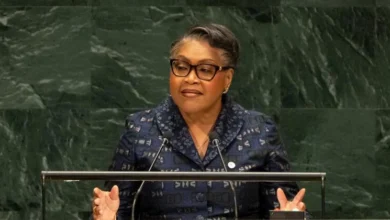
"War is getting deadlier for women and girls, and the world is allowing it to happen," stated UN Women Deputy Executive Director Nyaradzayi Gumbonzvanda during her briefing to journalists in New York. Underscoring the inescapable nature of contemporary violence, she added, "For them, war is not something they can scroll past. War is outside their door."
Gumbonzvanda emphasized that the physical dangers faced by women are exacerbated by economic marginalization and systemic underfunding of protective services. Her sentiments were echoed by UN Women Executive Director Sima Bahous, who drew a sharp contrast between global defense expenditures and the funding available for humanitarian and peacebuilding initiatives.
"More women and girls are trapped in wars than at any point in decades. Yet military spending keeps rising and development assistance keeps falling," Bahous said.
Data cited in the report illustrates this stark fiscal imbalance. Global military expenditures reached an all-time high of $2.9 trillion last year, fueled by escalating geopolitical competition and regional arms races. In stark contrast, 40 percent of grassroots women’s organizations operating in crisis-affected settings reported that they expect to close their doors—either temporarily or permanently—within the next year due to severe funding shortfalls and donor fatigue.
Exclusion from Peace and Security Architecture
Compounding the physical and economic threats is the persistent marginalization of women from formal political negotiations aimed at ending hostilities. Despite empirical evidence demonstrating that peace agreements are significantly more durable and comprehensive when women participate meaningfully in their drafting and implementation, diplomatic exclusion remains the global norm.
According to the UN data for 2025, women accounted for a mere 5 percent of negotiators across 57 monitored peace processes, representing a seven percentage point drop from the previous year. Furthermore, out of 13 major ceasefire agreements brokered or reviewed during the period, not a single document explicitly prohibited conflict-related sexual violence or established specific accountability mechanisms for perpetrators.
Analysts point out that this systematic sidelining ensures that post-conflict recovery frameworks frequently overlook the specific justice, health, and economic needs of female survivors, embedding systemic inequality into newly established political orders.
Broader Impact and Geopolitical Implications
The findings of the UN report carry profound implications for international law, global security, and the future of multilateralism. The normalization of high civilian casualty rates, particularly among women and children, signals a dangerous erosion of the norms established by the Geneva Conventions and international humanitarian law.
The increased reliance on long-range kinetic strikes, automated targeting systems, and siege tactics in densely populated urban environments has rendered traditional civilian shelters obsolete. When schools and hospitals are routinely compromised, the social fabric of entire communities dissolves, triggering mass displacement and long-term demographic trauma that can persist for generations.
Furthermore, the simultaneous rise in militarized spending and the financial starvation of local women-led peace networks points to a misallocation of global resources that prioritizes immediate kinetic solutions over sustainable social stability. Without robust financial backing, local civil society actors—who are often the first responders in delivering humanitarian relief and documenting human rights abuses—are forced to curtail their operations precisely when they are most desperately needed.
Path Forward and Recommendations
In response to these multi-layered crises, UN Women has issued an urgent, four-pillar call to action directed at member states, regional organizations, and international financial institutions.
First, the agency demands the immediate protection of women and girls through rigorous enforcement of international humanitarian law, an end to the use of heavy explosive weapons in populated areas, and the establishment of safe corridors for vulnerable populations.
Second, the international community must guarantee the meaningful, equal participation of women in all stages of peace and security governance, moving beyond token representation to ensure genuine influence in mediation, ceasefires, and transitional justice mechanisms.
Third, donors and governments must secure sustained, predictable financial investment in women-led peacebuilding organizations and frontline humanitarian responders, shielding them from budgetary cuts and geopolitical shifts.
Finally, the report stresses the necessity of ending institutional impunity for perpetrators of gender-based violence and war crimes through universal jurisdiction, empowered international tribunals, and robust domestic accountability frameworks.
Concluding her remarks at UN Headquarters, Ms. Gumbonzvanda encapsulated the philosophical and political challenge facing world leaders: "War is a human choice. So is peace." Whether the international community possesses the political will to choose the latter remains the defining question of the current geopolitical era.