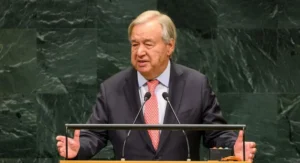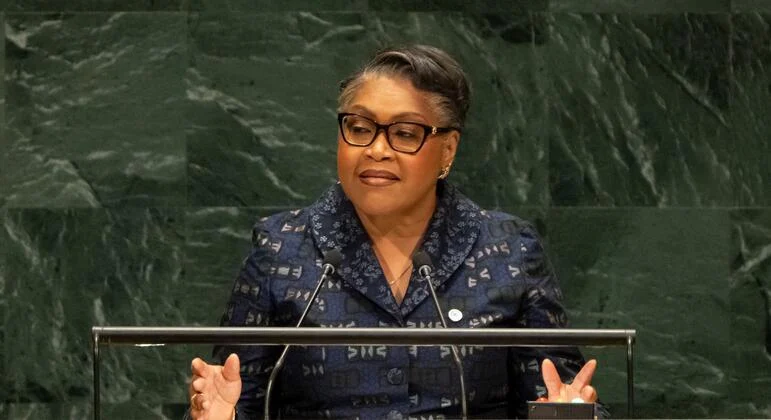
For decades, the eastern region of the Democratic Republic of the Congo (DRC) has stood as a tragic paradox: a territory of immense mineral wealth crippled by perpetual violence, mass displacement, and compounding humanitarian crises. Addressing world leaders at the United Nations General Assembly in New York, Prime Minister Judith Suminwa delivered a searing indictment of the international community’s failure to bridge the gap between diplomatic pledges and the grim reality on the ground. Her address not only cast a sharp spotlight on the ongoing geopolitical conflicts tearing through the Central African nation but also challenged the industrialized world’s pursuit of a decarbonized future built on the back of exploited labor and conflict minerals.
The Prime Minister’s remarks underscored a profound moral and economic dilemma. As the global transition toward green energy and digital infrastructure accelerates demand for critical minerals—such as cobalt, copper, lithium, and nickel—the DRC remains ground zero for extraction. Yet, the wealth generated from these resources continues to bypass the local populations whose lands are torn apart by warfare. Suminwa’s address framed the Congolese struggle not merely as a localized security crisis, but as a systemic international failure with global implications for human rights, economic justice, and sustainable development.
Anatomy of a Protracted Crisis: Security, Proxies, and Humanitarian Toll
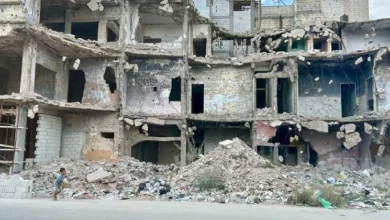
The humanitarian catastrophe in eastern DRC is driven by a complex web of domestic and foreign armed groups. Prime Minister Suminwa did not mince words regarding the external drivers of the conflict, explicitly accusing neighboring Rwanda of orchestrating a war of aggression through its proxy group, the Alliance Fleuve Congo/M23 Movement (AFC/M23). This ongoing offensive has exacerbated an already fragile security environment, compounding the devastation wrought by other formidable militant factions, notably the Allied Democratic Forces (ADF) and the Cooperative for the Development of the Congo (CODECO).
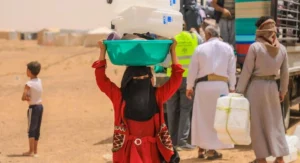
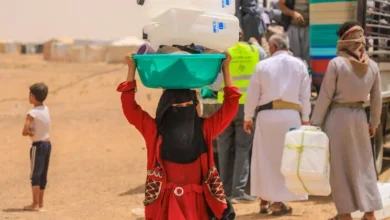
The human cost of this multi-sided conflict is staggering. Millions of Congolese have been forced to flee their homes, swelling the ranks of internally displaced persons (IDPs) who frequently lack access to adequate shelter, clean water, healthcare, and food security. To compound these compounding challenges, the region has simultaneously battled severe health emergencies, including recurring outbreaks of Ebola, which thrive in environments destabilized by conflict and population displacement.
International human rights monitors have repeatedly documented widespread atrocities committed by these armed groups, including targeted killings, sexual violence used as a weapon of war, and the forced recruitment of child soldiers. Despite numerous regional and international intervention frameworks over the years, the civilian population in provinces such as North Kivu, South Kivu, and Ituri continues to bear the brunt of an intractable cycle of violence.
A Diplomatic Imperative: The Washington Agreement and UN Resolution 2773
Amid the pervasive despair, diplomatic channels have occasionally yielded glimmers of hope. Prime Minister Suminwa pointed to the peace agreement signed in Washington, D.C., in June 2025 between the DRC and Rwanda as a potential turning point. The accord was hailed by international mediators as a crucial step toward de-escalating bilateral tensions and establishing a framework for regional stability.
However, the Prime Minister was quick to temper optimism with hard pragmatism, noting that “for millions of Congolese, this peace remains only a promise.” The chasm between signed accords and grassroots realities stems from a history of broken ceasefires and unfulfilled commitments.
In this context, Suminwa emphasized the critical importance of United Nations Security Council Resolution 2773 (2025). The resolution lays out an explicit roadmap designed to compel an effective cessation of hostilities, mandate the withdrawal of Rwandan forces from Congolese territory, and restore the sovereign authority of the Congolese state across its entire geographic footprint. Rather than calling for new diplomatic instruments, the Prime Minister insisted that the international community focus its collective political will on enforcing existing mandates. “We don’t need new texts to replace those that have already been adopted,” she asserted, signaling a growing frustration with endless rounds of negotiations that yield little tangible enforcement.
Complementing these security measures, the Prime Minister addressed the sensitive issue of the Democratic Forces for the Liberation of Rwanda (FDLR), a predominantly Hutu armed group whose presence in eastern DRC has historically served as a primary pretext for regional intervention. Under a protocol signed in May 2025, provisions were established for the systematic disarmament, demobilization, and repatriation of FDLR combatants. Demonstrating that implementation is underway, the UN peacekeeping mission in the DRC, MONUSCO, facilitated the safe repatriation of 120 individuals associated with the group earlier this month. Suminwa hailed this operation as “a first testament to the protocol’s implementation,” while underscoring that much more work remains to neutralize the remaining armed elements permanently.
The Green Transition Dilemma: Blood-Stained Minerals and Economic Justice
Beyond the immediate security framework, Prime Minister Suminwa’s address pivoted toward a broader global economic critique that struck at the heart of the international green energy transition. As the world scrambles to decarbonize economies, the demand for raw materials required to manufacture electric vehicle batteries, wind turbines, and advanced electronics has skyrocketed.
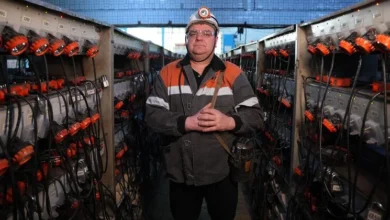
The DRC occupies a central, irreplaceable position in this new global industrial revolution. As the world’s leading producer of cobalt—a vital component in lithium-ion batteries—and a major producer of copper, the nation literally powers the technological and ecological ambitions of wealthy nations. Yet, this position of geographic privilege has historically translated into economic exploitation rather than shared prosperity.
“We cannot build a decarbonized economy through blood-stained minerals,” Suminwa declared, drawing a direct line between the exploitation of Congolese resources and the suffering of its people. “And we will not bring about a just transition by reproducing a greenwashed version of our past dependencies.”
The Prime Minister explicitly rejected the extractive colonial model that has defined the global economy for centuries—a system in which developing nations are relegated to the role of raw material providers, while high-value processing, technological innovation, research, and the vast majority of financial profits remain concentrated in distant capitals. She warned that maintaining this status quo is not only unjust but inherently dangerous for global stability.
Instead, Kinshasa is charting a new course. Suminwa articulated a vision wherein the DRC partners with African neighbors and international allies to build competitive regional industries. By localizing processing, fostering technical skills, and encouraging technology transfer, the country aims to transform its mineral wealth into a catalyst for domestic job creation and shared prosperity.
Chronology of Recent Key Developments in Eastern DR Congo
To understand the current trajectory of the conflict and diplomatic efforts in the DRC, a review of recent milestones highlights the shifting dynamics between peace initiatives and persistent instability:
- May 2025: The DRC and regional stakeholders sign a critical protocol establishing structured mechanisms for the disarmament, demobilization, and repatriation of combatants from the FDLR armed group.
- June 2025: High-level diplomatic talks in Washington, D.C., culminate in a bilateral peace agreement signed between the governments of the DRC and Rwanda, aimed at reducing cross-border hostilities and proxy warfare.
- Early 2025 / Security Council Actions: The UN Security Council adopts Resolution 2773 (2025), establishing a clear, unambiguous roadmap for the cessation of hostilities, foreign troop withdrawals, and the restoration of state authority in eastern provinces.
- September 2025: MONUSCO, in coordination with national authorities, successfully oversees the repatriation of 120 individuals associated with the FDLR, marking a tentative initial milestone in the execution of the May disarmament protocol.
- September 2025 (UN General Assembly): Prime Minister Judith Suminwa addresses the UN General Assembly, demanding international enforcement of existing peace resolutions and a fundamental restructuring of the global mineral supply chain to ensure economic justice for local populations.
Broader Implications and Global Analysis
The impassioned address delivered by Prime Minister Suminwa carries profound implications for international diplomacy, peacekeeping efficacy, and the global energy market.
From a geopolitical standpoint, the speech exposes the persistent limitations of multilateral institutions in compelling compliance from sovereign states and non-state actors alike. Despite binding UN resolutions and high-profile diplomatic summits, the operational realities on the ground in North and South Kivu demonstrate that peace cannot be sustained through paper agreements alone. It requires robust enforcement mechanisms, genuine regional cooperation, and the dismantling of illicit economic networks that finance armed groups.
Economically, Suminwa’s challenge to the global green transition introduces a vital ethical dimension to climate policy. As Western nations and corporate conglomerates aggressively pursue net-zero targets, they face a growing moral imperative to scrutinize their supply chains. The demand for ethical sourcing can no longer be treated as a secondary corporate social responsibility metric; it is a fundamental prerequisite for global security. If the pursuit of a decarbonized future relies on the subjugation and impoverishment of mining communities in Central Africa, the resulting environmental transition will rest on deeply unstable foundations.
Ultimately, the Prime Minister’s message to the international community was clear: the Democratic Republic of the Congo is no longer content to serve as a silent quarry for the world’s technological ambitions. By demanding accountability from aggressors, enforcement from the United Nations, and economic equity from industrial powers, Kinshasa is asserting its right to author its own future—one where peace is no longer a fleeting promise, but an enduring reality for every citizen.