Phil Lord and Chris Miller to Deliver Keynote at IndieWire Future of Filmmaking Summit 2026 Following the Triumph of Project Hail Mary

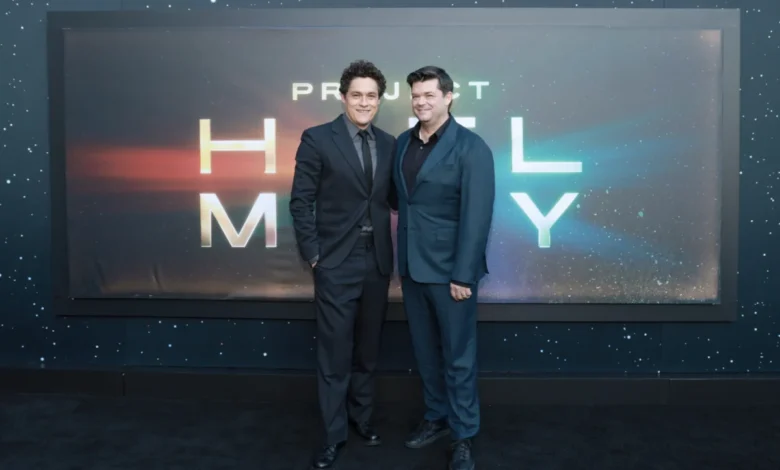
The cinematic landscape of 2026 has been marked by a rare and coveted phenomenon: a high-budget, ambitious science-fiction blockbuster that has successfully captured both critical acclaim and massive, broad-based commercial appeal. At the center of this cultural and industrial milestone is Amazon MGM’s adaptation of Andy Weir’s bestselling novel, “Project Hail Mary.” Blending cutting-edge visual effects, intricate practical puppetry, and a signature, grounded leading performance from Ryan Gosling, the film has breathed new life into an exhibition sector often exhausted by repetitive intellectual property and risk-averse studio strategies. As the industry dissects how this complex production managed to conquer the global box office, the masterminds behind the project are stepping forward to explain the mechanics of their success.
Filmmaking duo Phil Lord and Chris Miller are officially scheduled to deliver the keynote presentation at the upcoming IndieWire Future of Filmmaking Summit on October 17, 2026. The high-profile event, hosted at Penske Media’s headquarters at Lumen West LA, will serve as a deep dive into the creative and logistical challenges that defined the making of what many in Hollywood are calling the most difficult film of the directors’ storied careers. Attendees will receive an unprecedented, behind-the-scenes look at the intersection of innovative technology, artistic risk-taking, and studio-scale execution that brought “Project Hail Mary” to the silver screen.
A Legacy of Defying Cinematic Conventions
To fully understand the weight of Lord and Miller’s upcoming keynote, one must examine the extraordinary trajectory of their quarter-century partnership. Over the past 25 years, the writer-producer-director duo has systematically dismantled the notion that certain mediums or genres possess inherent limitations. Their footprint spans boundary-pushing television animation, live-action franchise comedies, and revolutionary comic book adaptations that changed the visual vernacular of modern cinema.
The duo’s professional journey in animation began in earnest with the 2002 cult classic television series “Clone High,” a biting satire of historical figures reimagined as modern teenagers. Though short-lived during its initial broadcast, the show achieved legendary status and established Lord and Miller’s distinct comedic voice, characterized by rapid-fire pacing, meta-textual irony, and deep emotional sincerity beneath layers of absurdity.
They successfully transitioned to feature films with Sony Pictures Animation’s “Cloudy with a Chance of Meatballs” (2009). Against low initial expectations for an adaptation of a children’s picture book, the film became a critical and commercial success, grossing over $243 million worldwide and establishing the duo’s signature kinetic visual style. They followed this triumph with 2014’s “The Lego Movie,” a project widely dismissed by industry skeptics as a feature-length toy commercial. Instead, Lord and Miller subverted expectations entirely, crafting a philosophically rich, visually inventive masterpiece that grossed nearly $470 million globally and sparked a massive multi-film franchise.
Simultaneously, the pair proved equally adept in the live-action sphere. In 2012, they directed “21 Jump Street,” an R-rated adaptation of a dated 1980s television drama. Bolstered by the chemistry between Jonah Hill and Channing Tatum, the film defied the graveyard of television-to-film remakes, earning more than $200 million worldwide and winning over skeptical critics. They returned to direct the 2014 sequel, “22 Jump Street,” which matched the critical and commercial success of its predecessor. Furthermore, their television producing credits include critically acclaimed ventures such as Fox’s post-apocalyptic single-camera comedy “The Last Man on Earth” and Apple TV+’s genre-bending murder mystery comedy series “The Afterparty.”

Perhaps their most influential modern contribution, however, has been their stewardship of the animated “Spider-Verse” franchise. Serving as writers and producers on “Spider-Man: Into the Spider-Verse” (2018) and its sequel “Spider-Man: Across the Spider-Verse” (2023), Lord and Miller helped revolutionize aesthetic standards in mainstream animation. By fusing traditional hand-drawn techniques with cutting-edge computer-generated imagery and comic book formatting, the franchise grossed over $1 billion collectively and fundamentally altered the visual expectations of audiences worldwide.
Inside the Production of Project Hail Mary
The announcement of Lord and Miller’s keynote comes at a critical juncture for the commercial film industry. As studios grapple with shifting consumer habits, streaming integration, and escalating production budgets, “Project Hail Mary” has emerged as a textbook case study in how to execute high-concept science fiction with genuine emotional stakes.
Based on the 2021 novel by Andy Weir—whose previous adapted work, “The Martian,” was successfully brought to the screen by Ridley Scott in 2015—“Project Hail Mary” follows Ryland Grace, a lone astronaut who wakes up from a coma aboard a spaceship with amnesia, only to discover he is humanity’s last hope to avert an extinction-level solar cataclysm. The novel’s intricate scientific problem-solving, coupled with Grace’s budding relationship with an unexpected alien ally, presented monumental hurdles for any cinematic adaptation.
According to early production insights and trade analyses, Lord and Miller leaned heavily into hybrid filmmaking techniques. Rather than relying entirely on digital environments or performance capture, the production utilized tangible, physical assets—including advanced puppetry—to bring non-human elements to life on set alongside Ryan Gosling. This commitment to practical integration provided the film with a tactile authenticity that resonated deeply with audiences fatigued by uniform digital aesthetics.
Industry analysts have noted that the film’s success demonstrates a renewed appetite for intelligent, mid-to-high-budget science fiction that prioritizes narrative clarity and character development over cynical franchise setup. For filmmakers navigating an increasingly volatile economic landscape, the Lord and Miller keynote is expected to offer practical takeaways regarding risk management, creative resilience, and the strategic deployment of innovative technologies without sacrificing emotional resonance.
The 2026 IndieWire Future of Filmmaking Summit: Event Structure and Programming
The Future of Filmmaking Summit has rapidly established itself as a premier destination for industry leaders, directors, producers, cinematographers, and technology developers. Held at the state-of-the-art Penske Media headquarters at Lumen West LA, the all-day event is structured to foster direct dialogue about the tools, techniques, and philosophies driving modern visual storytelling.

In addition to the anchor keynote presentation by Phil Lord and Chris Miller, the 2026 summit features an expansive curriculum of curated panels, masterclasses, and networking sessions. The programming is specifically designed to address the challenges of an evolving media ecosystem, touching upon advancements in virtual production, sustainable filmmaking practices, independent financing models, and the evolving relationship between theatrical exhibition and streaming distribution.
IndieWire representatives have emphasized that the summit aims to bridge the gap between legacy filmmaking traditions and the digital-native workflows of the future. By bringing together creators at the top of their respective fields—ranging from veteran auteurs to vanguard digital artists—the event functions as an annual incubator for industry-wide innovation.
Broader Implications for the Entertainment Industry
The timing of Lord and Miller’s keynote highlights a broader economic and artistic recalibration within Hollywood. Following years of post-pandemic recovery, supply chain disruptions, and labor union strikes that reshaped production calendars through the mid-2020s, studios are increasingly searching for reliable blueprints to ensure fiscal viability while maintaining artistic integrity.
The triumph of “Project Hail Mary” proves that audiences are willing to embrace complex, non-franchise intellectual property provided the execution meets an elite standard of craftsmanship. By dissecting their methodology at the IndieWire summit, Lord and Miller are poised to offer more than just anecdotal BTS stories; they are expected to provide a strategic roadmap for contemporary producers looking to navigate ballooning overhead costs while preserving creative risks.
As ticket sales for the October 17 event accelerate, anticipation among industry professionals continues to mount. For a filmmaking community eager to decode the formula behind one of the decade’s defining cinematic achievements, hearing directly from the architects of the “Hail Mary” campaign represents an unmissable opportunity. Additional programming details, panel lineups, and keynote respondent announcements are expected to be unveiled by IndieWire in the coming weeks leading up to the summit. Tickets and event registration information remain available through the official IndieWire events portal.
Related posts: