The Curse of the Owens Women Returns: Why Practical Magic 2 Defies Critical Backlash to Celebrate Sisterhood

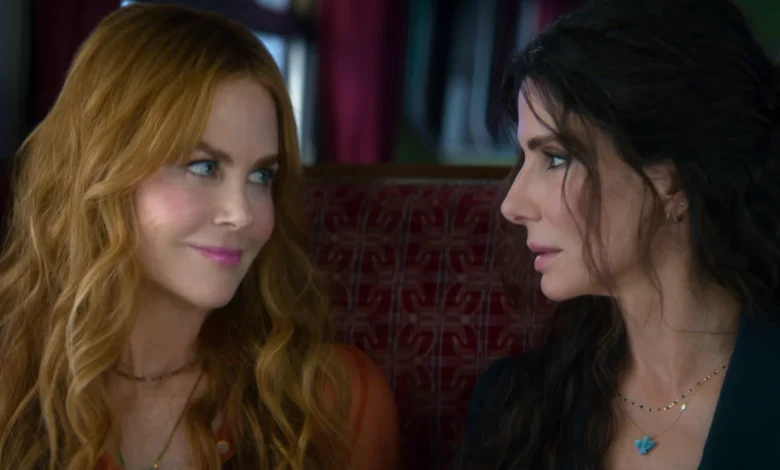
The cinematic landscape often struggles to reconcile commercial entertainment with critical acclaim, a dichotomy vividly highlighted by the theatrical release of Practical Magic 2. Debuting on Rotten Tomatoes with a modest 34 percent approval rating from critics, the long-awaited sequel has reignited industry conversations regarding the disconnect between institutional film reviewers and devoted fanbases. Directed by Susanne Bier and starring Academy Award winners Sandra Bullock and Nicole Kidman, the film arrives nearly three decades after the 1998 original. While contemporary reviewers have targeted the sequel’s pacing, visual aesthetic, and departure from the atmospheric charm of its predecessor, audiences have responded with robust commercial enthusiasm, signaling a profound cultural appetite for narratives centered on female solidarity and magical realism.
Main Facts and Plot Dynamics
Practical Magic 2 reunites audiences with the Owens sisters, Sally (Sandra Bullock) and Gillian (Gillian Owens, played by Nicole Kidman), as they confront the enduring family curse responsible for the untimely deaths of the men they love. The narrative catalyst emerges when Sally’s daughters, Kylie (Joey King) and Antonia (Maisie Williams), discover their own latent witchcraft and the lethal reality of the familial hex. When Kylie’s boyfriend, portrayed by Xolo Maridueña, falls into a coma following a vehicular accident, a desperate quest to break the curse ensues, drawing the family from New England to London with the assistance of a specialized magic historian played by Lee Pace.
The film’s production scale reflects modern franchise expectations, boasting a 130-minute runtime that exceeds the original by nearly thirty minutes. However, this expansion has drawn pointed criticism from reviewers who argue that the narrative scope dilutes the intimate charm that characterized the 1998 adaptation of Alice Hoffman’s novel. Furthermore, the extensive relocation to international settings distanced the production from the iconic New England Victorian home that became a central character in the collective memory of the fandom.
Chronology and Historical Context
The trajectory of the Practical Magic franchise represents a unique case study in cinematic longevity and retroactive cultural appreciation.
In October 1998, the original Practical Magic premiered under the direction of Griffin Dunne. Upon release, the film faced substantial critical hostility, lambasted for its unconventional tonal shifts that oscillated between romantic comedy, domestic drama, and supernatural horror. Industry reflections years later revealed that these stylistic choices were deliberate attempts by Dunne to mirror the unpredictable duality of human life—a perspective deeply influenced by personal tragedy, as his sister, actress Dominique Dunne, was murdered by an ex-partner in 1982.
Despite negative reviews and reported studio friction regarding the female-dominated cast—producer Denise Di Novi famously recalled industry feedback asserting the film featured "too many women"—the original picture achieved cult classic status. Through decades of home video circulation and cable syndication, it cultivated an engaged demographic that embraced its aesthetic, autumnal tone, and themes of generational matriarchy.
The twenty-eight-year gap between the original film and its sequel spans significant shifts in Hollywood production models, including the increasing viability of legacy sequels driven by nostalgic IP. The greenlighting of Practical Magic 2 was further informed by the publication of Alice Hoffman’s 2021 continuation novel, The Book of Magic, which provided the literary foundation for the next chapter of the Owens lineage.
Critical Reception and Analytical Breakdown
The adverse critical response to Practical Magic 2 centers on several distinct technical and artistic choices. Reviewers have highlighted a brighter, harsher lighting design that contrasts sharply with the moody, amber-hued cinematography of the 1998 installment. Additionally, heavy reliance on computer-generated imagery (CGI) has been cited as a detriment to the understated, tactile magic that defined the original aesthetic.
Casting decisions have also drawn scrutiny from both critics and former cast members. The recasting of Sally’s daughters—originally portrayed by Evan Rachel Wood and Alexandra Artrip—with Joey King and Maisie Williams was necessitated by the timeline of the source material, which requires the characters to be college-aged adults. Nevertheless, the absence of cameo appearances by the original actors prompted public commentary from Wood, highlighting the complexities of legacy casting in long-gestating franchises.
Conversely, industry analysts note that the film’s financial performance underscores the diminishing correlation between critical tomato meters and box office viability for legacy properties. Industry tracking for the film’s opening weekend projected a robust $30 million domestic gross, propelled by enthusiastic word-of-mouth marketing and synchronized digital engagement across social media platforms like TikTok and X (formerly Twitter). Audience approval metrics on aggregation sites mirrored this commercial strength, registering significantly higher than the critical consensus at 92 percent.
Broader Impact and Industry Implications
The reception of Practical Magic 2 illuminates enduring biases within cinematic evaluation, particularly concerning projects directed at female audiences and framed by themes of female domesticity and emotional resilience. Cultural commentators have observed that films prioritizing sisterhood, grief, and generational healing over conventional action tropes frequently encounter skepticism from traditional critical establishments.
The endurance of the Practical Magic intellectual property suggests that franchises do not require universal critical acclaim to achieve cultural permanence. By serving an established community of viewers who value comfort, shared nostalgia, and thematic consistency over rigorous adherence to cinematic minimalism, the sequel secures its position as a commercial success. As Hollywood continues to mine legacy catalogs for intellectual property, the performance of Practical Magic 2 serves as a pertinent indicator that audience loyalty, rooted in emotional resonance and communal fandom, remains a powerful force in modern box office economics.