Quentin Tarantino Surprises AFI Fest Audience with First Footage of David Fincher-Directed Cliff Booth Spin-off

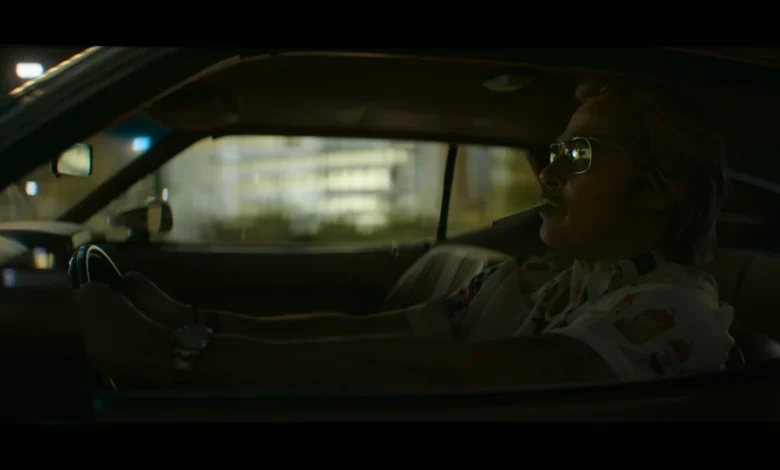
The 40th annual AFI Fest provided cinephiles with an unexpected historical cinema moment in Hollywood last night, delivering a rare and unannounced preview of one of the industry’s most anticipated upcoming holiday releases. Following a packed screening of his 2019 Academy Award-winning crowd-pleaser Once Upon a Time in Hollywood at the historic Chinese Theatre, filmmaker Quentin Tarantino treated approximately 900 fervent fans in attendance to a surprise screening of the first 17 minutes of The Further Mis-Adventures of Cliff Booth.
The event, which was initially framed as a standard retrospective screening and post-film question-and-answer session moderated by critic Jacqueline Coley, rapidly evolved into a major industry milestone. While the primary ticket for the evening was a chance to experience the 2019 feature on the massive iconic screen, Tarantino’s decision to unveil the opening minutes of the upcoming spin-off marked the first public, substantive look at the project since its development was announced.
A Shift in the Director’s Chair: Tarantino and Fincher Collaboration
The Further Mis-Adventures of Cliff Booth picks up the narrative thread of Brad Pitt’s enigmatic, laid-back stuntman character, transporting audiences deep into the gritty, changing landscape of 1970s Hollywood. While Tarantino authored the screenplay, marking a continuation of his extensive literary and cinematic universe, he stepped aside from the director’s chair for this installment. Instead, the script was handed over to acclaimed filmmaker David Fincher, a frequent collaborator of Brad Pitt known for his meticulous, atmospheric visual style in films such as Se7en, Fight Club, and Zodiac.
This unique creative partnership brings together two of the most influential auteurs of modern American cinema, with Tarantino providing the sprawling, hyper-detailed mythology and dialogue-driven world, and Fincher applying his trademark precision to the visual execution. The resulting project, slated for a theatrical release via Netflix on November 25, represents a rare instance of Tarantino scripting a feature-length narrative directed by another major filmmaker.
Expanding the Cinematic Universe and Literary Influences
Based on the 17-minute footage screened for the stunned AFI Fest audience, The Further Mis-Adventures of Cliff Booth signals a distinct tonal shift from the sun-drenched, melancholic optimism of Once Upon a Time in Hollywood. The new film draws heavily from the traditions of hard-boiled crime fiction, reflecting the profound influence of novelists like Elmore Leonard—whom Tarantino famously adapted for 1997’s Jackie Brown—and Raymond Chandler.

Furthermore, the footage introduced a considerably darker iteration of Cliff Booth. Rather than purely reflecting the amiable, albeit lethally capable persona seen on screen in 2019, this version leans closer to the more cold-blooded, psychologically complex characterization introduced in Tarantino’s official 2021 novelization of Once Upon a Time in Hollywood.
Chronologically, the narrative begins in June 1977, following Booth’s return from an extended sojourn in Italy where he had been working to support his fading television star friend, Rick Dalton, played in the original film by Leonardo DiCaprio. In the opening sequences shown at the Chinese Theatre, Booth’s primary professional tether to the film industry is modest: a job as a projectionist at the New Beverly Cinema, a subtle in-joke that drew immediate applause from the Los Angeles audience well aware of Tarantino’s real-life acquisition and ownership of the historic repertory theater. Beyond the projection booth, however, Booth operates as a shadowy fixer and bag man, though the brief footage left the overarching plot points deliberately obscure.
Dialogue, Production Design, and Period Authenticity
True to form, the script showcased characteristic Tarantino dialogue, highlighted within a fictional Blaxploitation film-within-the-film titled Soul Brothers Die Hard. Starring Yahya Abdul-Mateen II, the production within the narrative adds another layer of cinematic pastiche, echoing real-world 1970s cinema while maintaining ambiguous ties to the era’s actual releases, such as the 1973 film Brother on the Run, which occasionally circulated under the alternate title Soul Brothers Die Hard.
The footage also introduced a compelling familial dynamic, showcasing a fraught relationship between Cliff and his father, a pawn shop proprietor portrayed by veteran actor Peter Weller. Enhanced by meticulous period-accurate production design, wardrobe choices, and deep-cut pop culture references, the preview assured attendees that the new film will match the rich historical texture and nostalgic fidelity of its predecessor.
Behind-the-Scenes Lore and Nostalgic Detail
Prior to the surprise screening, the on-stage Q&A session between Tarantino and moderator Jacqueline Coley offered attendees a deep dive into the exhaustive world-building that accompanied the making of Once Upon a Time in Hollywood. Although much of the production history has been documented in comprehensive behind-the-scenes literature, such as Jay Glennie’s coffee table book The Making of Once Upon a Time in Hollywood, Tarantino’s extemporaneous storytelling provided fresh insights into the film’s seven-year legacy.
During the conversation, Tarantino reflected on the casting process, highlighting a poignant piece of Hollywood history that ultimately went unrealized. Veteran actor Burt Reynolds was initially cast in the pivotal role of aging ranch owner George Spahn. While Reynolds formally accepted the role and participated in early table reads and rehearsals with the cast, he passed away prior to principal photography, making his final performance his reading of the Spahn script. The role was subsequently filled in the finished film by Bruce Dern.

Tarantino also elaborated on the intricate Easter eggs embedded within the original film’s background details. He revealed that the voice of the Pan Am flight attendant serving Rick Dalton during his return flight to Italy belonged to Margot Robbie, serving as a subtle nod to her breakout role in the short-lived 2011 television series Pan Am.
Additionally, the director addressed the mythology behind the iconic "Canadian tuxedo" denim outfit worn by Brad Pitt, correcting the common fan consensus that the look was merely a tribute to Tom Laughlin’s character in the 1971 film Billy Jack. According to Tarantino’s internal continuity, the costume carries a literal narrative backstory within the universe: Cliff Booth earned the outfit, along with twenty-five dollars, by stepping in as a stunt double for actor Jeff Cooper on the production of Born Losers after the primary stuntman sustained an injury.
Implications and Broader Industry Impact
Tarantino’s commentary underscored an artistic philosophy defined by obsessive internal world-building, much of which remains entirely hidden from the final cinematic cut.
"The thing is, I’ve got nothing to do but invest in this mythology," Tarantino told the audience. "I invested in it before I did the movie, and I’ve invested in it in the years since I’ve done the movie. The audience doesn’t need to know everything. But it’s nice if I know everything."
The unexpected preview at AFI Fest underscores a strategic distribution and promotional rollout for The Further Mis-Adventures of Cliff Booth. By leveraging the cultural equity of Tarantino’s established cinematic universe and pairing it with Fincher’s directorial acumen, Netflix is positioning the holiday release as a major prestige event. As AFI Fest concludes its run in Hollywood, anticipation for the November 25 theatrical release has intensified, signaling continued commercial and critical vitality for stories originating from the cultural touchstones of 20th-century American entertainment.