At Night Review: Beatrice Gibson Blends Autofiction, Poetry, and Urban Melancholy in an Ambitious Feature Debut

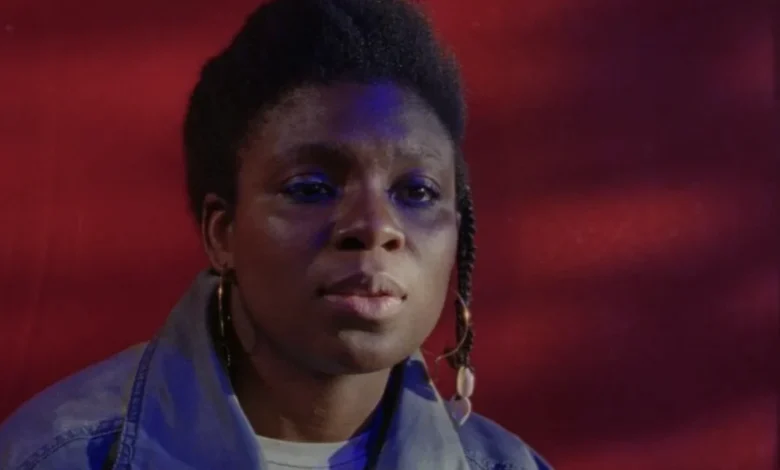
Beatrice Gibson steps behind the camera for her feature-length directorial debut with At Night, a formally daring and deeply reflective cinematic collage that draws inspiration from avant-garde literature, urban sociology, and the complexities of modern womanhood. Following its initial international premiere at the Locarno Film Festival, the film made its North American debut at the 2026 Toronto International Film Festival (TIFF), where it quickly generated discussion among critics and cinephiles for its unique synthesis of narrative fiction, documentary texture, and poetic intervention. As the film currently seeks U.S. distribution, its arrival marks a significant evolution in Gibson’s critically acclaimed career, expanding her long-standing engagement with text, performance, and feminist theory into a sweeping nocturnal exploration of contemporary urban life.
Literary Foundations and Poetic Architecture
The conceptual scaffolding of At Night is firmly rooted in the feminist avant-garde, drawing immediate inspiration from Alice Notley’s monumental 1996 epic poem, The Descent of Alette. The poem, renowned for its distinctive and restrictive punctuation featuring quotation marks interwoven between nearly every couple of words for hundreds of stanzas, serves as a thematic blueprint for the film. Yet, rather than treating Notley’s text as a rigid script to be slavishly adapted, Gibson utilizes it as a foundational frequency.
The film opens with an onscreen text card declaring, “I am a tone of voice,” belonging to Notley. When Notley’s voice subsequently echoes through the soundtrack, her idiosyncratic, breathless cadence bypasses the rigid on-page grammar, batching words in a near-subliminal fashion that sets the auditory mood for the entire project. This intertextual dialogue is a hallmark of Gibson’s artistic practice. Her previous multimedia and short-film works have frequently incorporated the writings of prominent contemporary poets and writers, including CA Conrad, Eileen Myles, and Kathy Acker—whose postmodern classic Don Quixote also informs the narrative architecture of At Night.
Rather than serving as a straightforward narrative adaptation, At Night functions as an ideological continuation of Notley’s underworld journey. The subterranean photography, captured with striking nocturnal clarity by renowned cinematographer Ben Rivers, explicitly recalls the recurring figure of the “man in the subway” from The Descent of Alette. Rivers’ camera transforms mundane urban infrastructure—gleaming dive bars, dimly lit back alleys, and nondescript storefronts—into a liminal, almost magical landscape of forgotten spaces.
Narrative Progression and Character Dynamics
The film’s narrative framework follows B, played by Gibson herself, as she navigates the exhausting and isolating process of scouting locations for a film that perpetually threatens to remain unmade. Operating in a state of emotional displacement, B is separated from her partner and young daughter, an absence that manifests as a pervasive despondency. In a poignant voicemail message left early in the film, B laments her inability to find what she is truly searching for, noting that she has accumulated countless aesthetically pleasing images but little substantive truth. “It is easy to make good images,” she observes with characteristic self-awareness.

Amidst these nocturnal wanderings, B encounters Didi, portrayed by Diocouda Diaoune, an immigrant and single mother living within the constraints of local social housing. The two women share a complex history; once close friends, their relationship is now strained by the undeniable discrepancies in their respective racial and class trajectories.
This underlying tension erupts during an extended sequence inside a local convenience store. B, paralyzed by self-flagellating guilt over her own professional and socioeconomic mobility in contrast to Didi’s daily struggles, attempts to articulate her remorse. Didi’s response cuts directly to the core of the film’s socio-political critique: “You think you win, and you think I lose… but I don’t see the point of playing a game where you’re always winning.”
Rather than resolving these structural inequalities through a neat, cinematic reconciliation, Gibson and Diaoune allow the melancholy to linger. The characters are forced to sit quietly with their discomfort as the night stretches onward past the corner shop, pushing them toward new streets and a broader network of acquaintances.
Ensemble Structure and Autofictional Conversations
As the narrative expands, At Night transforms from a solitary character study into a polyphonic chorus featuring six women from diverse walks of life. The ensemble comprises non-professional actors whose real-world identities encompass artists, psychologists, mothers, wives, immigrants, and sex workers.
The undisputed centerpiece of the film is a ten-minute conversational sequence set inside a restaurant. As the women exchange intimate, unscripted anecdotes concerning their sex lives, reproductive health, and the intersecting pressures of gender, race, and class, a handheld camera whips rapidly between them. The camera movements consistently lag slightly behind the dialogue, creating a spontaneous, observational aesthetic that evokes the direct-cinema methodologies of documentary master Frederick Wiseman.
Among the most resonant moments in this ensemble dialogue are passing reflections on vulnerability—specifically, the experience of being seen naked under a bedroom’s unforgiving “big light.” This universally recognized yet rarely articulated domestic detail anchors the high-concept theoretical discussions in tangible, lived reality.

While the film was meticulously planned and devised during pre-production, the seamless integration of street videography and extended conversational rehearsals ultimately grants the project the authentic weight of a non-fiction work. The brilliance of At Night lies not merely in what these women articulate, but precisely in how they articulate it. Gibson captures an intrinsic, deeply human intimacy that transcends the necessity of subtitles, reflecting friendships forged over decades of shared survival and mutual understanding.
Soundscape, Score, and Subversion
The auditory landscape of At Night plays an indispensable role in maintaining its haunting atmosphere. In addition to Notley’s spectral voiceovers, the film incorporates ambient field recordings of muffled conversations, the mechanical screech of metro cars, and a brilliant, dissonant score composed by Elvin Brandi.
The film builds toward a striking emotional and thematic climax featuring a performance by queer artist and musician Adam Christensen, who performs under the alter ego Madam. Christensen’s presence—marked by a performance style that evokes the moody, unsettling ambiance of David Lynch’s cinema—deliberately disrupts traditional audience expectations. Gibson affords Christensen the same rigorous, empathetic cinematic attention as he recounts personal experiences of harassment stemming from his non-conforming gender expression.
Broader Implications and Thematic Analysis
At its core, At Night grapples with an impossible yet urgent question: Is there a unified essence to womanhood? Throughout the film, Gibson’s surrogate longs to discover or construct a sanctuary where women can coexist free from the divisions of identity, class, and material condition. Ultimately, she finds that no such monolithic space exists.
The notion of a divine feminine refuge or a gender-separatist safe haven is methodically dismantled as the harsh nocturnal light hits the camera lens. Instead, At Night offers an invitation to wander through these contradictory, fragmented images of contemporary womanhood, accepting them as part of an incomplete, ongoing collage.
In doing so, the film echoes the concluding movement of the Alice Notley passage that inspired its creation: “Warming, shifting, pausing, changing, including, asserting, exulting, including, including, turning and including.” Through its refusal of easy answers and its embrace of collective vulnerability, At Night establishes Beatrice Gibson as a formidable, singular voice in contemporary independent cinema.
Related posts: