Helen Mirren identifies Patricia Highsmith as her most challenging biographical role to date

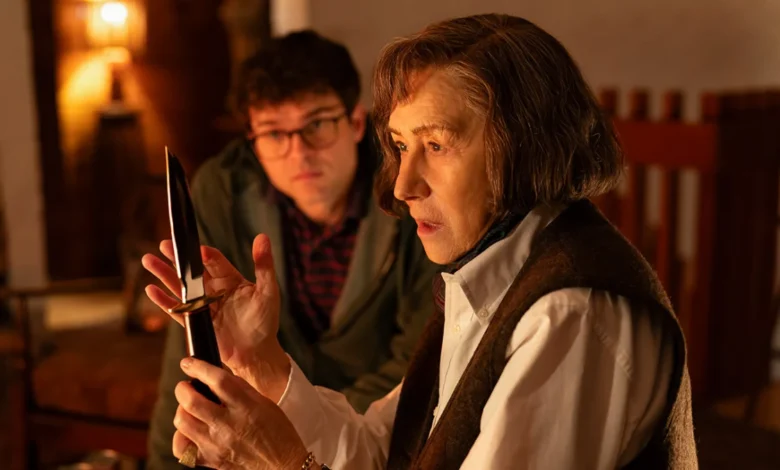
The landscape of modern cinema is frequently defined by the transformative power of its actors, yet few performers possess a portfolio as storied as Dame Helen Mirren. With a career spanning over five decades, Mirren has become the industry’s preeminent specialist in portraying historical figures. However, even for an Oscar-winning veteran accustomed to donning the mantle of monarchs and political titans, her latest endeavor—embodying the complex and enigmatic author Patricia Highsmith in Anton Corbijn’s thriller A Talent for Murder—has proven to be her most formidable psychological undertaking.
Speaking at The Hollywood Reporter’s Studio at the 1 Hotel during the Toronto International Film Festival (TIFF), an event supported by Canada Goose, Mirren offered a candid assessment of the difficulties inherent in capturing the essence of the woman behind The Talented Mr. Ripley. While audiences have long marveled at her ability to inhabit the gravitas of Queen Elizabeth II or the steel-willed determination of Golda Meir, Mirren suggests that Highsmith presents an entirely different class of challenge—one rooted in profound personality clashes and the gritty, unvarnished realities of the author’s final years.
The Anatomy of a Difficult Portrayal
For many, the appeal of a biographical film lies in the bridge between the actor’s persona and the historical figure’s public record. Mirren, however, emphasizes that this specific role required her to move past the comfort of historical reverence.
"I would say Patricia might be one of them, honestly, because she is so different from how I am," Mirren remarked during the TIFF panel. "I could sort of identify with Her Majesty, the Queen, to a certain extent. Golda Meir—on the realm of difficulty, I would say Queen, Golda, and Patricia Highsmith probably is the most difficult because of the way she’s portrayed in the film."
The difficulty, as Mirren frames it, stems from the narrative’s focus on the twilight of Highsmith’s life. Rather than a sanitized biopic, the film delves into a period where the author was notoriously abrasive, deeply reclusive, and, in Mirren’s words, "very fucked up." This necessitates an actor to lean into aspects of human behavior that are inherently unlikable, a departure from the more sympathetic or heroic figures Mirren has previously brought to the screen.
A Career Built on Historical Reenactment
To understand the weight of Mirren’s claim, one must look at the breadth of her biographical work. Her filmography serves as a masterclass in the craft of mimicry and psychological identification. Her Academy Award-winning turn in The Queen (2006) established a benchmark for royal portraiture, requiring a subtle, internalized performance that conveyed the weight of a nation. This was followed by:
- Elizabeth I (2005): A television miniseries that allowed her to explore the Tudor monarch’s vulnerability and political savvy.
- The Passion of Ayn Rand (1999): An examination of the firebrand philosopher that required intellectual rigor and ideological conviction.
- Woman in Gold (2015): The story of Maria Altmann, which balanced historical trauma with modern legal advocacy.
- Golda (2023): A recent performance as the Israeli Prime Minister, demanding the physical and emotional portrayal of a leader navigating the existential threat of the Yom Kippur War.
- Hitchcock (2012): Her role as Alma Reville, Alfred Hitchcock’s wife, provided a unique look at the collaborative and often strained dynamics of creative partnerships.
In a 2015 interview with The Hollywood Reporter, Mirren articulated the philosophy that guides these roles. She noted that while the external requirements—the gait, the voice, the hand gestures—are essential for credibility, the "essential journey" remains consistent with fictional characters. It is a process of imagination, where the actor must synthesize documented facts with an intuitive understanding of the subject’s internal life to tell a cohesive, compelling story.
The Narrative Arc of A Talent for Murder
Directed by the visually distinctive Anton Corbijn, A Talent for Murder is poised to be one of the most anticipated thrillers of the autumn season. The film serves as an adaptation of Joanna Murray-Smith’s 2014 stage play, Switzerland.
The plot follows a young man, portrayed by Alden Ehrenreich, who is dispatched to Switzerland by Highsmith’s American publisher. His mission is a high-stakes professional gamble: convince the cynical, reclusive author to pen one final entry in the Ripley series. The narrative dynamic—a clash of generations and motivations—is further bolstered by a supporting cast that includes Olivia Cooke and Juliet Stevenson.
The production represents a shift for Corbijn, who has transitioned from his roots in music photography and video direction to a career as a celebrated filmmaker known for mood, atmosphere, and the examination of isolated figures. The choice of Mirren to anchor this project suggests a focus on character-driven suspense rather than traditional genre tropes.
Chronology and Production Context
The development of the film has been a careful, deliberate process. The original stage play, Switzerland, premiered in Sydney in 2014 and garnered critical acclaim for its sharp, witty, and often dark interrogation of Highsmith’s psyche. The transition to the screen, led by Murray-Smith’s own adaptation, maintains the claustrophobic tension of the original setting.
The film is currently slated for a theatrical release on October 23, positioning it well for the awards season conversation. By releasing in late October, the studio—and by extension, the production—is signaling confidence in the quality of the performances and the film’s potential for critical recognition.
Analytical Implications: The Responsibility of Biography
When an actor of Mirren’s caliber speaks about the "responsibility" of playing real people, it reflects the evolving standards of the biopic genre. In recent years, audiences and critics alike have moved away from hagiography—the practice of treating historical figures as saints—toward a more clinical, psychological realism.
Mirren’s willingness to portray Highsmith’s "abrasive" and "reclusive" nature is indicative of this trend. There is an inherent risk in depicting such a polarizing figure; Highsmith herself was known for her complex personal views and a prickly public persona. By choosing to highlight these flaws, Mirren and Corbijn are not merely attempting to replicate a life, but to explore the darker corners of the creative spirit.
This approach has significant implications for how we view historical figures in contemporary cinema. When a performer stops trying to "sell" the audience on the likability of a character and instead focuses on the objective reality of their behavior, the storytelling becomes more authentic. It moves the film from a mere reenactment to a character study that can reveal truths about the subject that a standard documentary or biography might overlook.
The Intersection of Performance and Perception
The reception of A Talent for Murder will likely hinge on the audience’s willingness to embrace a protagonist who is not designed to be admired. Mirren’s career is a testament to the fact that her audiences are, in fact, prepared for this. From her earliest days in the Royal Shakespeare Company to her current status as a global icon, she has consistently chosen roles that challenge her own comfort zone.
The collaboration with Anton Corbijn, whose aesthetic is often described as stark and contemplative, provides the perfect environment for this type of performance. If the early discussions at TIFF are any indication, the film is expected to be a masterclass in tension, anchored by a performance that strips away the glamour of stardom to reveal the raw, often uncomfortable reality of a brilliant, troubled mind.
As the October 23 release date approaches, the industry remains focused on how Mirren’s portrayal will influence the broader discourse around Highsmith’s legacy. By confronting the "difficulty" of the subject head-on, Mirren is not just playing a character; she is contributing to a critical re-evaluation of one of the 20th century’s most enigmatic literary voices. In the final analysis, the project serves as a reminder that the most compelling stories are often found not in the triumphs of the celebrated, but in the complex, messy, and deeply human moments that define the lives behind the work.