Mahershala Ali and Bassam Tariq Pivot from Marvels Blade to the Visceral Thriller Your Mother Your Mother Your Mother

The trajectory of Mahershala Ali’s career in the mid-2020s serves as a compelling case study in the volatile nature of modern Hollywood franchise development and the creative pivot toward more intimate, character-driven storytelling. After years of anticipation surrounding his attachment to Marvel Studios’ reboot of Blade—a project that became a symbol of development hell within the Disney corporate structure—Ali has successfully redirected his creative energy toward a different kind of physicality. His collaboration with filmmaker Bassam Tariq on the newly released film Your Mother, Your Mother, Your Mother represents not merely a professional alternative to a cancelled blockbuster, but a deliberate expansion of Ali’s range as a performer.
The Blade Saga: A Timeline of Stalled Ambition
The project that was intended to bring the iconic vampire hunter into the Marvel Cinematic Universe (MCU) has faced an unprecedented series of setbacks since it was first announced at San Diego Comic-Con in 2019. Mahershala Ali, a two-time Academy Award winner, was cast in the titular role to much fanfare, signaling a high-prestige direction for the character. However, the production was plagued by a revolving door of writers and directors.
Bassam Tariq was originally tapped to direct the film, bringing a distinct indie sensibility to the project. Yet, as the production faced repeated delays—exacerbated by industry-wide disruptions, including the 2023 WGA and SAG-AFTRA strikes—the creative vision for the film became increasingly fragmented. By the time the project was officially removed from Disney’s release calendar in 2024, it had become a cautionary tale regarding the complexities of integrating high-concept IP with the rigorous, often rigid, demands of a shared cinematic universe. Ali, who had spent years training and preparing for the strenuous action requirements of a Marvel lead, found himself at a crossroads when he officially departed the production in July.
A Creative Synergy Born from Adversity
The departure from the Blade project did not result in a loss of momentum for Ali. Instead, the groundwork he had laid with Tariq during their early pre-production discussions for the Marvel film served as the genesis for their subsequent collaboration. In Your Mother, Your Mother, Your Mother, which premiered at the Toronto International Film Festival (TIFF) on September 12, Ali finds a role that balances the emotional depth he is known for with the intense, kinetic requirements of an action-oriented narrative.
At The Hollywood Reporter’s Studio at 1 Hotel during TIFF, Ali reflected on the transition, noting that the intensity of the new script resonated with him on a fundamental level. "I think it spoke to me so deeply," Ali remarked. "It offered up an opportunity to engage and commit to the type of difficult I want to commit to because this work is gonna be hard regardless—whether you’re in a good film or a bad film. It checked sort of an action, movement, physicality box for me that I had been really yearning to really invest energy in."
Character, Conflict, and Narrative Stakes
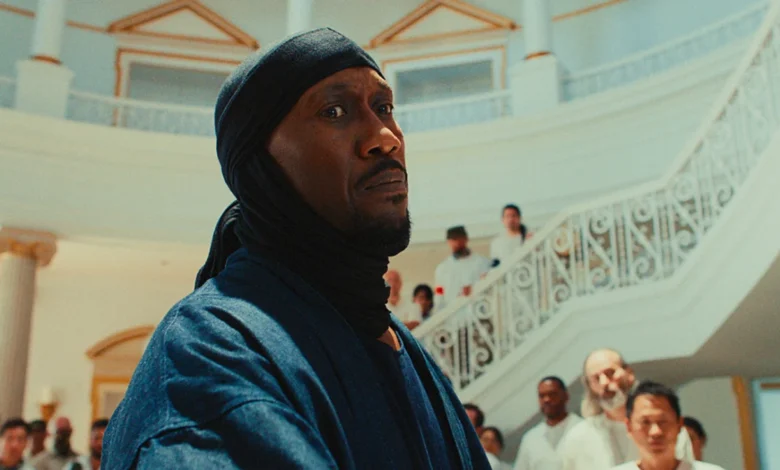
In Your Mother, Your Mother, Your Mother, Ali portrays Latif, a devout Muslim and contract killer navigating the complex social landscape of Houston. The film, which has since been picked up by Amazon MGM, functions as a high-stakes survival thriller. Following the death of his wife, Latif must protect his three children while contending with a formidable antagonist: Haun Yoon, played by John Cho.
The character of Haun Yoon—a militant church leader and Army veteran—adds a layer of ideological conflict that elevates the film beyond a standard genre exercise. The narrative serves as a meditation on the pressures of fatherhood and the existential anxiety of a provider who feels constantly inadequate. Bassam Tariq has described the film as being deeply personal, rooted in his own experiences as a father and the universal, often crushing, weight of the responsibility to protect and sustain one’s family.
For Ali, the script was an immediate pull. "Sometimes, you read things and energy starts going off," Ali explained. "It just resonates in a way where you feel called to it—almost as if you don’t even have a choice." The challenge for the production, he noted, was the thematic synthesis. The film blends the gritty, grounded nature of a crime thriller with the intimate, often messy, dynamics of family life. Ali praised Tariq’s ability to "stitch that world together in such a fascinating way," emphasizing that the film’s disparate elements—faith, violence, and domesticity—are woven into a cohesive whole.
Expanding the Physicality of Performance
While the Blade project remained a "what if" scenario in terms of on-screen action, Ali has utilized the skills he honed for that role in other high-profile projects. His participation in the second season of HBO’s Task has been another venue for this newfound focus on physicality. Filming for the Emmy-nominated series began in July, allowing Ali to continue exploring the limits of his screen presence.
"I’ll just say that there is some physical work in that as well," Ali teased during the TIFF panel. "It’s challenging in a very different way, but I’m getting through it." This pivot toward physical performance suggests a shift in the actor’s professional priorities. Known primarily for his interior, understated performances in films like Moonlight and Green Book, Ali is increasingly seeking roles that demand a broader physical vocabulary.
Industry Implications and the Shift Away from Franchises
The transition of talent from massive franchise projects to mid-budget, auteur-driven films like Your Mother, Your Mother, Your Mother reflects a broader trend in the entertainment industry. As audiences show signs of "superhero fatigue" and studios reassess the viability of bloated production budgets, high-caliber actors are increasingly looking toward projects that offer greater creative agency.
The failure of the Blade project to reach production highlights the inherent risks of "top-down" creative management. When projects are built around a release date rather than a script, the risk of collapse increases significantly. Conversely, the success of the Ali-Tariq partnership suggests that when a filmmaker and an actor align on a shared vision—even one as challenging and genre-bending as this thriller—the result is often a more resonant and sustainable piece of art.
Furthermore, the involvement of Amazon MGM in the distribution of the film points to the shifting landscape of film financing. As traditional studios pull back, streamers and tech-backed studios are increasingly becoming the primary homes for prestige films that occupy the middle ground between low-budget indie projects and multi-hundred-million-dollar tentpoles.
Conclusion: A Future of Intentional Choices
Mahershala Ali’s current trajectory suggests an actor who is no longer willing to wait for the machinery of a massive studio to align. By embracing roles that prioritize emotional stakes and physical rigor, he is successfully navigating the transition from a star who is "attached" to a project to an artist who is actively building a diverse and demanding filmography.
The success of Your Mother, Your Mother, Your Mother at TIFF, coupled with the anticipation surrounding his work in Task, positions Ali as a performer who remains at the top of his craft, regardless of the size of the project. His ability to find "the type of difficult" work he craves, even in the wake of professional disappointment, underscores the discipline and focus that have characterized his rise to stardom. As the industry continues to evolve, Ali’s commitment to substantive storytelling—even when it involves complex, dangerous, and morally grey characters like Latif—ensures that his contributions to cinema will remain as vital and compelling as ever. Whether he is wielding a blade in a vampire epic or navigating the streets of Houston as a man protecting his legacy, Ali remains one of the most watchable and deliberate actors working in film today.