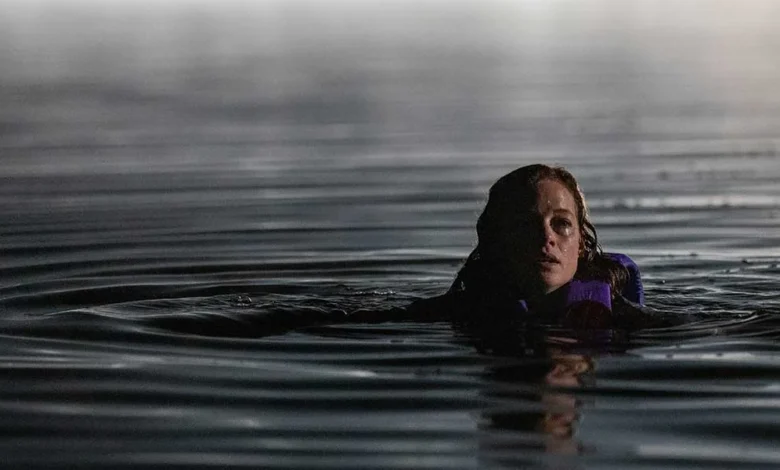
The survival slasher film River, directed by Joshua Giuliano and starring Jane Levy, Jessica Rothe, and Max Mattern, made its world premiere at the 2026 Toronto International Film Festival, positioning itself as a visually arresting entry into the modern horror genre. Distributed jointly by the Independent Film Company and Shudder, the feature debut combines traditional slasher tropes with a meticulous aesthetic approach, contrasting visceral brutality with lush, atmospheric cinematography by Nick Matthews.
Plot Structure and Opening Sequences
River subverts conventional narrative openings by introducing its antagonist’s initial victims entirely through auditory cues before transitioning to visual exposition. Set against a backdrop of dense forest clearings and vintage Americana imagery, the film’s opening sequence establishes an unsettling juxtaposition: a serene, sun-drenched natural environment invaded by sudden, unprovoked violence.
Following this cold open, the narrative shifts to its primary subjects: three estranged siblings—Lucy (Jane Levy), Carla (Jessica Rothe), and Drew (Max Mattern)—who have reunited to fulfill a somber familial duty. Their father has recently died, and the siblings have gathered to scatter his ashes on his favorite river using his vintage boat.
The character dynamics are immediately established through contrasting personalities and grief responses. Lucy, portrayed with grounded resolve by Levy, assumed the responsibilities of primary caregiver during their father’s final days, organizing the memorial excursion. Carla, played by Rothe, represents the defiant eldest sibling who severed ties with the household years prior. Mattern rounds out the trio as Drew, the sensitive and taciturn youngest sibling who attempts to bridge the emotional divides within the family.
Grief, Tension, and the Inciting Incident

Prior to embarking on the river journey, the siblings view home video footage in their childhood home, grounding the characters in a shared, albeit fractured, past. Once on the water, equipped with the father’s remains, basic provisions, and rising psychological friction, the memorial quickly devolves into an emotional confrontation.
Lucy maintains a traditional, respectful perspective on their late father, while Carla openly characterizes him as an abusive adulterer, highlighting deep-seated familial rifts. Drew offers a levity-infused recollection centered around their father’s appreciation for cinematic media, temporarily diffusing the rising hostilities.
Genre conventions take over when the mechanical integrity of the boat fails. Lacking cellular reception and a functional radio, the siblings become stranded. Carla’s impulsive decision to swim toward the shoreline serves as the inciting incident that draws the attention of the film’s primary antagonist, initiating a protracted survival struggle.
Antagonist Design and Cinematic Craftsmanship
Giuliano’s screenplay utilizes familiar character archetypes while emphasizing economic storytelling and pacing. The antagonist, portrayed by 6-foot-8 actor Dane DiLiegro, functions as a silent, monolithic force of nature. Wearing a grotesque mask crafted from the face of a prior victim, the killer operates without complex motivations or personal ties to the protagonists, embodying the classic slasher archetype of indiscriminate lethality.
Despite the heavy focus on survival and physical violence, critical reception of River has emphasized its visual strengths. Cinematographer Nick Matthews utilizes natural lighting and widescreen compositions to elevate the river setting from a simple backdrop to a prominent atmospheric element. The deliberate contrast between the verdant landscape and the high-contrast violence underscores the directorial intent to merge exploitation-era horror aesthetics with contemporary cinematic composition.
Production and Distribution Background

River marks a significant milestone for director Joshua Giuliano, transitioning the filmmaker from short-form projects to a feature-length production. The film’s selection for the 2026 Toronto International Film Festival places it within a competitive slate of genre and independent cinema showcasing global talent.
Following its festival circuit run, the Independent Film Company and Shudder have slated the film for a commercial release. While platform-specific distribution through Shudder typically targets home-viewing audiences, critics and industry analysts have noted that the film’s visual fidelity benefits substantially from theatrical exhibition formats.
Broader Implications for the Slasher Genre
The release of River reflects a broader industry trend wherein independent filmmakers utilize traditional genre frameworks—such as the isolated wilderness slasher—to explore familial trauma, generational conflict, and psychological endurance. By anchoring high-concept violence within a grounded exploration of sibling grief, the film bridges the gap between elevated psychological horror and exploitation-derived visceral thrills.
The performances of established genre actors Jane Levy and Jessica Rothe lend critical credibility to the production, reinforcing the viability of character-driven narratives within low-to-mid-budget horror frameworks. As studios continue to invest in curated horror platforms like Shudder, films such as River demonstrate the commercial and artistic potential of stylistic regional horror in contemporary cinema.