How the Creators of Buddy Conquered the Zeitgeist with a Nostalgia-Fueled Horror-Comedy

The anatomy of a modern cinematic viral sensation rarely resembles a straightforward trajectory from script to screen. In the contemporary media landscape, sleeper hits that suddenly seize the cultural zeitgeist are frequently the result of years of meticulous creative positioning, strategic audience priming, and multi-platform marketing innovation. A prime example of this phenomenon materialized with the 2026 release of Buddy, a horror-comedy directed by Casper Kelly that centers on a deeply flawed, melancholic 1990s television show mascot harbouring a profoundly dark side.
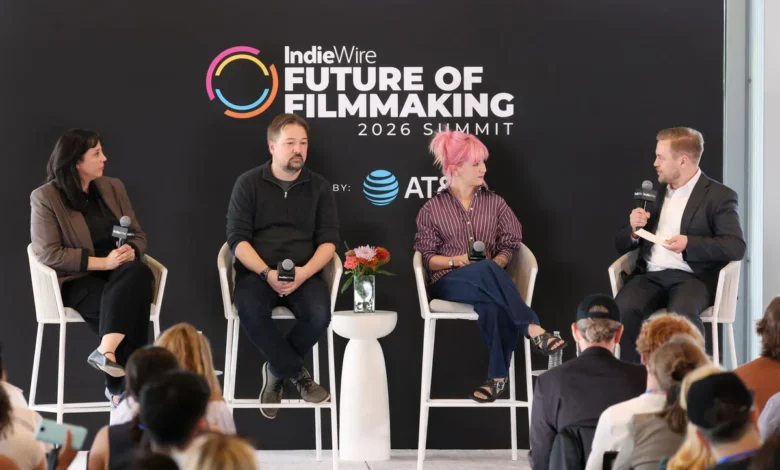
Examining the mechanics behind the film’s sudden ubiquity reveals an intricate intersection of nostalgic subversion, emotional character architecture, and a brilliant marketing campaign that weaponized collective memory. Recently, at IndieWire’s Future of Filmmaking Summit in Los Angeles—an event presented by AT&T Untold Stories in collaboration with the Tribeca Festival—key architects behind the project gathered to dissect the exhaustive behind-the-scenes labor required to manufacture an overnight success. Producer Tracy Rosenblum, co-writer Jamie King, and Roadside Attractions Head of Digital Marketing Melissa Yerou offered an illuminating look into how Buddy transformed from an abstract creative impulse into a cultural flashpoint.
The Genesis of a Modern Monster
The foundational ethos of Buddy traces its lineage directly to Casper Kelly’s distinctive brand of absurdist, unsettling comedy, which previously yielded viral masterpieces like the Adult Swim sensation Too Many Cooks. Kelly’s signature style relies heavily on the sudden puncturing of wholesome nostalgia with jarring, surreal horror. However, transitioning this niche aesthetic from short-form broadcast television into a sustainable, feature-length cinematic narrative presented a formidable structural challenge.
To bridge this gap, the production brought on co-writer Jamie King, whose background included penning projects for Disney. King’s mandate was clear yet demanding: take Kelly’s anarchic sensibilities and anchor them with genuine emotional resonance capable of capturing a mainstream theatrical audience.
During the summit panel, King elaborated on the collaborative triangulation required to make the project succeed. "I knew, as a fan of Casper’s and all of his Adult Swim work, that he would make it really funny. And I knew my friends at BoulderLight would make it really scary. So I thought that if I can help bring that heart element, that checks all three boxes, and that’s what makes a great movie," King explained.

This synthesis of horror, comedy, and heart ensured that Buddy the Unicorn transcended the traditional boundaries of the creature feature or mascot horror subgenre. Rather than functioning as a mere fuzzy avatar for indiscriminate bloodshed, Buddy was constructed as a complex, three-dimensional figure caught in a tragic spiral.
"He was always very clear that Buddy was not one of those mascot horror movies you’ve seen before, where Buddy is just a fuzzy version of a slasher villain," King noted, emphasizing the character’s internal conflict. "He’s someone who could be a good person, but he’s just gone down the wrong road."
Producer Tracy Rosenblum echoed this sentiment, rejecting reductive descriptions of the film’s protagonist during the panel discussion. "I resent you calling him a homicidal maniac," Rosenblum joked, before turning serious. "He has depth, and he has shame, and he’s not a good guy, but I think that’s what makes him special."
Engineering a False Memory: The Marketing Strategy
While the screenplay focused on giving the titular character psychological depth, the distribution and marketing teams at Roadside Attractions faced the unique task of introducing this bizarre premise to the public without spoiling the film’s sinister twists. Under the leadership of Melissa Yerou, the digital marketing campaign bypassed traditional trailer rollouts in favor of an immersive, interactive alternate reality approach.
Yerou and her team recognized that the emotional weight of Buddy’s character could be used to foster immediate, uncritical audience affection. They launched a social media campaign designed to simulate the resurrection of a forgotten 1990s children’s television relic. By having Buddy interact directly with accounts representing classic, wholesome 90s brands and properties, the marketing team manufactured a profound sense of shared nostalgia.
"We followed Care Bears and Barney and all these tried and true properties. We just thought, ‘What if we had Buddy bust into the conversations, how would they react?’" Yerou detailed during the panel.

The strategy relied on aggressive, personalized engagement. Rather than broadcasting standardized promotional assets, the social media team adopted Buddy’s distinct voice, responding to virtually every comment left by bewildered and amused users. This hyper-active engagement strategy triggered a psychological phenomenon among the audience, cultivating a false memory that led many internet users to genuinely question whether Buddy had been a cancelled television show from their childhoods that had somehow slipped through the cracks of collective remembrance.
By the time audiences realized that the fuzzy mascot possessed a homicidal streak, they were already emotionally invested in his journey, creating a rare symbiotic relationship between viral internet culture and traditional box office momentum.
The Broader Implications for Independent Filmmaking
The trajectory of Buddy offers vital lessons for the broader independent film ecosystem, particularly at a time when studios and distributors struggle to cut through the deafening noise of the digital attention economy. The collaboration between indie creators, genre specialists, and innovative marketers highlights a changing paradigm in how original intellectual property must be cultivated to survive.
Historically, sleeper hits were often discovered organically by audiences after release. In the current era, however, such phenomena are increasingly engineered through precision-targeted campaigns that treat the audience not merely as passive consumers, but as active participants in the mythology of the film. By building a character with internal contradictions—humor, charisma, sadism, and deep-seated remorse—the creators of Buddy provided marketing teams with raw material that felt authentic enough to trick the internet into believing a fiction.
Furthermore, discussions at the IndieWire Future of Filmmaking Summit underscored the ongoing evolution of storytelling platforms. Events like the summit, which is presented by AT&T Untold Stories—a multi-year collaboration with the Tribeca Festival that provides $1.2 million in funding, mentorship, and comprehensive support to emerging cinematic voices—highlight the critical infrastructure required to lift unconventional projects from concept to completion.
As the industry looks toward the future, the success of Buddy serves as a blueprint for marrying auteur-driven eccentricity with populist appeal. It demonstrates that modern audiences do not necessarily reject high-concept absurdity; rather, they crave it, provided the underlying storytelling possesses the emotional gravity required to make the absurd feel heartbreakingly human.