The Artemis Generation Prepares for Liftoff: Building the Future Space Workforce Through STEM Education and Industry Expansion

The rapid commercialization of low-Earth orbit, combined with ambitious international missions targeting the lunar surface and deep-space exploration, has triggered an unprecedented hiring boom across the aerospace sector. As the boundaries of space exploration expand further than ever before, industry leaders, educational institutions, and government agencies face a critical challenge: cultivating a robust, highly skilled STEM (Science, Technology, Engineering, and Mathematics) pipeline capable of sustaining the "NewSpace" economy. This burgeoning workforce imperative was recently explored in depth on Episode 233 of the podcast This Week in Space, where co-hosts Tariq Malik and guest host Rick Jenet sat down with Dr. Amanda Smith-Hackler to discuss how the next generation of engineers, scientists, and technicians is being prepared to inherit the cosmos.
The NewSpace Labor Crunch and the Artemis Generation
The aerospace landscape has transformed dramatically over the past two decades. Historically dominated by government agencies like NASA and a handful of prime defense contractors, the space industry now encompasses a vibrant ecosystem of private commercial enterprises, nimble startups, and international partnerships. From reusable rocket fleets and private space stations to lunar cargo logistics and planned Martian outposts, the commercial space market is experiencing exponential growth.
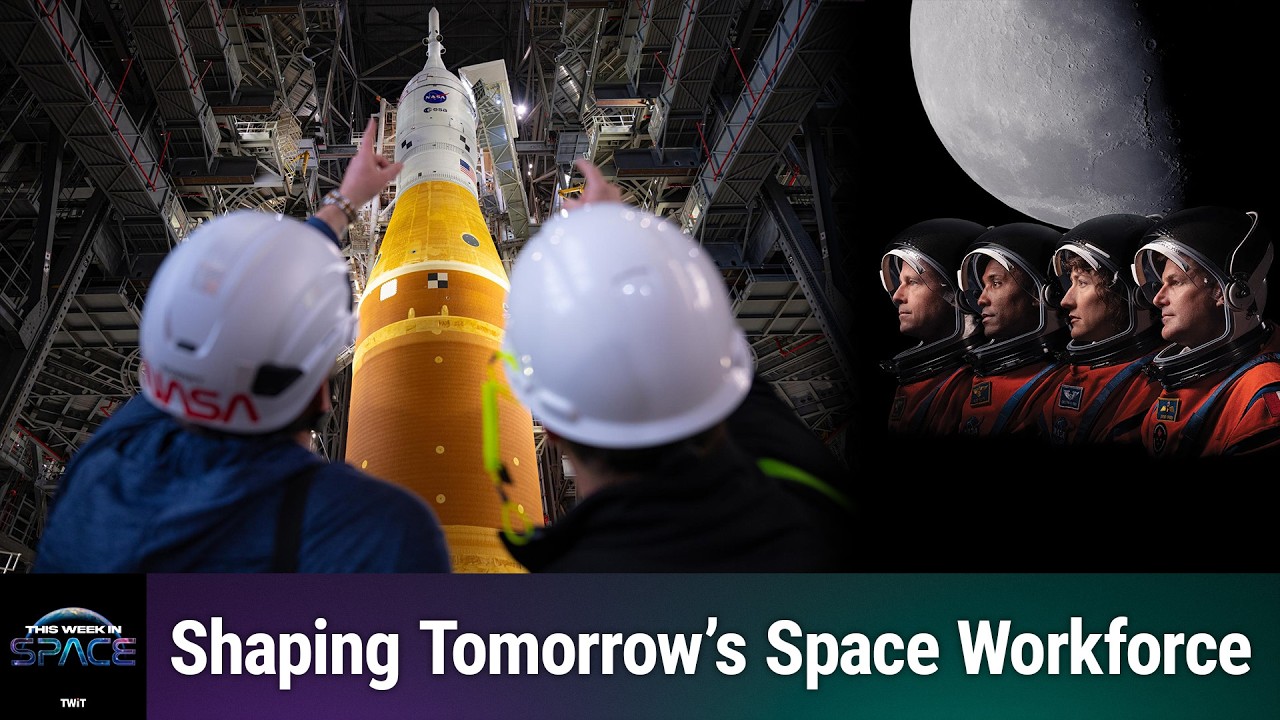
However, this rapid expansion has created a massive talent deficit. Engineering firms, satellite manufacturers, launch providers, and research laboratories are competing fiercely for top-tier talent. Enter the "Artemis Generation"—a moniker affectionately given to the demographic of students and young professionals who are coming of age alongside NASA’s Artemis program, which aims to return humans to the Moon and establish a sustainable lunar presence.
During their appearance on This Week in Space, Malik, Jenet, and Dr. Smith-Hackler—who serves as the Director of Education for the Universities Space Research Association (USRA) and Principal Investigator for the Air Force Research Laboratory (AFRL) Scholars and STEM Workforce Development Programs—analyzed the mechanics of feeding this vast hiring pipeline. Dr. Smith-Hackler detailed the targeted initiatives designed to bridge the gap between academic classrooms and the cutting-edge floors of aerospace facilities.
Bridging Academia and Industry: Programs Driving the Pipeline
Developing a specialized aerospace workforce requires more than traditional classroom instruction; it demands hands-on experience, mentorship, and direct exposure to mission-critical environments. Programs like the AFRL Scholars and USRA workforce development initiatives play a pivotal role in this ecosystem. By placing undergraduate and graduate students directly into research laboratories and engineering departments, these programs demystify aerospace careers and accelerate professional readiness.
Data from educational foundations and labor market analyses underscore the urgency of these interventions. The demand for aerospace engineers, software developers proficient in telemetry, materials scientists capable of withstanding extreme thermal environments, and systems engineers has outpaced general labor market growth. According to recent labor statistics, employment in aerospace engineering is projected to grow faster than the average for all occupations over the decade, driven largely by commercial space flight, satellite internet constellations, and defense modernization.
Dr. Smith-Hackler emphasized that modern space companies are not merely looking for theoretical knowledge; they require problem-solvers who can adapt to fast-paced, iterative engineering cycles reminiscent of Silicon Valley culture applied to heavy rocketry. This cultural shift means educational pipelines must foster interdisciplinary collaboration, risk tolerance, and rapid prototyping skills early in a student’s academic journey.
A Historical Chronology of Space Workforce Evolution
To understand the current state of aerospace recruitment, it is instructive to examine how the industry’s labor force has evolved alongside geopolitical and technological milestones:
- The Apollo Era (1961–1972): Driven by the Cold War space race, the National Aeronautics and Space Administration (NASA) relied on a centralized, highly structured workforce of government civil servants and prime contractors. Education initiatives during this era focused heavily on traditional mechanical, electrical, and aerospace engineering disciplines.
- The Space Shuttle and International Space Station Era (1981–2011): The focus shifted toward routine orbital operations, international cooperation, and reusable spacecraft maintenance. The workforce stabilized around long-term maintenance contracts, bureaucratic oversight, and specialized technical skill sets.
- The Birth of NewSpace (2002–2015): The rise of privately funded ventures like SpaceX, Blue Origin, and Rocket Lab disrupted the traditional cost-plus contracting model. These companies injected a startup mentality into aerospace, demanding a younger, more agile workforce willing to embrace trial-and-error engineering.
- The Artemis and Commercial LEO Era (2016–Present): Today, the industry operates on a hybrid model where government agencies act as anchor customers for commercial providers. The workforce demand has diversified drastically, requiring expertise not only in rocketry but also in space law, planetary resource extraction, orbital debris management, and advanced artificial intelligence.
Economic and Societal Implications of the Space STEM Boom
The push to expand the space STEM pipeline carries profound implications for the broader economy and society. Beyond the obvious technological spin-offs—such as advanced water filtration, medical imaging improvements, and telecommunications breakthroughs—investing in aerospace education serves as a powerful catalyst for national economic competitiveness.
Analysts note that enthusiasm for space exploration acts as a "gateway drug" for broader scientific literacy among K-12 students. When children see reusable rockets landing vertically or witness high-resolution imagery from the James Webb Space Telescope, their engagement with mathematics and the physical sciences spikes. By channeling this inspiration into structured workforce development programs, nations can secure a technical workforce equipped to tackle terrestrial challenges as well, ranging from climate change mitigation to renewable energy grid management.
However, challenges remain. Critics and equity advocates point out that access to high-quality STEM education and aerospace internships is not evenly distributed across socioeconomic and geographic lines. Ensuring that the Artemis Generation truly reflects the global population requires intentional outreach to underrepresented communities, rural school districts, and minority-serving institutions. Leaders like Dr. Smith-Hackler have increasingly advocated for expanded fellowship and mentorship frameworks designed to lower barriers to entry for historically marginalized groups in STEM.
Bringing Space Home: Consumer Scale Models and Public Engagement
While high-level workforce development and institutional programs build the rockets of tomorrow, public engagement continues to play a vital role in maintaining cultural momentum. A thriving space industry relies on a passionate populace that follows missions, understands the value of scientific research, and demands continued exploration.
In a nod to the crossover appeal of aerospace engineering among hobbyists and future engineers alike, consumer markets have increasingly reflected public enthusiasm. A prominent example is the recent release by model rocket manufacturer Estes, which introduced a meticulously detailed, launchable scale model of the SpaceX Falcon 9 rocket. Retailing for $149.99, the model allows enthusiasts to experience a miniature version of modern vertical-landing rocketry firsthand. Products of this caliber serve a dual purpose: they provide tactile, engaging physics lessons for younger audiences while satisfying the collection desires of dedicated space history buffs.
Looking Ahead: The Road to Mars and Beyond
As This Week in Space hosts Rod Pyle and Tariq Malik regularly examine in their weekly broadcasts, humanity stands on the precipice of a permanent multi-planetary expansion. Plans for sustained lunar bases under the Artemis architecture are advancing rapidly, and private entities continue to refine architectures aimed at crewed missions to Mars.
Achieving these milestones will not depend solely on technological breakthroughs or capital investment; it will hinge on the human element. The students currently participating in AFRL scholar programs, the undergraduates working on university nanosatellite teams, and the children building model rockets in their backyards are the ones who will design, fly, and maintain the infrastructure of the interplanetary future. Through targeted educational leadership, institutional support, and sustained public engagement, the aerospace sector is working diligently to ensure that the Artemis Generation is more than ready when humanity takes its next giant leap.
Related posts: