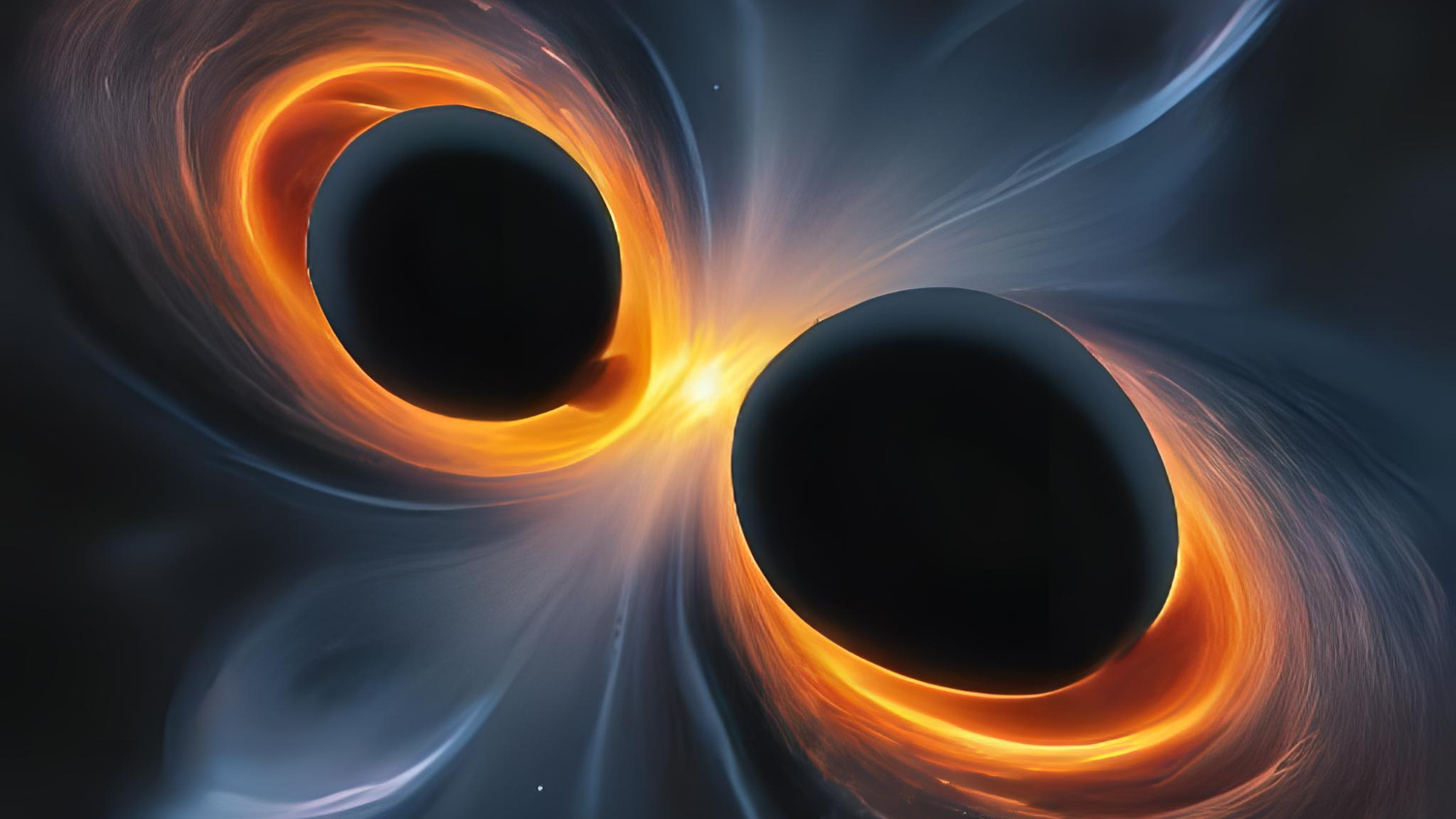
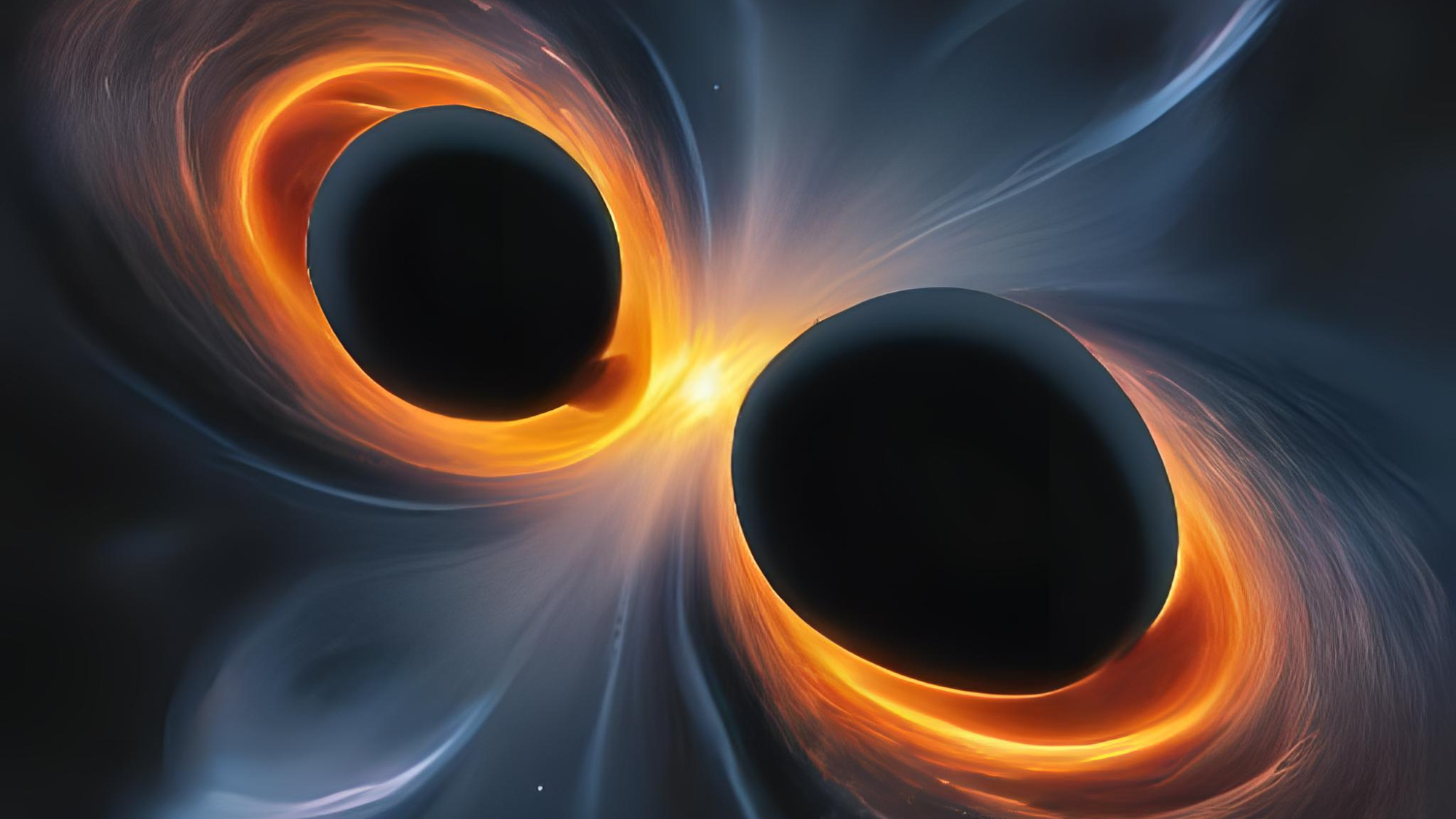
When the Laser Interferometer Gravitational-Wave Observatory (LIGO) and its international partners detected a faint tremor in the fabric of spacetime on November 23, 2023, astrophysicists were immediately thrust into a theoretical quandary. Designated as GW231123, the gravitational wave signal appeared to chronicle the violent collision of two monstrous black holes—one boasting an estimated 140 times the mass of our sun, and the other weighing in at roughly 100 solar masses.
Under the conventional paradigms of stellar evolution and black hole astrophysics, such massive objects should simply not exist from standard stellar collapses, nor should they be capable of forming such a binary pair with unusually rapid rotation rates. The scientific community was left scrambling to rewrite models of stellar physics to accommodate this "forbidden" merger. However, a groundbreaking study published on August 25 in the Astrophysical Journal Letters offers a radically different perspective: the colossal masses recorded by instruments on Earth may have been nothing more than an elaborate cosmic illusion.
The Illusion of Mass and General Relativity
To understand how two black holes could appear drastically larger than they actually are, researchers from the Albert Einstein Institute (AEI) turned to a foundational pillar of modern physics: Albert Einstein’s 1915 theory of general relativity. Alongside predicting the existence of gravitational waves—ripples traveling outward from cataclysmic cosmic events—Einstein’s field equations established the concept of gravitational lensing.
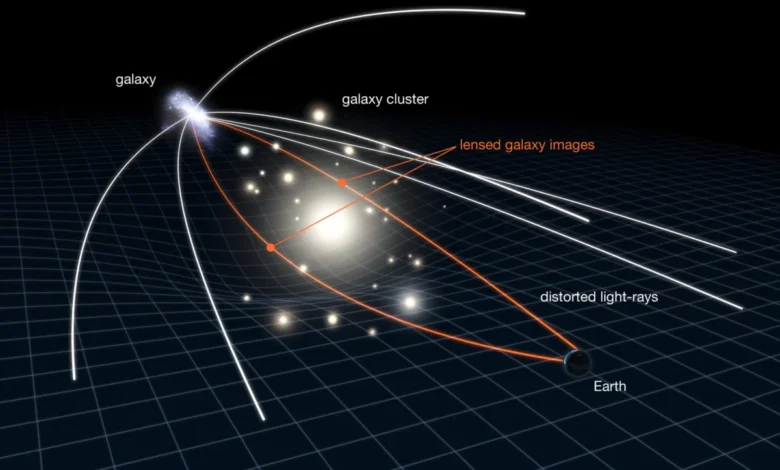
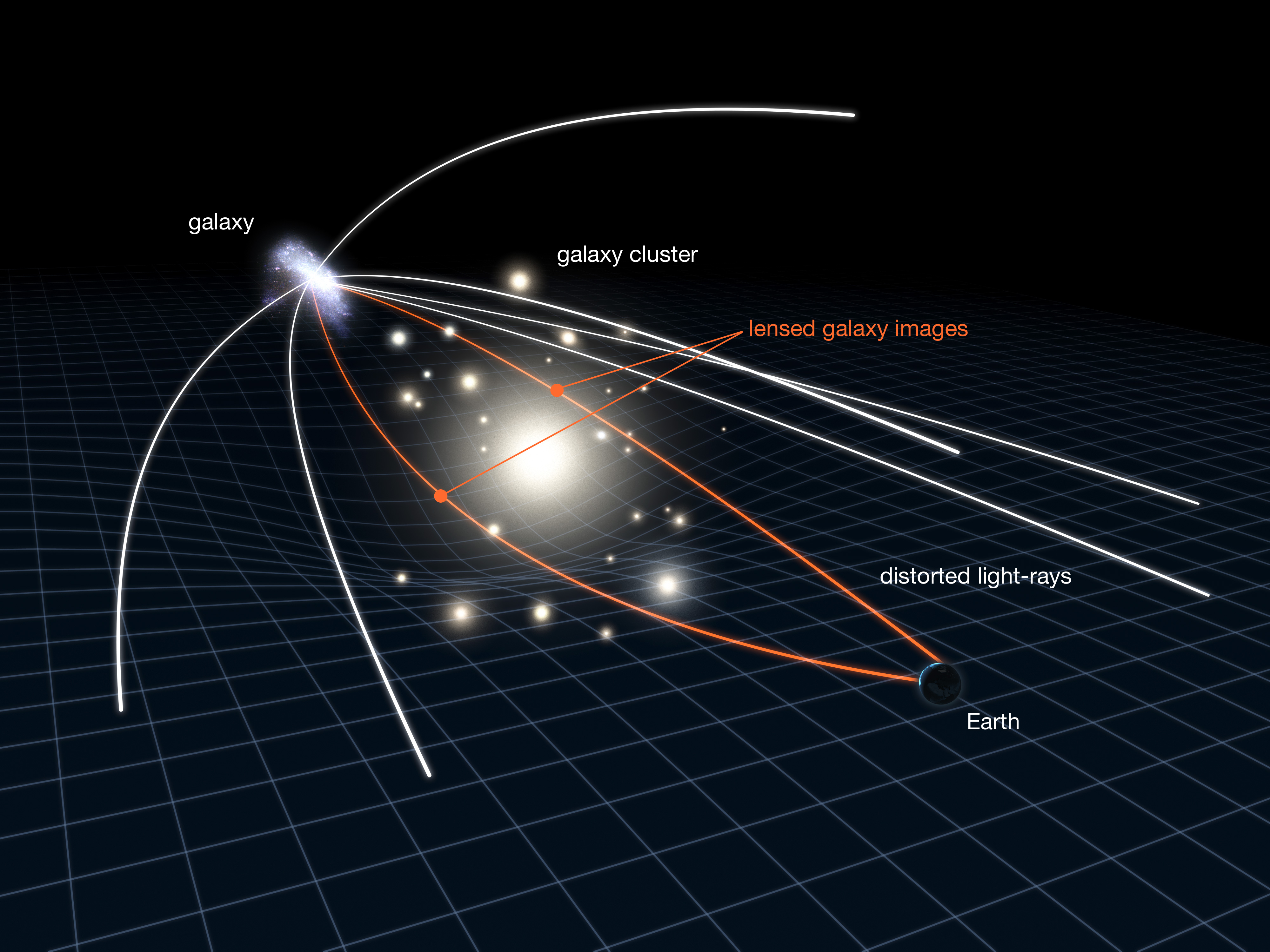
According to general relativity, any object with mass warps the four-dimensional continuum of space and time, known collectively as spacetime. Massive objects create pronounced gravitational wells, causing the paths of traveling energy to bend. While astronomers have traditionally utilized gravitational lensing to observe ancient, faint galaxies by bending light around foreground galaxy clusters, the new research suggests this same phenomenon can manipulate gravitational waves.
Just as optical lenses can magnify, distort, and split light rays into multiple distinct images, massive foreground structures can deflect and magnify gravitational wave signals as they traverse the cosmos. By the time these ripples reached the detectors of LIGO and its counterparts, the gravitational lensing effect had amplified the amplitude of the signal, artificially inflating the calculated mass of the merging black holes in human analysis models.
Chronology of the Discovery
The journey toward reevaluating GW231123 began immediately following its detection during LIGO’s fourth observation run.
November 23, 2023: The LIGO Scientific Collaboration, alongside partner detectors Virgo and KAGRA, registered the gravitational wave transient GW231123. Initial parameter estimation algorithms flagged the event as an extreme outlier due to its unprecedented combined mass of roughly 240 solar masses, placing it squarely within the theoretical "mass gap" where stellar-mass black holes are not expected to form.
Late 2023 to Mid-2024: Theoretical astrophysicists spent months attempting to reconcile the observation. Hypotheses ranged from hierarchical merging—where black holes form from the remnants of previous collisions within dense star clusters—to exotic modifications of general relativity. However, these models struggled to account simultaneously for the massive scale and the high spin parameters observed in the data.
August 2024: A specialized research team at the Max Planck Institute for Gravitational Physics (Albert Einstein Institute), led by investigators including Miguel Zumalacárregui and Srashti Goyal, developed advanced mathematical models and high-performance software capable of testing a gravitational lensing hypothesis on gravitational wave data.
August 25, 2024: The team formally published their findings in the Astrophysical Journal Letters, demonstrating that accounting for a gravitational lens resolves the anomaly without requiring non-standard stellar evolution or impossible black hole spin rates.
Deconstructing the Mathematical Model
The research team approached the anomaly by integrating wave optics into their analysis of gravitational lensing. While geometric optics are typically sufficient for analyzing light, gravitational waves have longer wavelengths that make diffraction and interference effects critical to their detection and interpretation.
When the researchers factored a gravitational lens into their calculations, the parameters of the event shifted dramatically. Instead of a colossal 240-solar-mass system, the underlying merger likely involved black holes totaling a much more modest 140 solar masses—a figure comfortably accommodated by standard stellar evolution models.
According to the team’s models, the deflecting agent would need to be either a compact object ranging between 190 and 850 solar masses or an extended structure such as a globular cluster.
"If we assume that GW231123 was deflected and distorted by a compact object… or by an extended structure such as a globular cluster, we can understand the observed high masses," explained Srashti Goyal, a researcher who was based at the AEI during the project. "Moreover, the lensing interpretation does not require unusually high spins."
Despite solving the mass-gap dilemma, the hypothesis introduces a new cosmological mystery: the nature of the lens itself. Individual compact objects weighing between 100 and 1,000 solar masses—often referred to as intermediate-mass black holes—are exceedingly rare in the universe. Finding one positioned precisely along the line of sight to intercept and magnify GW231123 presents a significant statistical hurdle.
Broader Impact and Implications for Gravitational Wave Astronomy
The implications of this study extend far beyond a single anomaly, signaling a maturing phase for gravitational wave astronomy. Since the first direct detection of gravitational waves in 2015, scientists have relied primarily on unlensed signals to map the population dynamics of black holes and neutron stars throughout the universe.
If gravitational lensing of gravitational waves is confirmed to occur with frequency, it will fundamentally alter how researchers interpret transient signals. Lensed signals can provide independent measurements of the Hubble constant—the rate of the universe’s expansion—and offer unprecedented probes into the distribution of dark matter and elusive intermediate-mass black holes that cannot be seen with conventional electromagnetic telescopes.
However, researchers remain cautious. The team emphasizes that while the lensing model offers a viable and elegant solution for GW231123, proving definitively that the event was lensed will require observing similar multi-image or frequency-dependent diffraction signatures in future data releases.
Looking Ahead: The Next Generation of Detectors
As current detectors like LIGO, Virgo, and KAGRA undergo continuous sensitivity upgrades, and as next-generation facilities such as the space-based Laser Interferometer Space Antenna (LISA) and the ground-based Cosmic Explorer approach operational reality, the volume of detected gravitational wave events is projected to scale exponentially.
These technological advancements will dramatically increase the statistical likelihood of capturing unambiguously lensed gravitational wave signals. Until then, events like GW231123 serve as vital testing grounds for the limits of general relativity, pushing astrophysicists to refine the tools used to listen to the most violent and distant whispers of the cosmos. Whether solving a theoretical impossibility or uncovering a rare cosmic magnifying glass, the intersection of gravitational lensing and gravitational wave science continues to reshape our understanding of the universe’s most extreme inhabitants.
Related posts: