Culinary Expeditions at the Edge of the World: How Holmen Lofoten is Redefining Arctic Gastronomy and Sustainable Tourism

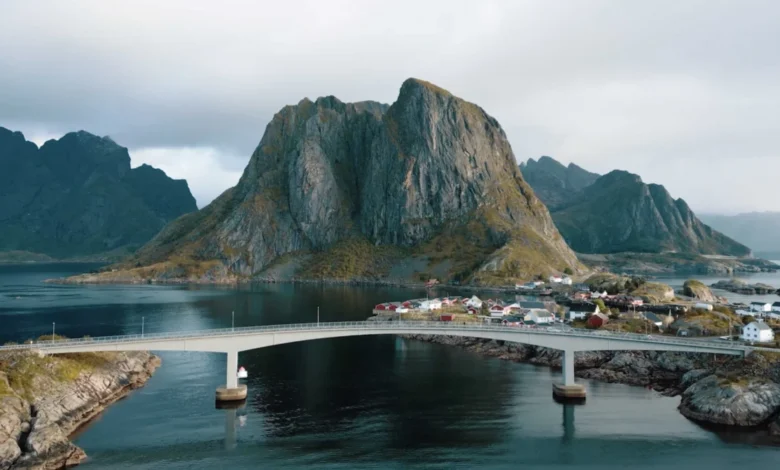
The remote archipelago of Lofoten, situated 68 degrees north of the Arctic Circle in Northern Norway, has long drawn adventurers with its dramatic topography—spiky, Jurassic-era mountain formations rising steeply from the Norwegian Sea, interspersed with pristine fjords and white-sand beaches. In recent years, however, this destination has increasingly captured global attention for an entirely different reason: its burgeoning culinary identity. As inbound tourism to Northern Norway outpaces the national average, the region is grappling with the dual challenge of accommodating a growing influx of travelers while preserving its fragile ecosystems. At the heart of this cultural and ecological intersection stands Holmen Lofoten, a boutique hotel and culinary destination in the southwestern village of Sørvågen, which is pioneering a model of slow, highly localized tourism anchored entirely in the region’s distinctive foodways.

An Evolution in Arctic Hospitality
Originally functioning as a traditional cod processing facility, the property’s mustard-colored timber cabins—known locally as rorbuer—have been meticulously restored to balance historical preservation with modern hospitality. Acquired in October 2001 by Ingunn Rasmussen and now operated alongside her son, Håvar Holmen, Holmen Lofoten was conceived as a deliberate antidote to mass tourism. Rasmussen sought to create an environment where visitors could disconnect from urban distractions and re-engage with the elemental landscape of Northern Norway.

The physical infrastructure of the hotel honors its industrial heritage. Restored buildings feature corrugated, grass-topped insulating roofs and interconnected wooden walkways facing the open sea, while interior furnishings remain intentionally sparse to keep the focus directed outward toward the craggy shoreline. This commitment to local authenticity extends to material choices: tableware utilized across the dining spaces is custom-designed by regional ceramicists such as Gunvor Tangrand, incorporating organic textures derived from the surrounding environment and discarded fishing materials.
The Genesis of Kitchen on the Edge of the World

Central to Holmen’s cultural programming is Kitchen on the Edge of the World, an intensive culinary series launched in 2018. Held four times annually, the multi-day event invites internationally acclaimed chefs to collaborate with local producers, utilizing the archipelago’s wild landscape as both a pantry and a source of inspiration.
The 30th edition of the program was helmed by California-born, Copenhagen-based chef Matt Orlando, renowned for his pioneering work in low-waste and circular gastronomy through his former restaurant, Amass, and his newly established Michelin-starred venture, Esse. Orlando’s residency underscored the event’s core philosophy: fostering spontaneous, highly adaptable cooking methods dictated by immediate geographic availability rather than rigid global supply chains.

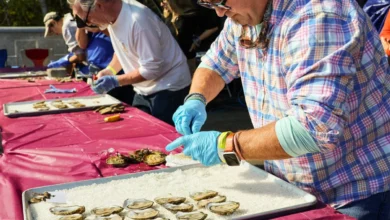
Over the course of the multi-day gathering, a diverse cohort of international guests—including geologists, long-distance travelers, and dedicated food enthusiasts—participated in immersive workshops, coastal foraging excursions, and open-fire cooking demonstrations.
The Interdependence of Landscape and Livelihood

The ecological productivity of Lofoten is dictated by a unique confluence of climatic variables. The meeting of the relatively warm Gulf Stream with cold Arctic waters generates a nutrient-dense marine ecosystem that supports abundant fish populations and thriving seabird colonies. Simultaneously, extended daylight hours during the summer months accelerate plant growth, while sea spray naturally enriches coastal pastures utilized for regional livestock grazing.
This interdependence is perhaps best exemplified by the region’s historical reliance on skrei, or Arctic cod. For over a millennium, the seasonal migration of cod from the Barents Sea to the spawning waters of Lofoten has anchored the local economy. Traditional wooden drying racks, known as hjeller, remain an architectural fixture across the landscape, where stockfish (tørrfisk) has been wind-cured for centuries.

However, shifting migration patterns, climate pressures, and the expansion of industrial fishing fleets have introduced systemic vulnerabilities to coastal economies reliant on a single commodity. In response, a diversified agricultural and artisanal movement has taken root across the islands, supported by organizations such as Love Food, which works to connect small-scale producers with regional dining establishments.
Local food systems specialist Bjørg-Elin Kjærnn emphasizes the economic necessity of these localized supply chains. "Lamb, stockfish, and seaweed are all remarkably sustainable ways of producing food," Kjærnn notes. "But conservation only works when the people living on the land and by the sea can make a good living. When a restaurant chooses these products, it helps keep that whole system alive."

Diversifying the Arctic Economy: Artisanal Producers
This economic diversification is visibly manifest in enterprises such as Lofoten Seaweed Company, based in the nearby fishing village of Napp. Co-founded by Angelita Eriksen and Tamara Singer, the women-led team harvests seven varieties of wild seaweed—including sugar kelp and nori—directly from high-tidal currents in straits like Nappstraumen. Operating out of a former cod-processing rorbu, the enterprise supplies high-end culinary institutions across Europe, including world-renowned restaurants in Copenhagen, while simultaneously provisioning Holmen’s kitchens.

Similarly, sustainable agriculture is expanding through micro-producers cultivating root vegetables, edible flowers, and artisanal cheeses suited to the subarctic climate. By integrating these products into daily hospitality operations, destinations like Holmen create a direct economic feedback loop that prioritizes regional resilience over speculative mass tourism.
Navigating the Tensions of Modern Tourism

Despite the economic benefits of increased visitor numbers, Northern Norway’s tourism boom has generated significant friction among local residents. The proliferation of unmanaged mountain hiking and wild camping has placed strain on delicate alpine ecosystems. In response to trail erosion and environmental degradation, regional authorities have enacted stricter regulations, including bans on unregulated wild camping in favor of designated sites. Furthermore, local guides frequently withhold precise geographic coordinates for fragile mountain ascents to prevent overexposure on social media platforms.
Industry stakeholders argue that culinary tourism offers a constructive framework to mitigate these tensions. By shifting the visitor focus from passive sightseeing and high-impact physical recreation toward educational, land-based cultural engagement, tourism operators aim to foster a deeper sense of stewardship.

"Our hope is that people come to Lofoten for the right reasons," Ingunn Rasmussen observes. "Ultimately, that will be what helps us protect the islands and our way of life."
Future Implications for Sustainable Regional Travel

As destinations globally confront the externalities of overtourism, the operational model demonstrated at Holmen Lofoten offers a replicable paradigm for remote communities. By synthesizing heritage conservation, zero-waste culinary practices, and direct engagement with regional producers, the initiative illustrates that economic viability and environmental preservation are not mutually exclusive.
For travelers, the experience serves as an invitation to re-evaluate the mechanics of modern mobility. As Chef Matt Orlando noted during his residency, the constraints of remote locations often inspire the most innovative solutions to environmental responsibility. Ultimately, as the intersection of climate pressures and tourism continues to evolve, the future of Arctic hospitality will likely depend on the degree to which visitors learn to view a landscape not merely as a scenic backdrop, but as an interconnected, living ecosystem sustained by those who call it home.