U.S. Experiences Hottest and One of the Driest Summers on Record, NOAA Climate Report Confirms

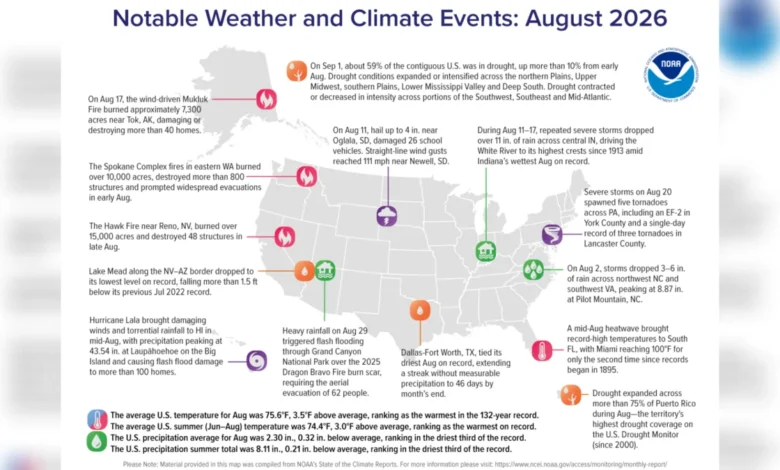
The contiguous United States has officially endured its hottest summer in at least 132 years of modern record-keeping, a milestone that underscores a rapidly shifting national climate landscape. According to a comprehensive national climate report released by the National Oceanic and Atmospheric Administration (NOAA), average temperatures across the lower 48 states soared 3 degrees Fahrenheit (1.67 degrees Celsius) above the twentieth-century seasonal norm from June through August. This staggering departure shatters the previous modern summer record set in 2021 by a significant margin of 0.4 degrees Fahrenheit (0.22 degrees Celsius), signaling an acceleration in regional warming trends that continue to baffle and alarm atmospheric scientists.
The unprecedented heat was not merely an artifact of a warm June or July; August 2026 also clinched the title of the hottest August on record nationwide. Across the contiguous U.S., the collective climate signature of the summer months combined stifling, unrelenting heatwaves with a profound deficit in precipitation. More than half of the American landscape found itself gripped by intensifying drought conditions by the close of the meteorological season in September, creating a dangerous feedback loop of parched soils, elevated wildfire risks, and severe economic strains on agriculture, water management, and local ecosystems.
A Chronology of Scorching Extremes: The Summer of 2026
The trajectory toward this historic climate milestone began early in the meteorological calendar. Spring transitions across large portions of the United States were notably warm, setting the stage for an intense summer. By early June, high-pressure ridges—often colloquially referred to by meteorologists as heat domes—began to anchor themselves persistently over the American Southwest and the southern Rockies. These atmospheric stagnation events trap hot air beneath them, preventing cloud formation and allowing solar radiation to bake the underlying terrain day after day.
By July, the heat anomalies had expanded northward and eastward, enveloping the southwestern Plains, California, Nevada, New Mexico, and Colorado. Urban centers and rural communities alike experienced weeks of unbroken triple-digit temperatures. Infrastructure was pushed to its absolute limits, with electrical grids straining under record-breaking air conditioning demands.
As August arrived, the intensity peaked rather than subsided. The national average temperature for August reached 75.6 degrees Fahrenheit (24.2 degrees Celsius), coming in at a remarkable 3.5 degrees Fahrenheit (1.94 degrees Celsius) above the long-term monthly average. While the Southwest and southern Florida bore the brunt of the most extreme temperature anomalies, virtually every corner of the contiguous United States experienced above-average warmth, leaving very few regions shielded from the summer’s thermal assault.
Precipitation Extremes and the Expanding Drought Footprint
While soaring temperatures dominated headlines, the summer of 2026 was equally defined by water scarcity. Total precipitation across the contiguous U.S. averaged 0.32 inches (0.8 centimeters) below normal levels. This deficit pushed the season into the record books as the third-driest summer in the historical record and the driest observed since the year 2000.
By September 1, official drought monitoring indicated that 59.1% of the contiguous United States was experiencing drought conditions. The dryness was particularly acute across the West, the upper Midwest, and the Deep South. The agricultural heartland and municipal water supplies faced immediate pressure as reservoirs dwindled and soil moisture depleted rapidly under the relentless sun.
The crisis extended beyond the mainland. Insular territories were hit particularly hard, with more than 75% of Puerto Rico slipping into drought conditions by late summer. Most alarming was that roughly 40% of the island was classified as experiencing "extreme drought," threatening local crop yields, livestock, and potable water access for millions of residents. NOAA’s seasonal outlooks indicated that these dry anomalies would likely persist, amplifying long-term concerns regarding water security heading into the autumn and winter months.
Concurrent Natural Disasters and Severe Weather Events
The combination of extreme heat and severe precipitation anomalies created a volatile atmospheric environment, fueling a diverse array of natural disasters across the country. The month of August alone served as a case study in compounding climate hazards.
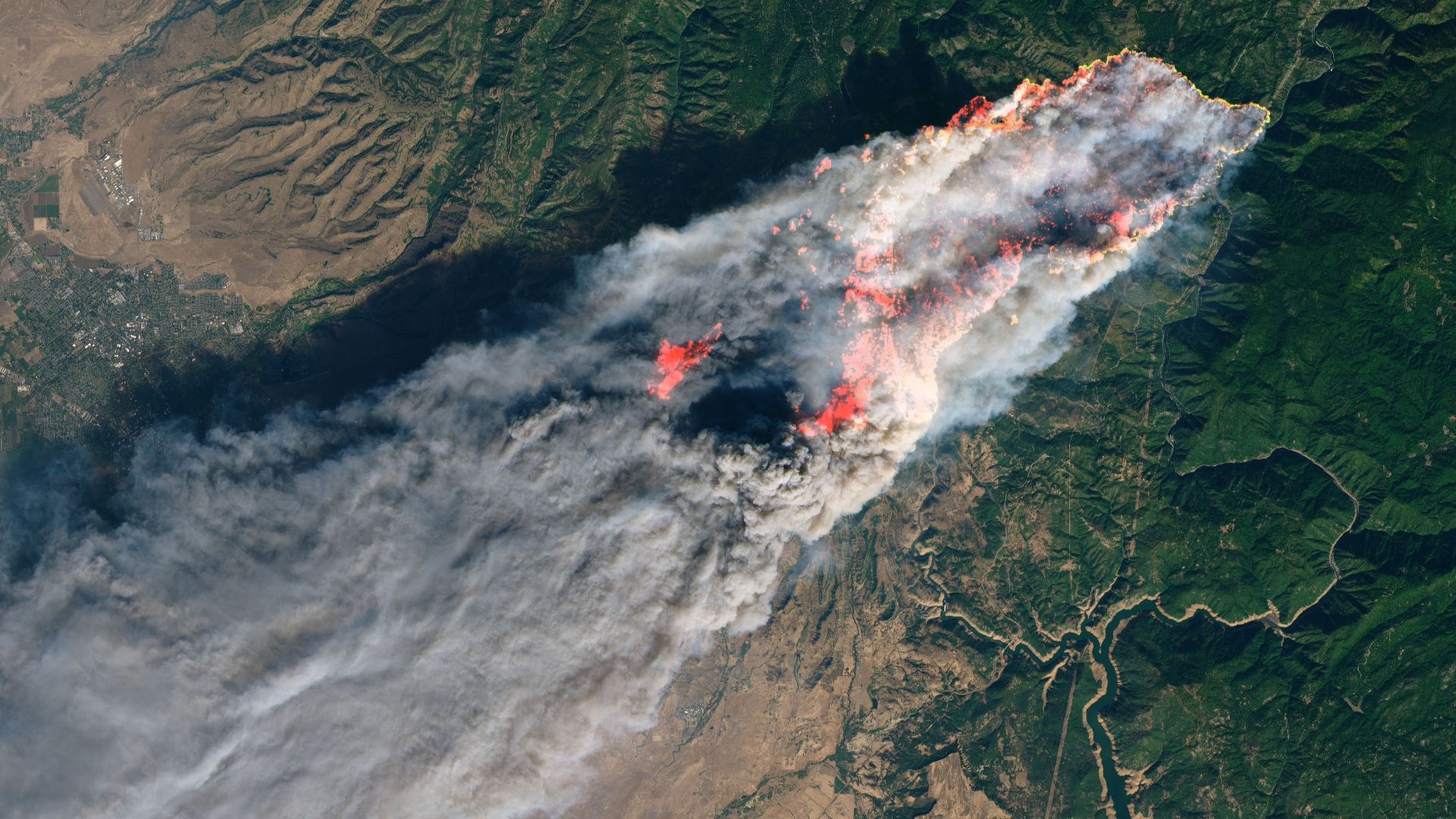
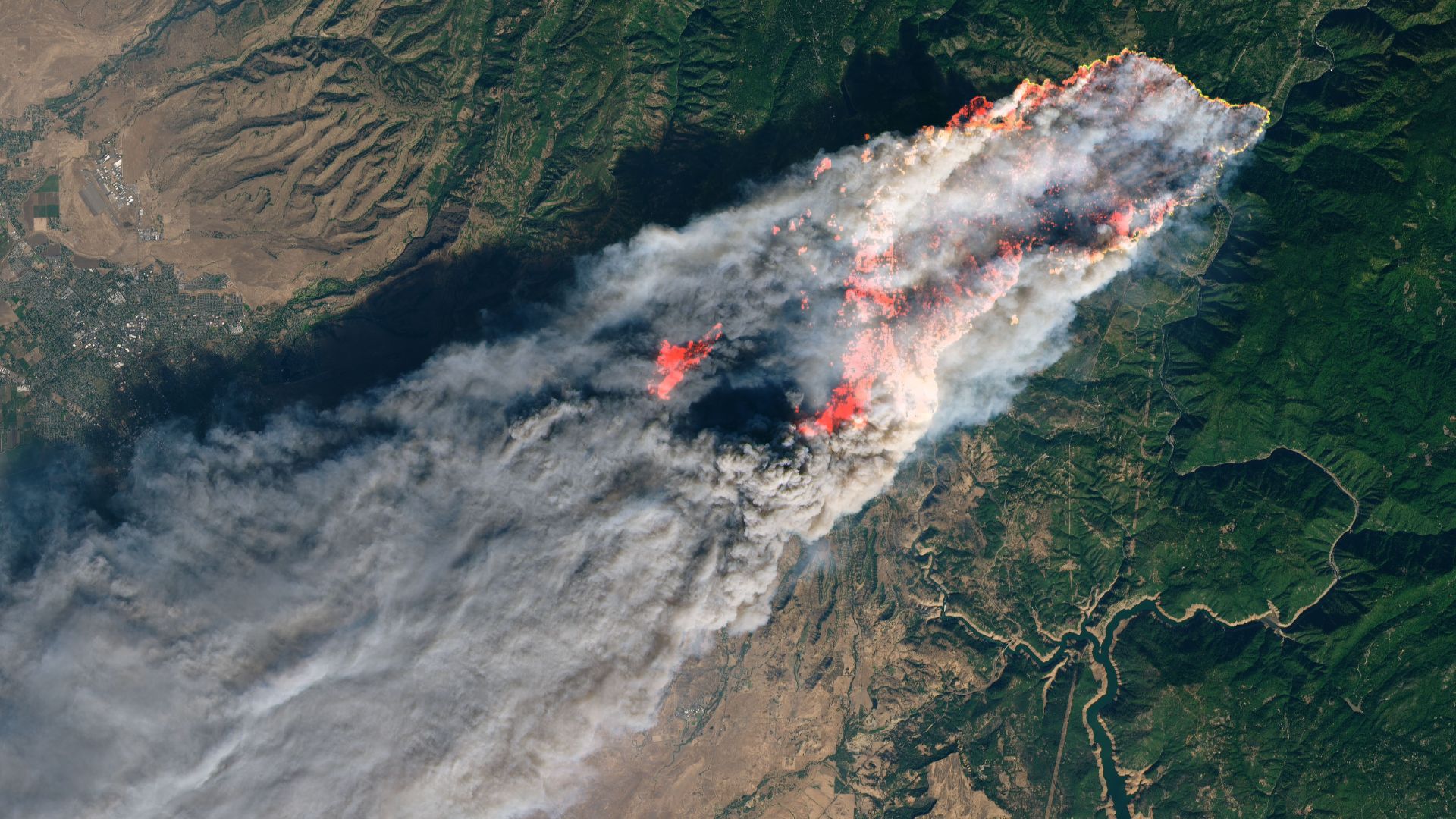
In the Pacific Northwest, explosive wildfires broke out across more than 10,000 acres in eastern Washington before racing across state lines into Oregon, fueled by dry underbrush and erratic winds. Concurrently, large-scale fires ravaged portions of Nevada and Alaska, sending plumes of smoke visible from space via satellite imagery managed by NASA and NOAA.
The threats were not limited to fire. In South Dakota, severe convective storms spawned destructive straight-line winds and gusts reaching an astonishing 111 miles per hour (178.6 kilometers per hour), tearing down power lines, uprooting ancient trees, and damaging structural property. Meanwhile, in the Southeast, a persistent and oppressive heatwave parked itself over southern Florida, breaking daily temperature records. Farther west in the Pacific, Hurricane Lala battered Hawaii with intense wind shears, heavy downpours, and severe coastal flooding, illustrating that the country was grappling simultaneously with both extreme dryness and intense tropical precipitation events.
Scientific Context and the Broader Implications of Global Climate Change
Climatologists emphasize that while individual seasonal records can be influenced by natural climate patterns—such as the cyclical phases of El Niño and La Niña—the long-term upward trajectory of global temperatures is overwhelmingly driven by anthropogenic greenhouse gas emissions. The accumulation of carbon dioxide, methane, and other heat-trapping gases from fossil fuel combustion, industrial manufacturing, and intensive transportation networks continues to alter the Earth’s energy balance.
The consequences of this planetary warming are far-reaching and systemic. As global average temperatures rise, the hydrological cycle intensifies. Warmer air holds more moisture, which can lead to more catastrophic downpours when it rains, while simultaneously evaporating moisture more aggressively from soils during dry spells, exacerbating droughts. This duality explains why seasons like the summer of 2026 can feature record-breaking dryness in some areas alongside intense flash flooding elsewhere.
Furthermore, the cascading effects of a warming climate are visible across the cryosphere and hydrosphere. Researchers note accelerated floating ice loss in regions like Greenland, rising global sea levels that threaten coastal infrastructure, and an increased frequency and severity of compound weather disasters.
Official Responses and Outlook
Federal agencies, emergency management organizations, and municipal leaders are increasingly forced to adapt to what scientists call the "new normal." In the wake of NOAA’s sobering report, emergency preparedness officials have called for enhanced regional water conservation frameworks, updated building codes to withstand higher wind and heat loads, and more robust wildfire mitigation strategies.
As the planet continues to warm, scientific consensus dictates that weather extremes will become more frequent, intense, and unpredictable. The record-shattering summer of 2026 serves as a stark reminder of the tangible, immediate costs of climate change—transforming abstract scientific projections into daily realities for millions of Americans navigating heatwaves, parched landscapes, and the ever-present threat of climate-fueled disasters.
Related posts: