Gravity-1 Solid-Fuel Rocket Achieves Third Successful Mission, Demonstrating Growing Maritime Launch Capabilities

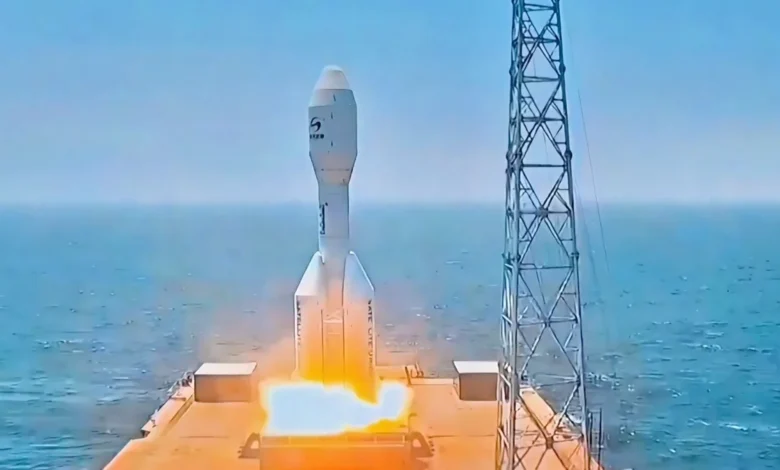
The world’s most powerful solid-fuel rocket just aced its third-ever mission. Orienspace’s Gravity-1, a distinctively squat and stubby rocket, launched on Tuesday night, July 21, 2026, from the deck of a ship stationed off the coast of Shanghai, China. This successful mission marks another significant step for China’s burgeoning private space sector and its capabilities in maritime rocket launches.
Liftoff occurred precisely at 10:54 p.m. EDT (0254 GMT and 10:54 a.m. Beijing time on July 22), according to the state-run Chinese outlet Xinhua. The agency further reported that all nine satellites onboard successfully reached their designated orbits. While specific details regarding the nature and purpose of these nine satellites were not immediately disclosed, the consistent success of the Gravity-1 program suggests a strategic deployment for various applications, potentially including Earth observation, telecommunications, or scientific research.
A Compact Powerhouse: Understanding Gravity-1
Orienspace, the company behind the Gravity-1 rocket, is headquartered in the eastern Chinese province of Shandong. The Gravity-1 stands at approximately 100 feet (30 meters) tall, a notably compact stature when compared to many orbital launch vehicles. For context, this is less than half the height of SpaceX’s ubiquitous Falcon 9, a testament to its unique design philosophy.
The rocket’s impressive power is derived from its solid rocket motors, which comprise three core stages and four strap-on boosters. This configuration enables the Gravity-1 to deliver an impressive payload capacity of up to 14,300 pounds (6,500 kilograms) to low Earth orbit (LEO). This capability firmly establishes it as the most powerful solid rocket currently in operation globally. To put this payload capacity into perspective, the liquid-fueled Falcon 9, a benchmark in the industry, can deliver a maximum of 50,265 pounds (22,800 kg) to LEO, highlighting the different niches and design objectives of these launch systems. The Gravity-1’s strength lies in its high thrust-to-weight ratio and its rapid launch readiness, characteristics often associated with solid-fuel rockets.
A Proven Track Record: The Chronology of Gravity-1 Successes
The July 21st launch represents the third successful flight for the Gravity-1, a remarkable achievement for a relatively new launch system. All three missions to date have been conducted from sea-based platforms, underscoring Orienspace’s strategic focus on flexible and mobile launch operations.
The maiden flight of Gravity-1 took place in January 2024, a landmark event that immediately positioned the rocket as a significant player in the launch market. This was followed by its second flight in October 2025, further validating the rocket’s design and operational procedures. The consistent success across these three missions, each deploying multiple satellites into orbit, demonstrates a high degree of reliability and technical maturity for Orienspace. This unbroken streak of mission success provides a strong foundation for the company’s future endeavors and builds confidence among potential customers.
Maritime Launch Advantage: Strategic Deployment from the Sea
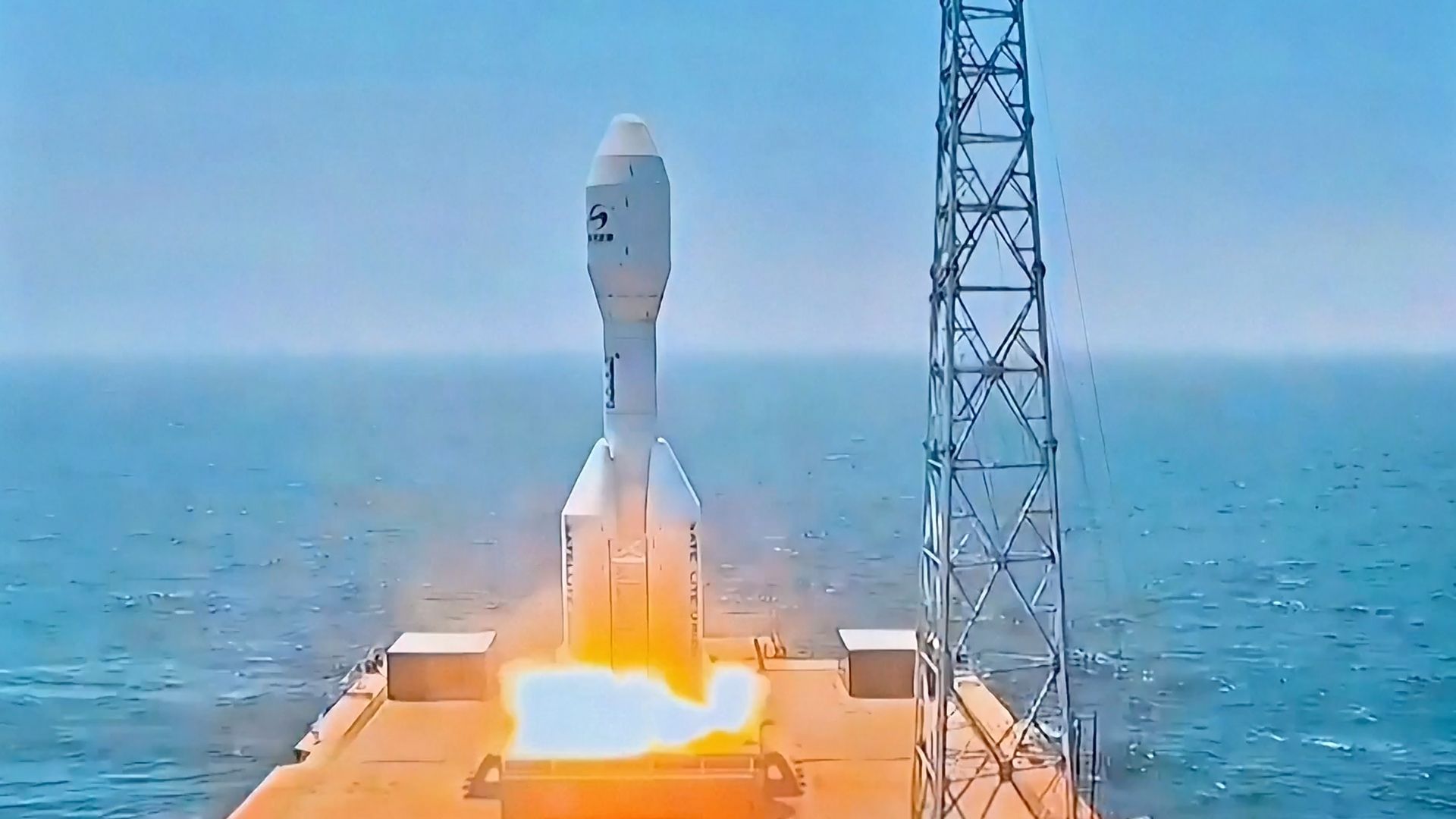
The decision to launch from a ship at sea offers several strategic advantages, particularly for solid-fuel rockets like Gravity-1. Firstly, it provides geographical flexibility, allowing launches from various oceanic locations, which can optimize orbital insertion trajectories and reduce geographical constraints often associated with land-based launch sites. Secondly, sea launches can help mitigate environmental concerns by dispersing any potential debris over vast ocean expanses. For solid rockets, which produce significant exhaust plumes, launching from a marine environment can also be advantageous in terms of safety and infrastructure requirements.
Orienspace’s commitment to maritime launches for Gravity-1 is a deliberate strategy. This approach not only diversifies launch options for China but also aligns with the global trend of developing more adaptable and responsive launch capabilities. The ability to deploy from different maritime locations can be crucial for meeting specific launch windows and catering to diverse customer needs without the extensive infrastructure development required for fixed launch pads.
The Future of Orienspace: Scaling Up with Gravity-2 and Gravity-3
The success of Gravity-1 is a stepping stone for Orienspace’s ambitious future plans. The company is actively developing larger and more powerful launch vehicles, Gravity-2 and Gravity-3. These next-generation rockets are designed to be hybrid systems, incorporating liquid-fueled core stages complemented by solid rocket boosters. This design approach aims to leverage the high thrust of solid boosters for initial ascent while utilizing the controllability and efficiency of liquid fuels for sustained orbital maneuvers.
Gravity-2 is reportedly on track for a potential flight by the end of 2026, with indications that it too will utilize an ocean-based launch pad. This suggests a continued emphasis on maritime launch capabilities as Orienspace expands its operational footprint. The development of these larger vehicles signifies Orienspace’s intent to compete in a broader segment of the launch market, capable of lofting heavier payloads and potentially supporting more complex space missions, including those for national defense or ambitious space exploration initiatives.
Expert Insights and Broader Implications
The consistent success of the Gravity-1 rocket and Orienspace’s forward-looking development strategy have significant implications for the global space industry. Chief Designer Xu Guoguang emphasized the strategic importance of their approach: "Sea launch of solid-propellant rockets paves the way for future launch of liquid rockets at sea," he stated, according to CGTN. "We are also considering other methods, such as launching from drilling platforms." This forward-thinking perspective suggests a comprehensive strategy to maximize launch flexibility and accessibility.
The ability to launch powerful solid-fuel rockets from ships at sea not only enhances China’s indigenous launch capabilities but also offers an alternative for international customers seeking reliable and versatile launch services. As the space economy continues to grow, driven by the proliferation of satellite constellations for communication, navigation, and Earth observation, the demand for cost-effective and flexible launch solutions will only intensify. Orienspace’s Gravity-1, with its demonstrated performance and ongoing development of larger systems, is well-positioned to capture a significant share of this expanding market.
The development of hybrid launch systems like Gravity-2 also signals a move towards greater efficiency and mission flexibility. By combining the advantages of solid and liquid propellants, Orienspace aims to offer launch vehicles that are both powerful and adaptable to a wider range of mission requirements. This strategic evolution of their launch portfolio suggests a long-term vision to become a major provider of space launch services, capable of supporting everything from small satellite constellations to potentially larger payloads for deep space missions. The increasing capabilities of China’s private space sector, exemplified by Orienspace’s achievements, are reshaping the competitive landscape and driving innovation across the global aerospace industry.
Related posts: