Japan’s Hayabusa2 Mission Achieves Daring Asteroid Torifune Flyby, Unveiling Unexpected Discoveries and Advancing Planetary Defense Capabilities

The Japan Aerospace Exploration Agency (JAXA) has successfully executed a remarkably close flyby of the near-Earth asteroid Torifune, returning stunning imagery and valuable scientific data. The daring maneuver, which took place on July 5, 2026, pushed the limits of the venerable Hayabusa2 spacecraft, generating significant internal debate before its approval and ultimately yielding unexpected scientific revelations about the asteroid’s nature. This mission not only provides crucial insights into asteroid formation but also marks a significant step forward in Japan’s capabilities for planetary defense.
A Close Encounter with the Unknown
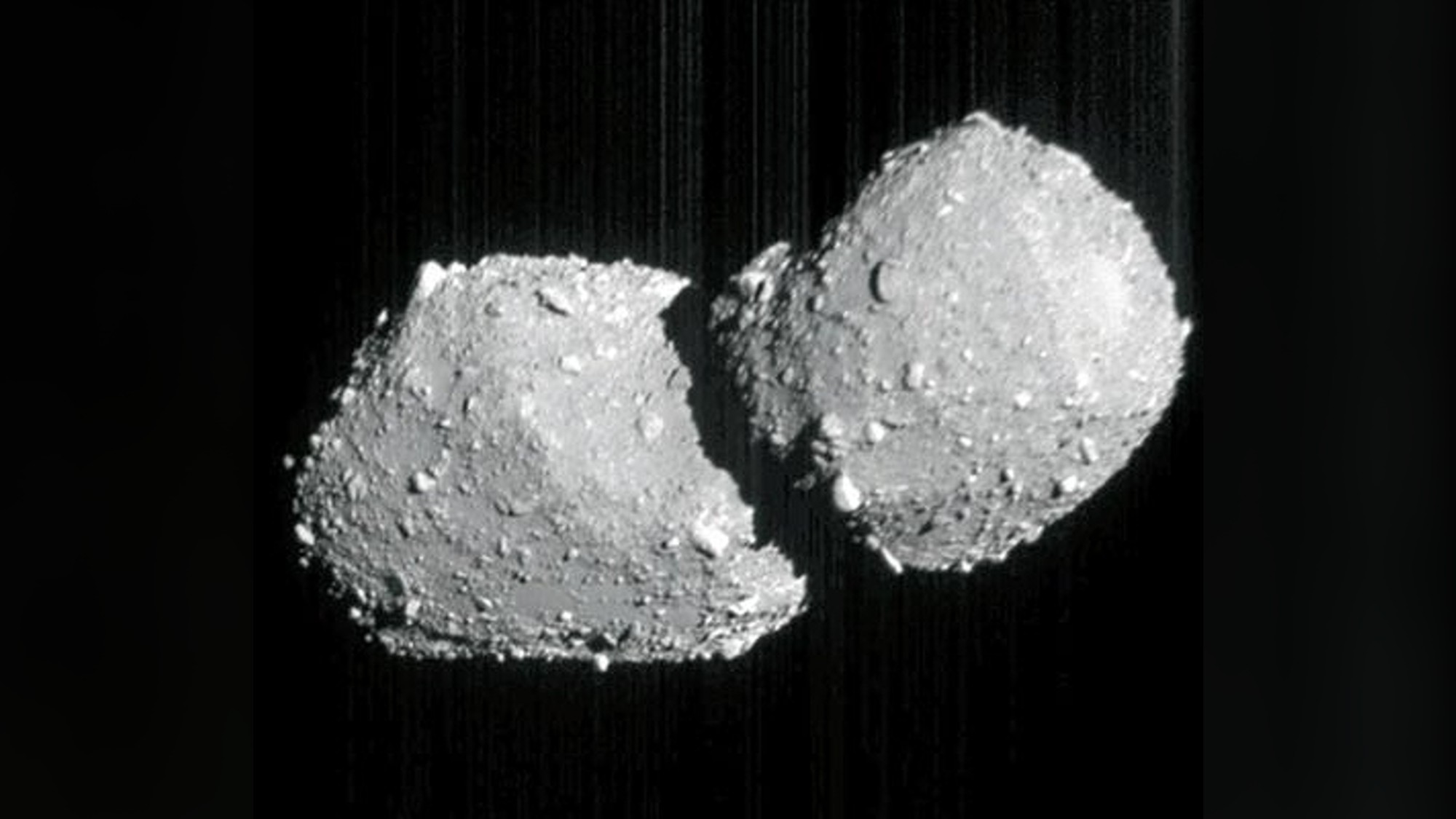
On the morning of July 6, 2026, Japan time, the scientific community at JAXA was abuzz with the arrival of unprecedented images from the asteroid Torifune. The data, captured by Hayabusa2’s Optical Navigation Camera (ONC-T) during a super-close flyby, presented two immediate surprises for Makoto Yoshikawa, the former mission manager of the Hayabusa2 mission, and his team. Torifune, a celestial body previously observed from Earth, was revealed to be a contact binary – a formation where two distinct rocky masses have gravitationally bound together, creating a single, dumbbell-shaped entity. Furthermore, the returned images were significantly larger and more detailed than anticipated, hinting at the success of the audacious approach.
"We did not imagine such a contact binary," Yoshikawa shared with his colleagues during the Asteroids, Comets and Meteors conference held in Poznan, Poland, on July 10. He elaborated on the unexpected scale of the imagery, stating, "Originally, we didn’t think we could have such a very big image. Maybe we will take a very small one, but the image was much larger than we expected." This sentiment underscores the inherent uncertainties and potential for discovery in deep space exploration.
The Genesis of a Daring Maneuver: Navigating Scientific Ambition and Engineering Realities
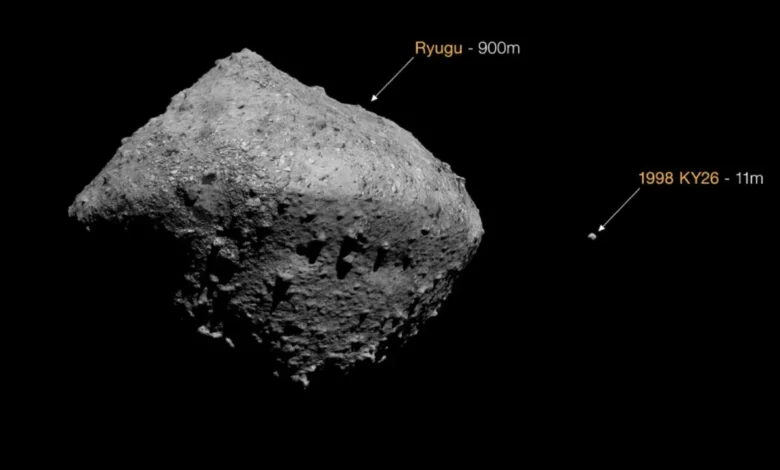
The double surprise of Torifune’s contact binary structure and the high-resolution imagery was the culmination of months of intense deliberation between JAXA’s science and engineering departments. The decision to attempt such a close flyby was not made lightly. Hayabusa2, a spacecraft renowned for its successful sample return mission from the asteroid Ryugu, was nearing the end of its operational life. Launched in December 2014, Hayabusa2 had already completed its primary objectives, including the collection and return of precious samples from Ryugu in 2020. JAXA had subsequently outlined a long-term plan involving a flyby and a rendezvous with the much smaller asteroid 1998 KY26 in 2031.
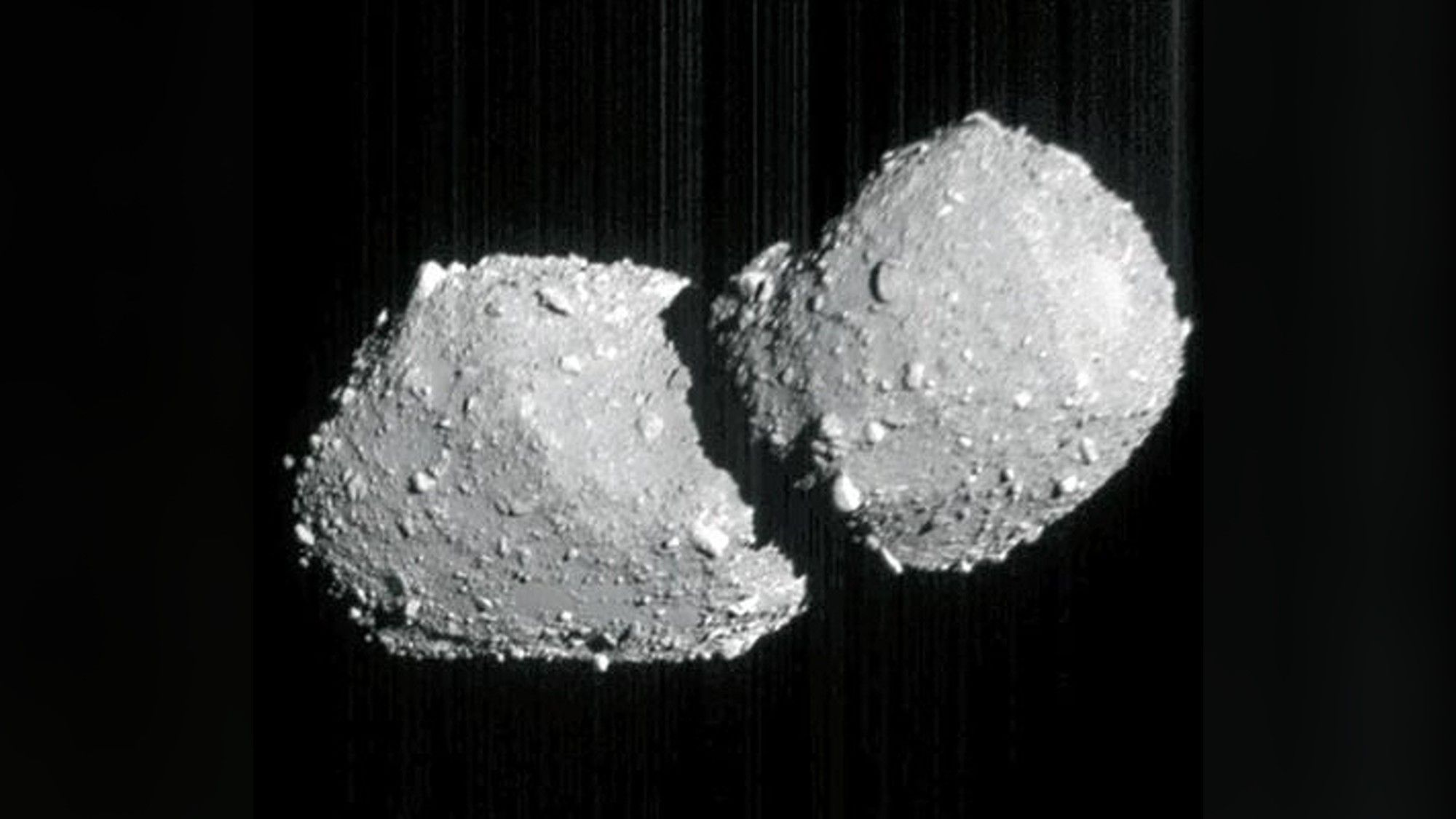
Typically, asteroid flybys are conducted at a safe distance, often around 100 kilometers (approximately 62 miles). However, Yoshikawa explained that such a distance would be insufficient to capture the detailed imagery required to thoroughly study Torifune’s characteristics. The Hayabusa2 spacecraft, while incredibly capable, was primarily designed for rendezvous, proximity operations, and sample collection, which involve slower, more controlled movements, rather than high-speed passes at approximately 5.3 kilometers per second (3.3 miles per second). Its cameras, too, were not specifically engineered for the rapid slewing required for such a dynamic encounter.
This engineering limitation prompted initial pushback from some science team members. They argued that at a distance of 100 kilometers, Hayabusa2’s cameras would struggle to resolve the global shape of the asteroid. The engineering team responded with a revised proposal: a flyby at a significantly closer distance of 10 kilometers (6.2 miles). This was deemed acceptable by the science team, but the engineers, driven by the potential for even greater scientific return, continued to explore the feasibility of getting even closer. Ultimately, they confirmed that a pass within 1 kilometer (0.6 miles) of the asteroid’s center was achievable, a prospect that greatly excited the science contingent eager for high-quality photographic evidence.
Escalating the Stakes: A Last-Minute Proposal and Heated Debate
The scientific ambition, however, did not cease there. Just one month prior to the scheduled flyby, Yuya Mimasu, the leader of the extended mission team, put forth a bold, last-minute proposal: to reduce the closest approach distance to a mere 800 meters (approximately 2,625 feet). This proposal ignited a heated debate among the mission personnel. "Some science people said ‘No, it’s too dangerous,’ and a very heated discussion started," Yoshikawa recounted.
The primary concern revolved around the unknown size and precise dimensions of Torifune. Based on ground-based observations, the team had estimated a conservative worst-case scenario for the asteroid’s dimensions, ranging from 1,400 meters by 400 meters (4,600 by 1,300 feet). A pass 800 meters from the asteroid’s center would place Hayabusa2 perilously close to the edge of this calculated exclusion zone, leaving little room for error. Adding to the complexity was the fact that the spacecraft’s optics had been affected by fine dust particles encountered during the sample collection activities on Ryugu, potentially impacting their resolution and performance. A thorough navigation analysis revealed that the targeting error ellipse for the maneuver was approximately 200 meters (656 feet). "The distance fixed is 800 meters," Yoshikawa acknowledged, "but this is quite a big challenge for us."
A New Navigation Paradigm: Onboard Guidance for a Perilous Journey
To execute such a precise and risky maneuver, Hayabusa2’s navigation systems had to be pushed to their limits. The spacecraft first detected Torifune on June 19, 2026. For the critical final stages of the approach, a novel navigation strategy was employed. Ground-based guidance was utilized up to three hours before the flyby, after which Hayabusa2 transitioned to an autonomous onboard guidance system. "This is quite new," Yoshikawa remarked, highlighting the development of specialized software for this purpose, which was then transmitted to the spacecraft. This shift to onboard control was essential for reacting to real-time conditions and making micro-adjustments at incredibly high speeds, minimizing the risk of collision.
A Multifaceted Scientific Harvest
The daring flyby on July 5, 2026, yielded a wealth of scientific data from all four of Hayabusa2’s instruments. The Optical Navigation Camera Telescope (ONC-T) provided the spectacular, up-close imagery of the dual-lobed Torifune, revealing intricate details of its rocky surface.
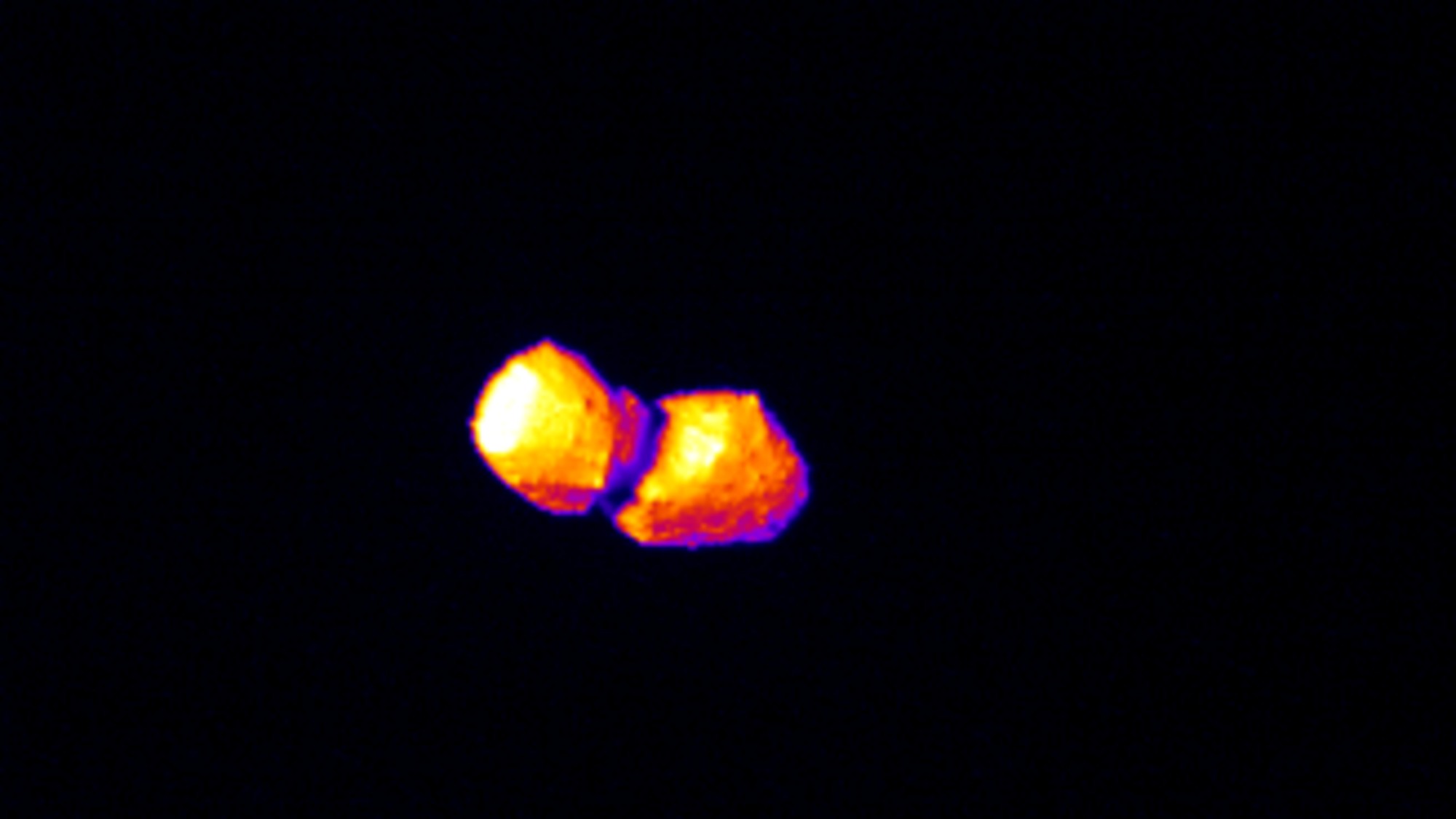
Beyond visual confirmation, the Thermal Infrared Imager (TIR) played a crucial role in independently verifying Torifune’s contact binary structure. In a nine-second window between 09:29:50 and 09:29:59 GMT on July 5, just a second before the closest approach, the TIR captured thermal imaging data. This data confirmed the distinct heat emissions from the two lobes, reinforcing the interpretation of Torifune as a contact binary.
The Near Infrared Spectrometer (NIRS3) and the laser altimeter (LIDAR) also returned valuable scientific information. Yoshikawa highlighted the significance of the LIDAR data, describing it as potentially the first successful ranging measurement conducted during an asteroid flyby. This capability could be crucial for future missions requiring precise distance measurements to celestial bodies.
While the most urgent 25 megabytes (MB) of data were successfully downlinked, the complete scientific data package amounts to approximately 300 MB. The remainder of this crucial data will be transmitted to Earth following Hayabusa2’s planned Earth flybys in 2027 and 2028. To facilitate this, the spacecraft’s ion engine system was reactivated on July 9, commencing its journey back toward Earth for these gravitational assists. The engine will operate for approximately four months, propelling Hayabusa2 on its extended cruise.
Implications for Planetary Defense and Future Exploration
Yoshikawa emphasized that the Torifune flyby was more than just an opportunistic scientific excursion; it represented a significant technological demonstration with profound implications for planetary defense. "JAXA has acquired the technology to collide spacecraft with a small celestial body," he stated in his concluding remarks at the ACM conference. This achievement draws a direct parallel to NASA’s Double Asteroid Redirection Test (DART) mission, which successfully demonstrated kinetic impact as a method of asteroid deflection.
The rapid reconnaissance capabilities showcased during the Torifune flyby are directly applicable to planetary defense strategies. The ability to quickly characterize an unknown asteroid’s size, shape, and composition is vital for assessing potential impact threats and planning effective mitigation missions. This successful demonstration provides JAXA with a validated methodology for rapid hazard assessment, a capability that could prove critical in safeguarding Earth from future asteroid impacts.
The Unfolding Odyssey of Hayabusa2
The journey of Hayabusa2 is far from over. The spacecraft’s extended mission is meticulously planned to culminate in a rendezvous with the exceptionally small asteroid 1998 KY26. This target, measuring approximately 36 feet (11 meters) in diameter and rotating rapidly, presents a unique scientific challenge. Hayabusa2 is scheduled to reach 1998 KY26 in 2031, promising further groundbreaking discoveries about the formation and evolution of the smallest celestial bodies in our solar system. The continued operation of Hayabusa2, a testament to its robust engineering and the dedication of its mission controllers, ensures that humanity’s exploration of the asteroid belt will continue to yield invaluable scientific knowledge and technological advancements.
Related posts: