Flock Safety Cameras Spark National Outcry as Police Misuse for Stalking Surges Amid Broader Privacy Concerns

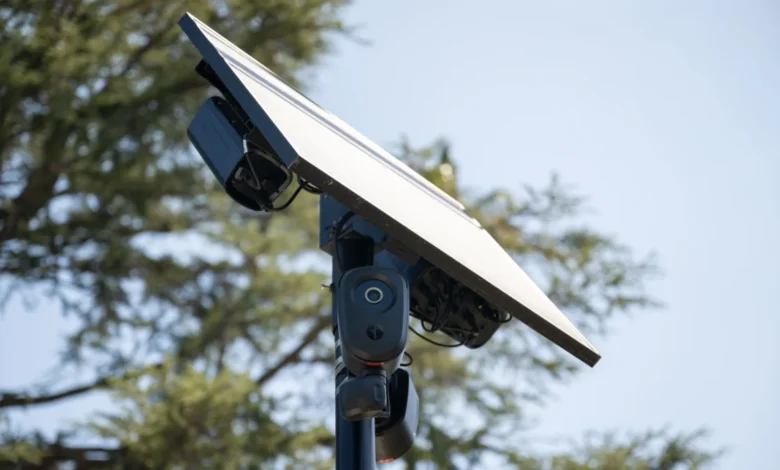
The proliferation of automated license plate recognition (ALPR) cameras across the United States has introduced a powerful tool for law enforcement, but it has also unveiled a disturbing pattern of misuse, particularly by officers exploiting the technology to stalk romantic partners and exes. With an estimated 80,000 Flock Safety cameras dotting street corners nationwide, forming an $8.3 billion enterprise, these devices log billions of license plates monthly, generating a vast surveillance network. However, a growing number of reports highlight a severe breach of public trust, revealing that the very tools designed to enhance safety are being weaponized for personal vendettas, prompting widespread alarm among civil liberties advocates and the public.
The Alarming Trend of Misconduct in Law Enforcement
The most recent cases underscore a troubling systemic vulnerability within police departments. In Milwaukee, Wisconsin, former police officer Josue Ayala faced charges of misconduct after illicitly searching the license plate of someone he was dating over 200 times during a two-month period in 2025, according to court documents. His searches also extended to his partner’s ex, demonstrating a clear pattern of personal abuse of official resources. Ayala subsequently resigned and was sentenced to one year of probation.
Disturbingly, the investigative process itself exposed further misconduct. Tehrangi Chapman, another Milwaukee officer assigned to probe Ayala’s actions, was himself charged in July 2026 with "misuse of GPS information." Allegedly, Chapman engaged in the exact same transgression, leveraging the ALPR technology to track individuals in his personal life while investigating a similar offense. This incident dramatically illustrates not only the ease with which such technology can be misused but also the potential for a cascading effect of abuse if unchecked.
These Milwaukee cases are not isolated incidents. The Institute for Justice, a libertarian public-interest law firm, has identified at least 24 similar cases across the nation over the past two years where officers used ALPR cameras like Flock Safety’s to stalk romantic interests. In nearly all these instances, the officers faced criminal charges and were terminated from their positions, signaling a concerted effort by authorities to address the misconduct, albeit after the fact.
The month of July 2026 alone has seen a surge in such reports, with at least six new cases surfacing in local media outlets. Beyond Chapman’s situation in Wisconsin, officers in Illinois, South Carolina, Texas, California, and Georgia have all lost their jobs due to alleged misuse of Flock cameras, further solidifying the alarming pattern and highlighting the widespread nature of this problem across diverse jurisdictions. These incidents erode public confidence in law enforcement and underscore the urgent need for stricter oversight and accountability mechanisms.
Flock Safety’s Ubiquitous Presence and Its Stated Mission
Flock Safety has emerged as the dominant player in the ALPR market, positioning its technology as a crucial asset in modern policing. The company’s cameras are compact, solar-powered, weigh less than three pounds, and are designed to be unobtrusive, blending into urban and suburban landscapes. This discreet design, coupled with their ease of installation, has contributed to their rapid deployment, reaching 80,000 street corners across the country. The company’s business model, valued at an estimated $8.3 billion, is built on empowering officers with real-time tracking capabilities, logging billions of license plates each month.
Garrett Langley, Flock Safety’s CEO, has openly articulated an ambitious vision for his company, aiming to have a camera "on every corner" to deter and solve crime. The stated purpose of these cameras is to assist law enforcement in solving serious crimes, such as identifying vehicles involved in pursuits, Amber Alerts, or those associated with known criminal activity. However, the sheer volume of data collected raises fundamental questions about proportionality and necessity, especially when juxtaposed with actual crime-solving efficacy.
A History of Evolving Surveillance Concerns
The concerns surrounding ALPR technology predate Flock Safety’s widespread adoption. Six years prior to the recent surge in stalking cases, a 2020 investigation by Mother Jones‘ Daniel Moattar detailed how some of California’s most populous counties were already extensively collecting information using ALPRs, largely tracking individuals who were not under suspicion of any crime. This highlighted an inherent issue: the dragnet approach of ALPRs captures data on millions of law-abiding citizens alongside potential suspects.
Even earlier, in 2013, the American Civil Liberties Union (ACLU) released a report revealing that in Maryland, a mere 47 out of every million license plates scanned by ALPRs that year were "even tentatively associated with actual serious crimes." This data suggested a remarkably low hit rate for the stated purpose of serious crime prevention, implying that the vast majority of collected data pertained to innocent citizens.
In the years since these early warnings, police use of ALPRs has expanded significantly across the country. Beyond the initial concerns about general surveillance, the technology has been repurposed for more controversial objectives. ALPRs have been reportedly used to target immigrants without warrants, raising concerns about their role in federal immigration enforcement and potential racial profiling. More recently, following shifts in abortion legislation, these cameras have been implicated in tracking individuals seeking abortions as they travel across state lines for the procedure, sparking outrage from reproductive rights advocates and privacy groups.
Chad Marlow, Senior Policy Counsel at the ACLU, has been a long-time observer of technology and privacy issues. He emphasizes the profound implications of such ubiquitous surveillance: "The tracking of an individual vehicle, as it moves throughout an area, can reveal very deeply personal and private information, not only about the vehicle but the person operating it." Marlow unequivocally states, "That is Flock at its most dangerous," pointing to the potential for granular insights into private lives, including travel to medical appointments, religious institutions, political gatherings, or sensitive personal locations. When reached for comment regarding the rising misuse, a Flock Safety representative provided press releases detailing their "audit assistance tool," an internal compliance mechanism designed to detect and deter misuse.
Corporate Response and Growing Backlash
The growing tide of misuse incidents has fueled a robust backlash against Flock Safety and other ALPR providers. Activists and privacy advocates argue that the technology inherently holds immense potential for abuse, irrespective of its intended purpose. Furthermore, concerns extend beyond direct misuse by individual officers; some researchers and human rights organizations, including the Business & Human Rights Resource Centre, have raised alarms about Flock Safety’s data sharing practices, asserting that they may lead to privacy rights violations even when the technology is used "as intended." The vast network of interconnected cameras allows for data aggregation and sharing across jurisdictions, creating a comprehensive and persistent record of individuals’ movements, accessible by numerous agencies.
The tangible impact of this backlash is evident in the cancellation of contracts. Throughout 2025, at least 30 municipalities opted to terminate their agreements with Flock Safety, signaling a growing reluctance to endorse technology that poses such significant privacy risks. Grassroots organizations, such as DeFlock, have emerged to actively map the locations of these license plate readers, empowering communities with information about the surveillance infrastructure in their neighborhoods and advocating for their removal. The intensity of this opposition was highlighted last year when Flock CEO Garrett Langley controversially labeled DeFlock and other activists as "terroristic," a statement for which he issued an apology in July 2026, acknowledging the passionate nature of the debate.
Implications for Privacy, Civil Liberties, and Public Trust
The widespread deployment and documented misuse of ALPR systems like Flock Safety’s pose significant threats to fundamental civil liberties and privacy rights. The ability to track an individual’s movements with such precision creates a chilling effect, where citizens may feel constantly under surveillance, leading to self-censorship and a reluctance to exercise freedoms such as assembly or speech. This pervasive surveillance environment, often described as a "digital panopticon," shifts the burden of proof, effectively making everyone a potential suspect whose movements are recorded, regardless of any actual wrongdoing.
From a constitutional perspective, the aggregation of ALPR data raises Fourth Amendment concerns regarding unreasonable searches and seizures. While driving on public roads generally implies a diminished expectation of privacy, the ability to compile years of location data can reveal deeply personal associations and activities, potentially crossing the threshold into protected private information. Legal scholars and civil liberties advocates are exploring whether such extensive data collection, particularly without specific warrants or probable cause, constitutes a general warrant for surveillance.
Furthermore, the misuse by law enforcement officers directly undermines public trust. When the very individuals entrusted with upholding the law exploit powerful surveillance tools for personal gratification or harassment, it erodes the moral authority of policing and fosters a sense of betrayal among the communities they serve. This erosion of trust can have far-reaching consequences, impacting community cooperation with police and exacerbating existing tensions, particularly in marginalized communities that often bear the brunt of over-policing and surveillance.
The Unifying Opposition and Future Outlook
Despite the divisive political climate, the issue of government surveillance, particularly through ALPR technology, has proven to be a rare unifying force across the American political spectrum. As Chad Marlow of the ACLU observes, "In these incredibly divisive political times, we’re actually seeing the rare issue that unites Americans: opposition to government surveillance." This bipartisan concern stems from a shared understanding that unchecked surveillance threatens individual freedoms, regardless of political affiliation.
The movement against pervasive ALPR surveillance is showing no signs of abating; Marlow predicts it "is only going to grow." The path forward will likely involve a multi-pronged approach: increased legislative efforts to regulate the acquisition, use, and retention of ALPR data; intensified legal challenges arguing for stronger constitutional protections; continued grassroots activism to raise public awareness and pressure local governments; and demands for greater transparency and accountability from both law enforcement agencies and technology providers like Flock Safety.
Ultimately, the debate over Flock Safety cameras and similar ALPR technologies represents a critical juncture in the ongoing struggle to balance public safety with individual privacy in an increasingly digitized world. The promise of enhanced security must be rigorously weighed against the potential for unchecked surveillance and abuse, ensuring that technological advancements serve to protect, rather than compromise, the fundamental liberties of all citizens.