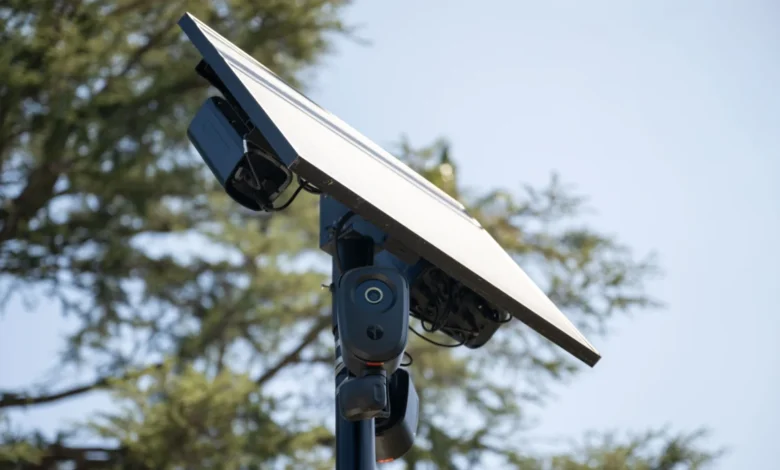
The silent proliferation of automated license plate recognition (ALPR) cameras, spearheaded by industry giant Flock Safety, has transformed urban and suburban landscapes across the United States, raising profound questions about privacy, civil liberties, and the unchecked power of surveillance technology. With an estimated 80,000 solar-powered cameras discreetly mounted on street corners nationwide, Flock Safety has built an $8.3 billion enterprise by enabling law enforcement agencies to track vehicular movements on an unprecedented scale, logging billions of license plates each month. However, a troubling pattern has emerged from this vast network: a growing number of police officers are reportedly abusing this powerful tool, not for crime prevention, but to stalk romantic partners, ex-spouses, and individuals in their personal lives, sparking a national debate and fueling a robust backlash against ubiquitous surveillance.
The Mechanics of Mass Surveillance: How ALPRs Operate
Automated License Plate Readers (ALPRs) are sophisticated camera systems that use optical character recognition (OCR) technology to capture images of license plates, record their location, date, and time, and often photograph the vehicle itself. These data points are then uploaded to vast databases, creating a detailed digital trail of a vehicle’s movements. Flock Safety’s devices, weighing less than three pounds and designed for unobtrusive deployment, represent the cutting edge of this technology. Their solar-powered design allows for easy installation in diverse environments, from busy urban intersections to quiet residential streets, requiring minimal infrastructure.
Historically, ALPR technology was primarily utilized for targeted law enforcement purposes, such as identifying stolen vehicles, locating suspects in Amber Alerts, or tracking vehicles associated with known criminal investigations. However, the business model championed by companies like Flock Safety has dramatically expanded their application. By selling subscriptions to local police departments, homeowners’ associations, and even private businesses, Flock Safety has created a network where data is not only collected by individual agencies but can also be shared and aggregated across a wide array of entities. This interoperability allows for the creation of vast, interconnected databases that can track an individual’s movements across multiple jurisdictions, often without their knowledge or consent, and frequently without any suspicion of wrongdoing.
A Disturbing Trend: Misuse by Law Enforcement
In recent months, a disturbing number of incidents have come to light, revealing a pattern of severe misconduct involving police officers misusing ALPR systems for personal reasons. The Institute for Justice, a libertarian public-interest law firm, has identified at least 24 such cases nationwide over the past two years, where officers exploited their access to ALPR databases to stalk romantic interests. Nearly all of these officers faced criminal charges and subsequently lost their jobs, underscoring the gravity of their actions.
A particularly stark example unfolded in Milwaukee, Wisconsin, highlighting the ease with which these systems can be abused. In 2025, Milwaukee police officer Josue Ayala was found to have searched the license plate number of someone he was dating over 200 times within a two-month period, according to court documents. He also reportedly searched for his partner’s ex, demonstrating a clear pattern of obsessive and unauthorized surveillance. Ayala was charged with misconduct, ultimately resigned from the force, and was sentenced to one year’s probation.
However, the story did not end there. In a shocking development, Tehrangi Chapman, another Milwaukee officer assigned to investigate Ayala’s case, was himself charged with "misuse of GPS information" in July 2026. Chapman allegedly engaged in the exact same misconduct he was investigating, using the technology to track individuals in his own personal life. This "investigator becoming the investigated" scenario vividly illustrates the temptation and vulnerability inherent in systems that grant broad access to sensitive location data without sufficient oversight.
Beyond Milwaukee, the problem appears to be widespread. In July 2026 alone, local media outlets reported at least six new cases of alleged ALPR misuse. Officers in Illinois, South Carolina, Texas, California, and Georgia all faced termination or resignation due to accusations of improperly accessing Flock camera data for personal reasons. These incidents paint a national picture of a systemic vulnerability, where powerful surveillance tools, intended for public safety, are being turned against private citizens by those entrusted to uphold the law.
Broader Implications: Beyond Stalking
While the misuse of ALPRs for personal stalking is particularly egregious, the concerns surrounding these systems extend far beyond individual acts of misconduct. Civil liberties advocates have long warned about the potential for mission creep and the erosion of privacy that accompanies the deployment of such pervasive surveillance networks.
The American Civil Liberties Union (ACLU) has been at the forefront of this debate for over a decade. As far back as 2013, the ACLU reported that in Maryland, only 47 out of every million license plates scanned by ALPRs were even "tentatively associated with actual serious crimes." This incredibly low "hit rate" suggests that the vast majority of data collected by these systems pertains to law-abiding citizens who are not under suspicion of any wrongdoing. The collection of such massive datasets on innocent individuals, often retained for 30 days or longer, raises fundamental questions about the right to privacy in public spaces. Chad Marlow, senior policy counsel at the ACLU, succinctly articulated this concern: "The tracking of an individual vehicle, as it moves throughout an area, can reveal very deeply personal and private information, not only about the vehicle but the person operating it. That is Flock at its most dangerous."
Indeed, the applications of ALPR data have expanded to areas that deeply concern civil rights organizations. These cameras have been used to target immigrants without warrants, creating a chilling effect on communities. More recently, in the post-Roe v. Wade landscape, ALPRs have been identified as a tool that could be used to track individuals seeking abortions as they travel across state lines for legal medical procedures. This potential for using surveillance data to enforce highly controversial social policies adds another layer of urgency to the calls for stricter regulation and oversight.
Flock Safety’s Dominance and Its Vision
Flock Safety’s aggressive expansion strategy has made it the undisputed leader in the ALPR market. With over 80,000 cameras deployed, the company’s CEO, Garrett Langley, has publicly stated his ambition to have a camera "on every corner." This vision, while framed as a means to "eliminate all crime in America," is viewed by critics as a move towards a pervasive surveillance state, where every vehicular movement is recorded and cataloged.
The company markets its technology to communities grappling with rising crime rates, promising enhanced public safety and faster investigations. They highlight successes in recovering stolen vehicles or identifying suspects in serious crimes. However, the sheer volume of data collected, combined with the low rates of actionable intelligence, creates a "haystack" problem: an immense amount of personal information is amassed, often yielding minimal results directly related to serious criminal activity.
In response to the growing criticism and documented cases of misuse, Flock Safety has introduced "audit assistance tools." These tools are designed to proactively flag suspicious searches or patterns of access by law enforcement users, aiming to detect and prevent unauthorized data retrieval. For instance, in April 2026, the company issued a press release announcing this feature, followed by another in July 2026 detailing how its audit assistance tool helped surface ALPR misuse in Albany, Georgia, leading to the arrest of five officers. While these initiatives are presented as efforts to enhance trust and compliance, critics question whether such tools can fully address the systemic issues of data access, retention, and the fundamental privacy implications of widespread surveillance.
The Escalating Backlash and a Unified Front
The backlash against Flock Safety and the broader use of ALPRs is rapidly intensifying. Throughout 2025, at least 30 municipalities across the country canceled their contracts with Flock, citing privacy concerns, efficacy doubts, and the potential for misuse. This trend indicates a growing awareness and skepticism at the local government level regarding the deployment of such technology.
Grassroots organizations, such as DeFlock, have emerged to actively challenge the proliferation of these cameras. DeFlock, for instance, has undertaken the crucial task of mapping the locations of ALPRs, empowering citizens with knowledge about where and how they are being monitored. These community-led efforts play a vital role in raising public awareness and advocating for policy changes.
The intensity of this debate was underscored by a controversial incident in 2025, when Flock Safety CEO Garrett Langley referred to DeFlock and other activists as "terroristic." While Langley subsequently apologized for the remark in July 2026, the comment revealed a deep chasm between the company’s vision and the concerns of privacy advocates.
Perhaps one of the most significant aspects of this growing opposition, as noted by the ACLU’s Chad Marlow, is its ability to transcend traditional political divides. "In these incredibly divisive political times, we’re actually seeing the rare issue that unites Americans: opposition to government surveillance," Marlow observed. This bipartisan consensus, stemming from both left-leaning civil liberties concerns and right-leaning skepticism of government overreach, suggests that the movement against unchecked surveillance is not a fleeting trend but a fundamental societal shift that is "only going to grow."
Legal and Ethical Considerations
The legal landscape surrounding ALPRs is still evolving. While courts have generally held that there is no reasonable expectation of privacy in movements on public roads, the aggregated nature of ALPR data presents a different challenge. Landmark Supreme Court cases like United States v. Jones (2012), which involved GPS tracking, suggest that prolonged surveillance can indeed constitute a Fourth Amendment search, even if individual movements are public. The question for ALPRs is whether the collection and aggregation of vast amounts of seemingly innocuous data, creating a comprehensive historical record of one’s whereabouts, crosses this constitutional threshold.
Ethically, the deployment of ALPRs forces society to confront the delicate balance between security and liberty. While the desire for safer communities is universal, the methods employed to achieve that safety must not inadvertently create a society where every citizen is under constant, invisible scrutiny. The potential for chilling effects on free association, expression, and movement, coupled with the documented instances of abuse of power, demand a robust framework of legal protections, stringent oversight mechanisms, and transparent data governance policies.
The ongoing saga of Flock Safety and the misuse of ALPRs serves as a critical case study in the rapid advancement of surveillance technology and its profound implications for democratic societies. As these systems become more prevalent and sophisticated, the urgency for a comprehensive public dialogue, clear legal boundaries, and unwavering accountability mechanisms will only intensify, shaping the future of privacy in an increasingly monitored world.