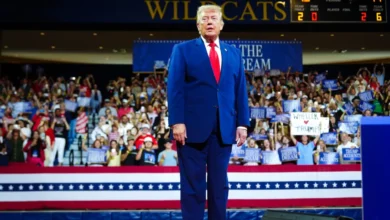
America’s 250th Anniversary: Trump’s Controversial Celebration and Historical Reinterpretations

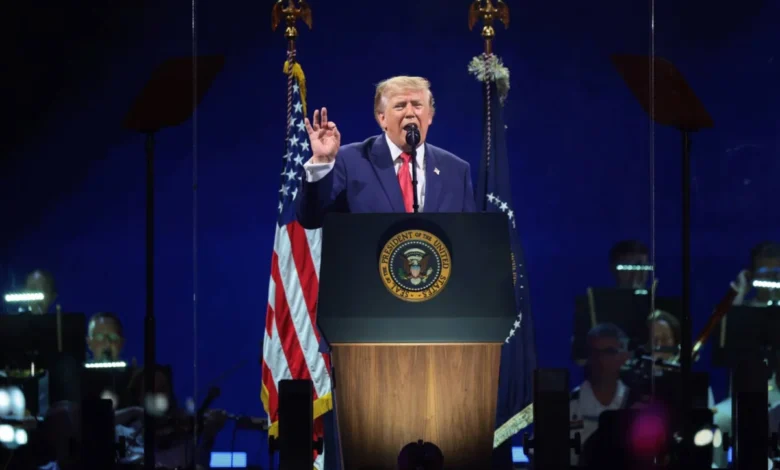
The ambitious plans for America’s 250th anniversary, the semiquincentennial celebration slated for July 4, 2026, envisioned by former President Donald Trump, were met with both grand aspirations and significant controversy, particularly concerning his historical interpretations and a defiant stance against inclement weather. Trump had outlined a spectacular event on the National Mall in Washington, D.C., promising a sprawling state fair, extensive military fly-overs, an unprecedented fireworks display, and a "really long" primetime speech from himself. This vision, reminiscent of his "Salute to America" events during his presidency, aimed to project an image of national strength and patriotic fervor, but the execution and accompanying rhetoric quickly drew criticism for historical inaccuracies and perceived self-aggrandizement.
A Stormy Celebration: The Day’s Unfolding Events
The lead-up to the July 4th festivities was dominated by weather forecasts predicting extreme conditions for the nation’s capital. Washington, D.C., was bracing for a combination of oppressive heat and severe thunderstorms, posing significant logistical and safety challenges for an outdoor event of this magnitude. As the day progressed, these forecasts proved accurate, severely disrupting the planned celebrations.
-
Inclement Weather Disrupts Festivities: The morning saw soaring temperatures and high humidity, prompting authorities to issue heat advisories and ultimately leading to the cancellation of the traditional Independence Day Parade. This parade, a cherished component of the capital’s Fourth of July celebrations, typically draws thousands of spectators and participants, featuring marching bands, floats, and military contingents. Its cancellation underscored the severity of the weather conditions. Later in the day, as thunderheads gathered and storm warnings intensified, the National Mall, which was expected to host hundreds of thousands for the evening’s main events, was evacuated. This precautionary measure, enforced by the National Park Service and local law enforcement, created a chaotic scene as throngs of people sought shelter, effectively dismantling the public gathering envisioned for the presidential address and fireworks. The decision to evacuate was a critical safety measure, given the dangers posed by lightning, strong winds, and potential flash flooding in a densely populated outdoor area.
-
Presidential Resolve Amidst Chaos: Despite the widespread disruptions and public safety concerns, former President Trump remained outwardly undeterred. Taking to his social media platform, Truth Social, he declared his intention to proceed with his address, even if it meant waiting until "2:00 a.m." In a characteristic display of defiance, he asserted that "storms mean good luck," attempting to frame the adverse weather as a positive omen rather than a setback. His post, which included the phrase "It’s Saturday night, LET’S HAVE SOME FUN," reflected a determination to maintain a celebratory atmosphere and proceed with his planned remarks, regardless of the diminished audience or the challenging circumstances. This resolute stance highlighted his consistent approach to public appearances, often characterized by a rejection of conventional limitations and a focus on personal conviction.
The Normandy Analogy: A Controversial Comparison
As the evening wore on and the weather continued to challenge the event, Trump engaged in discussions with Fox News’ Bret Baier regarding the potential delay and reduced attendance for his speech. It was during this conversation that he drew a comparison that immediately sparked widespread criticism and historical debate.
-
Echoes of D-Day: A Question of Historical Gravity: Baier recounted Trump’s statement: "He said, ‘I don’t care. It’s America 250. If they can storm the beaches of D-Day on D-Day, I can deliver a speech and keep this program going.’" This analogy, equating the act of delivering a political speech with the monumental sacrifice and valor displayed during the D-Day landings, was met with incredulity. D-Day, June 6, 1944, was the largest seaborne invasion in history, a pivotal moment in World War II that saw Allied forces, predominantly American, British, and Canadian, land on the heavily fortified beaches of Normandy, France. The operation involved immense logistical complexity, unimaginable courage, and resulted in tens of thousands of casualties. The objective was nothing less than the liberation of Western Europe from Nazi occupation. The comparison of this harrowing, life-or-death military operation to a presidential address, even one celebrating a national anniversary, was widely perceived as tone-deaf and disrespectful to the profound historical significance and human cost of D-Day. Critics argued that it trivialized the sacrifice of the "Greatest Generation" and demonstrated a fundamental misunderstanding of the gravity of such historical events.
-
Expert Commentary on the D-Day Parallel: Historians and military analysts swiftly condemned the comparison. Dr. Robert Greene, a military historian, commented, "To liken a speech, even an important one, to the storming of Omaha Beach, where thousands lost their lives under a hail of machine-gun fire, is not only an apples-to-oranges comparison but deeply offensive. It shows a profound lack of appreciation for the unparalleled sacrifice of those soldiers." Veterans’ organizations also expressed dismay, with one spokesperson stating, "Our veterans endured unimaginable hardship on D-Day. Their bravery secured freedom. To use that moment as a rhetorical flourish for a political event is simply inappropriate." This incident was not isolated; Trump had previously drawn comparisons between his political rallies and historical events or used military imagery in ways that were deemed controversial, often blurring the lines between political campaigning and national commemoration. For instance, his 2019 "Salute to America" event also featured military hardware, which critics argued politicized the armed forces and incurred significant taxpayer expense.
Reinterpreting Foundational Texts: The Declaration and Divine Authority
Beyond the D-Day analogy, Trump’s speech also contained several other historical references that sparked debate, particularly concerning the nation’s founding documents and religious identity.
-
The Declaration of Independence and Religious Framing: In his address, Trump asserted, "As our Declaration of Independence tells us, we are all made in the image of one almighty god," adding, "And a communist will never say that, that’s for sure." This statement immediately drew scrutiny for its historical inaccuracy. The Declaration of Independence, authored primarily by Thomas Jefferson and adopted on July 4, 1776, famously states that "all men are created equal, that they are endowed by their Creator with certain unalienable Rights, that among these are Life, Liberty and the pursuit of Happiness." While it references a "Creator," it does not explicitly state that "we are all made in the image of one almighty god." This phrase is drawn directly from the Book of Genesis (Genesis 1:27) in the Bible ("So God created man in his own image, in the image of God he created him; male and female he created them"). Trump’s conflation of biblical text with the Declaration of Independence reflects a broader trend within some political circles to reframe America’s founding as explicitly rooted in Christian theology, often to the exclusion of other religious or secular perspectives.
-
Debates on Church and State in American Governance: The implication that the Declaration calls for a specific religious understanding, coupled with the "communist" remark, touches upon the long-standing American debate about the separation of church and state. While the Declaration speaks of a "Creator," the First Amendment to the U.S. Constitution, ratified in 1791, explicitly establishes the principle of religious freedom through its Establishment Clause ("Congress shall make no law respecting an establishment of religion") and its Free Exercise Clause. The concept of a "wall of separation between church and state" was famously articulated by Thomas Jefferson in an 1802 letter, emphasizing the founders’ intent to prevent government entanglement with religious institutions and protect individual religious liberty. Trump and the Republican Party have often championed the idea that America is fundamentally a Christian nation, pushing for policies and rhetoric that prioritize Christian values, sometimes leading to accusations of undermining the pluralistic and secular principles of the nation’s founding documents. His statement, therefore, served not just as a historical misquote but as a political assertion within this ongoing cultural and constitutional debate, using "communist" as a rhetorical device to contrast his interpretation with perceived ideological opponents.
The Civil War: A "Big, Big Deal" with Contradictory Stances
Trump’s historical commentary continued with a remark about the American Civil War, specifically noting that the phenomenon of an escaped slave joining the Union army was "a very big, big deal at the time."
-
Revisiting the Legacy of the Civil War: While factually true that the Civil War (1861-1865) was an immense and transformative conflict, and the enlistment of formerly enslaved people in the Union Army was indeed a significant development, Trump’s casual phrasing struck some as an understatement of one of the most pivotal and costly events in American history. The Civil War resulted in over 600,000 deaths, abolished slavery, and fundamentally reshaped the American Union, determining the nation’s future trajectory. The participation of African American soldiers, including many who had escaped bondage, was crucial to the Union victory and represented a profound step towards racial equality, despite the systemic discrimination they continued to face.
-
Confederate Heritage and Modern Political Stances: The comment’s simplicity stood in stark contrast to Trump’s own administration’s actions and rhetoric regarding Confederate figures and symbols. Throughout his presidency, Trump consistently defended Confederate monuments and opposed efforts to rename military bases that honored Confederate generals. For example, he vehemently resisted the bipartisan push to rename bases like Fort Bragg (now Fort Liberty) and Fort Hood, often framing these efforts as an attack on American heritage rather than an acknowledgement of the Confederacy’s pro-slavery origins. In 2020, amidst widespread protests against racial injustice, he issued an executive order aimed at protecting federal monuments, including many associated with the Confederacy. This historical revisionism, or at least a selective embrace of certain historical narratives, has been a hallmark of his political approach, leading to accusations that he minimizes the horrors of slavery and the treasonous nature of the Confederacy while selectively praising aspects of American history that align with his political agenda. The remark about escaped slaves joining the Union army, while accurate, seemed to exist in a vacuum, detached from his broader stance on preserving Confederate symbols.
Acknowledging a "Greatest Generation": A Reluctant Tribute
Another notable moment during Trump’s address came as he acknowledged a group of veterans on stage, referring to them as "the fighters and the banners of the greatest generation."
- The "Greatest Generation" and Presidential Tributes: The term "Greatest Generation" typically refers to those Americans who came of age during the Great Depression and subsequently fought in World War II, embodying resilience, sacrifice, and civic duty. Their contributions are widely revered in American society. Trump continued his remarks, stating, "They are the greatest generation," but then added, "I hate to admit that, but they are." This particular phrase, "I hate to admit that," immediately caught attention. It introduced a peculiar note of reluctance or begrudging acknowledgment into what is typically an unambiguous and heartfelt tribute. Critics interpreted this as either an odd gaffe, a poorly executed attempt at self-deprecating humor, or a subtle indication of his perceived personal superiority, even over widely admired historical figures. Such remarks, even if unintended to offend, can be perceived as disrespectful or indicative of a lack of genuine appreciation for military service and historical achievement, particularly from a national leader.
Broader Implications: History, Rhetoric, and National Identity
The events of America’s 250th anniversary celebration, as shaped by Donald Trump’s vision and rhetoric, extend beyond a single day’s controversies, revealing deeper implications for American public discourse, historical understanding, and the politicization of national identity.
-
The Politicization of National Commemorations: Trump’s approach to the semiquincentennial echoed his previous "Salute to America" events, which were criticized for transforming traditional non-partisan national holidays into de facto political rallies. By emphasizing a large, primetime speech and military displays, and by injecting partisan rhetoric, these events tend to blur the lines between presidential duties and campaign activities. This trend raises questions about the appropriate use of federal resources and taxpayer money for events that, while ostensibly national celebrations, serve to bolster a specific political figure or agenda. Critics argue that such politicization undermines the unifying potential of national holidays, turning them into arenas for ideological contention rather than shared remembrance and celebration.
-
Historical Accuracy and Public Discourse: The repeated instances of historical misquotations, controversial analogies, and selective interpretations of American history in Trump’s speech highlight a broader concern about historical literacy in public discourse. When a prominent national figure misrepresents foundational texts or minimizes significant historical events, it can contribute to public confusion and a distorted understanding of the past. This phenomenon is particularly potent in an era of widespread misinformation, where historical narratives are often weaponized for political gain. The fact-checking of such statements becomes crucial for maintaining an accurate collective memory and fostering an informed citizenry. Historians and educators frequently lament the erosion of a shared, fact-based understanding of history, arguing that it weakens the foundation for constructive civic engagement and national unity.
-
Campaign Strategy and National Identity: Trump’s rhetoric and actions surrounding the America 250 celebration also served as a window into his ongoing political strategy. His defiance against adverse conditions, his bold historical comparisons, and his framing of national identity around specific religious and ideological tenets resonate strongly with his base. For his supporters, these actions demonstrate strength, conviction, and a willingness to challenge established norms and perceived "political correctness." For critics, however, they underscore a divisive approach that prioritizes personal narrative over national cohesion, and an egocentric view of governance where federal resources and national symbols are leveraged for individual political benefit. The concluding sentiment of the original article, hinting at Trump’s perceived self-interest and its broader economic implications for the nation, speaks to a critique of governance that prioritizes personal or factional gain over the common welfare, a concern frequently raised by political commentators regarding the allocation of federal funds and the impact on the cost-of-living for ordinary Americans.
Ultimately, the planned America 250 celebration, as envisioned and articulated by Donald Trump, became a microcosm of his political style: ambitious, confrontational, often historically contentious, and deeply polarizing. It underscored the ongoing debate about how the nation remembers its past, celebrates its present, and envisions its future, especially in an era of profound political and cultural division.