Trump Administration Considers Sweeping EPA Rule Change Potentially Eroding Public Oversight for Polluting Facilities

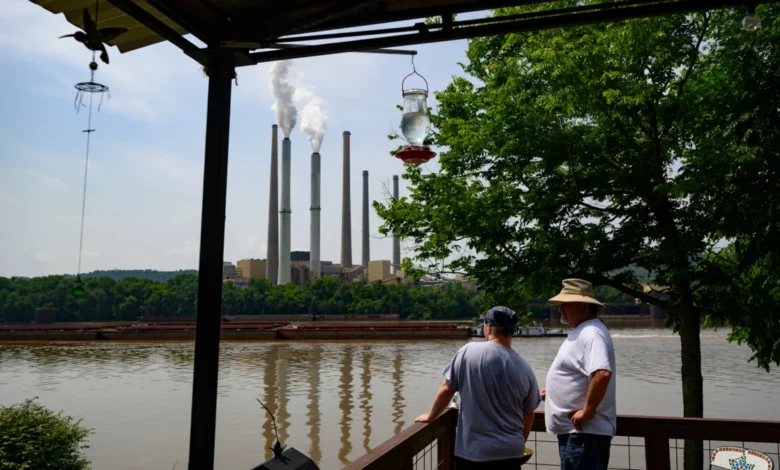
The Trump administration is reportedly advancing a significant regulatory amendment that could fundamentally alter public participation in the permitting process for new and expanded polluting facilities, including a burgeoning number of energy-intensive data centers. This proposed change by the Environmental Protection Agency (EPA) threatens to shift critical oversight responsibilities to individual states, potentially allowing the construction of facilities with reduced public notification and engagement, a move that has drawn sharp criticism from environmental advocates and community organizers nationwide. The controversy comes as a photograph dated June 12, 2025, depicts two individuals observing a coal power plant on the Ohio River in Ripley, Ohio, underscoring the enduring presence of industrial emissions in American landscapes.
The Proposed Rule Change: A Shift in Environmental Governance
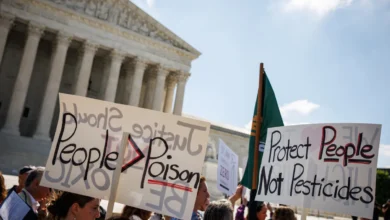
On a recent Wednesday, the Environmental Protection Agency conducted a public hearing concerning a proposed rule modification that aims to delegate to individual states the authority to determine the parameters of public involvement in the permitting process for specific new sources of air pollution. This includes a broad spectrum of facilities, from minor industrial operations to large-scale energy producers. Notably, this proposed rollback coincides with escalating community resistance across the United States against the rapid proliferation of data centers, many of which are designed to operate with significant, often decentralized, power generation capabilities. The current permitting process has frequently served as a crucial avenue for local communities to voice concerns, demand environmental impact assessments, and, in some cases, delay or halt development that could adversely affect their health and environment.
The core of the EPA’s proposal, if finalized, would essentially remove a federal baseline for public engagement in minor source permitting. Currently, while the specifics vary, EPA regulations (such as 40 CFR 51.161) mandate some level of public participation for minor source permits. By handing this power entirely to states, the federal government would relinquish a layer of oversight, potentially leading to a highly disparate landscape of environmental protection and public access across the nation. For ordinary citizens, this could translate into little to no advance warning about new or expanded polluting facilities being established in their neighborhoods, effectively diminishing their ability to influence decisions directly impacting their quality of life.
Vanessa Lynch, a Pennsylvania organizer with Moms Clean Air Force, articulated this concern clearly at the EPA hearing, stating, "As someone actively working in communities with data centers, I know this to be fundamentally true: People want to have a say." Her sentiment reflects a widespread belief among environmental justice advocates that local communities, particularly those historically burdened by pollution, must retain strong participatory rights in environmental decision-making.
The Rise of Data Centers and Their Environmental Footprint
The timing of this proposed rule change is not coincidental. It aligns with an unprecedented boom in data center construction, largely fueled by the exponential growth of artificial intelligence (AI) technologies and the increasing demand for digital infrastructure. These facilities, which process, store, and transmit vast amounts of data, are notoriously energy-intensive. Many new data centers are relying on "behind-the-meter" power generation, often through gas-fired plants or arrays of diesel generators, to ensure a constant and reliable power supply, independent of the main grid.
These private power plants, while often individually classified as "minor sources" of pollution, collectively contribute significantly to local air quality degradation and greenhouse gas emissions. For instance, operators like xAI and Meta have utilized minor source permitting processes to construct these on-site power solutions. A recent report indicated that new gas-powered data centers could emit more greenhouse gases than entire nations, highlighting the substantial environmental implications of this industry’s expansion. Furthermore, the construction spending on data centers has recently outpaced investment in public transportation infrastructure, eclipsing $50 billion annually, underscoring the scale of this buildout and its potential environmental impact. The Trump administration has openly expressed its ambition to make the U.S. "the AI capital of the world," a goal that appears to be driving policies aimed at accelerating data center development, even at the potential expense of environmental safeguards.
Understanding Environmental Permitting: Major vs. Minor Sources
To grasp the full implications of the proposed rule change, it’s essential to understand the framework of the Clean Air Act and its permitting processes. Any company intending to build or modify a facility that will release air pollution is required to obtain permits under this foundational environmental law. These permits fall broadly into two categories: "major" and "minor" sources.
Major sources of pollution are those that meet or exceed specific thresholds for certain pollutants, as defined by federal regulations. These facilities undergo an extensive permitting process, which includes rigorous review by both federal and state regulators, comprehensive pre-construction analyses, and ongoing monitoring requirements after construction. Crucially, the Clean Air Act explicitly mandates several public participation steps for major source permits, including public hearings, comment periods, and access to permit applications and supporting documentation. This robust public engagement is designed to ensure transparency, accountability, and the incorporation of community input into decisions that could have significant environmental and public health consequences.
In contrast, "minor sources" of pollution are facilities that do not meet the thresholds for major source classification. The scope of what constitutes a minor source is incredibly broad, encompassing a diverse array of operations, from small businesses like dry cleaners and auto body shops to larger industrial equipment such as diesel and gas engines. While current EPA rules do require some public participation for minor source permits, the level of oversight and the specifics of engagement have historically varied significantly due to a "patchwork" of state enforcement laws. This variability means that public engagement processes – and indeed, the extent to which state agencies comply with EPA requirements – can differ dramatically from one state to another, or even within different jurisdictions of the same state.
The proposed rule change directly targets this minor source permitting process. By removing the federal requirement for public participation, the EPA would effectively eliminate a critical backstop, leaving the specifics of public engagement entirely to state discretion. This could lead to a substantial weakening of public oversight in states with less stringent environmental regulations or those prioritizing rapid industrial development over community input.
The Erosion of Public Participation: A Historical Context
Public participation has been a cornerstone of American environmental law since the advent of landmark legislation in the 1970s, including the Clean Air Act and the Clean Water Act. The rationale behind these provisions was rooted in the belief that decisions impacting the environment and public health should not be made solely by government agencies and industry, but should also incorporate the perspectives and concerns of affected communities. Congress explicitly designed these laws to foster transparency and democratic accountability, recognizing that citizens are often the first to experience the impacts of pollution and possess invaluable local knowledge.
Over the decades, public hearings, comment periods, and access to information have served as vital tools for environmental advocacy groups and ordinary citizens to challenge permits, demand stricter pollution controls, and ensure that environmental justice concerns are addressed. The potential removal of a federal floor for public participation in minor source permitting represents a significant departure from this historical commitment, raising alarms about a potential regression in environmental governance.
Varied State-Level Enforcement and the "Patchwork" Problem
The existing variability in state-level public participation requirements provides a stark preview of what could become the norm if the EPA’s proposed rule is finalized. Examples from across the country illustrate the disparate impacts this shift could have:
-
Georgia: Keri Powell, an Atlanta-based attorney with the Southern Environmental Law Center (SELC), points to Georgia as an example of a state with a relatively more robust public notification and participation process for minor sources. This stronger framework has allowed groups like SELC to actively monitor projects and intervene when necessary. Earlier this month, for instance, SELC leveraged information gleaned from public air permit applications to alert the state utility about construction issues at a data center. However, Powell expresses deep concern that if the federal requirement for public engagement is removed, community and legal groups in Georgia could be left with little to no advanced warning about new projects, effectively shutting them out of crucial participation and review processes. Sara Lips, Director of Communications at Georgia’s Environmental Protection Division, acknowledged these concerns, stating that the agency is "determining whether proposed federal rule changes would affect the public participation requirements per the state regulations." This indicates the uncertainty and potential for significant shifts at the state level.
-
Kentucky: Similarly, Kentucky currently maintains stronger public participation laws for minor source permits. Byron Gary, a senior attorney at the Kentucky Resources Council, notes that state agencies have made an "informal commitment" to uphold their current public participation rules, even in the event of federal changes. However, Gary cautions that such commitments are not legally binding and could easily "shift" under a different state administration in the future, leaving communities vulnerable.
-
Texas: Texas stands as a stark example of what lower levels of public engagement can entail. The state has experienced an aggressive data center boom, leading to a massive buildout of private gas plants, many of which have been permitted as minor pollution sources. The state’s less stringent enforcement and public notification processes have often left communities living near these data centers surprised by the scope and nature of the fossil fuel infrastructure being installed in their vicinity. Residents have reported discovering large-scale gas plants or arrays of diesel generators only after construction is well underway, significantly limiting their ability to influence or challenge these developments. This scenario highlights the potential for widespread "environmental surprises" and a lack of accountability if federal oversight is diminished.
Reactions and Concerns from Stakeholders
Environmental and community advocacy groups have voiced strong opposition to the proposed rule change, citing concerns that it would disproportionately harm vulnerable communities and undermine democratic principles. Their arguments center on several key points:
- Diminished Community Voice: Advocates emphasize that public participation is not merely a bureaucratic step but a fundamental right for communities to protect their health and environment. Removing federal requirements would silence these voices, particularly in areas already burdened by pollution.
- Environmental Justice Implications: Communities of color and low-income populations often bear the brunt of industrial pollution. Weakening public participation processes could exacerbate environmental injustices by making it easier to site polluting facilities in these communities without adequate scrutiny or input.
- Increased Health Risks: Without robust public oversight, there is a greater risk of increased air pollution from minor sources, leading to adverse health outcomes such as respiratory illnesses, cardiovascular disease, and other chronic conditions.
- Lack of Transparency and Accountability: The rule change could create a less transparent permitting system, making it difficult for the public to access information about proposed projects, understand their environmental impacts, and hold polluters accountable.
Keri Powell summarized the apprehension, stating, "I think it’s part of a package of rules that the Trump administration is pushing through to make it easier for AI data centers to be constructed." This perspective suggests a deliberate strategy to dismantle regulatory hurdles perceived as impediments to economic development, particularly in emerging technology sectors.
Official Justifications and Industry Perspectives
An EPA spokesperson, in justifying the proposed rule, told WIRED that "it would put state and local agencies most familiar with local issues in the driver’s seat to determine whether, when, and for how long to provide opportunities for public participation for proposed new minor sources and modifications." The spokesperson also emphasized that the rule "wouldn’t alter emissions standards." This argument posits that local authorities are best equipped to make decisions tailored to their specific contexts and that the rule simply streamlines the process without compromising environmental quality.
While industry representatives have not issued public statements directly on this specific rule, it can be logically inferred that many would support measures that streamline permitting processes and reduce potential delays or opposition to their projects. For industries like data center development, where speed to market and reliable energy infrastructure are critical, a less cumbersome permitting environment would likely be viewed as a significant advantage, potentially reducing development costs and accelerating deployment schedules. This perspective often frames environmental regulations as burdensome "red tape" that hinders economic growth and innovation.
Broader Implications: Environmental, Public Health, and Democratic Impacts
The potential ramifications of the EPA’s proposed rule change extend far beyond administrative adjustments, touching upon critical aspects of environmental protection, public health, and democratic governance.
- Environmental Degradation: While the EPA claims the rule wouldn’t alter emissions standards, a reduction in public oversight can indirectly lead to increased pollution. Without the scrutiny of community members and environmental groups, permits might be granted with less rigorous conditions, or compliance with existing standards might be less stringently enforced. The cumulative impact of numerous "minor sources" operating with less public accountability could significantly degrade air quality in affected regions.
- Public Health Disparities: The populations most likely to be affected by this rule change are often those living in close proximity to industrial zones, which are frequently environmental justice communities. These communities already face disproportionate health burdens from existing pollution. Reducing their ability to participate in permitting decisions would exacerbate these disparities, leading to higher rates of respiratory diseases, cancers, and other health issues.
- Erosion of Democratic Accountability: Public participation is a cornerstone of democratic governance. By diminishing avenues for citizens to engage with and influence decisions that directly affect their environment and health, the rule could erode public trust in regulatory agencies and reduce government accountability to its constituents. It shifts power away from the grassroots and towards state bureaucracies and private corporations.
- Impact on Climate Goals: The accelerated development of gas-fired power plants and diesel generators for data centers, coupled with reduced public oversight, could undermine efforts to transition to renewable energy sources and meet climate change mitigation goals. Locking in fossil fuel infrastructure for decades through expedited permitting would make it harder to achieve significant emissions reductions.
- Precedent for Future Deregulation: This rule change could set a dangerous precedent for further deregulation across other environmental sectors, signaling a broader intent to roll back environmental protections in favor of perceived economic growth.
Economic Drivers and Policy Landscape
The broader context of the Trump administration’s "AI capital of the world" initiative and its consistent push for deregulation provides crucial insight into the motivation behind this EPA rule change. The administration has systematically sought to remove perceived "roadblocks" for various industries at the federal level. For the data center industry, which faces growing public opposition and "bottlenecks" in development due to environmental concerns, this rule revision is likely seen as a strategic policy move.
The sheer scale of investment in data center construction, which has now surpassed spending on public transportation infrastructure, highlights the immense economic forces at play. In June, construction spending on data centers eclipsed $50 billion, signaling a powerful economic imperative driving their expansion. This economic momentum, coupled with a policy agenda that prioritizes industry growth over stringent environmental oversight, creates a fertile ground for regulatory changes like the one proposed by the EPA.
Conclusion
The Trump administration’s proposed EPA rule change to shift public participation authority for minor source permits to states represents a pivotal moment in U.S. environmental policy. While framed as an effort to empower states, critics argue it risks eroding a fundamental right to public engagement, particularly impacting environmental justice communities and potentially accelerating the unchecked expansion of polluting industries, including the rapidly growing data center sector. The debate underscores the delicate balance between economic development, environmental protection, and democratic accountability, setting the stage for significant shifts in how America manages its environmental future.
Related posts: