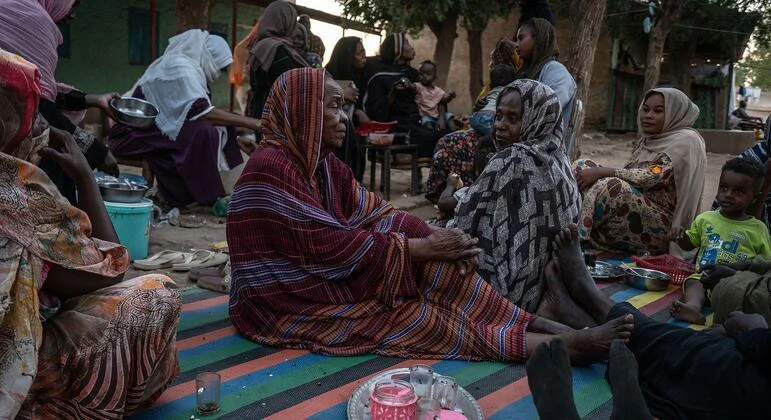
The gender equality agency UN Women issued a grave warning this week, highlighting a harrowing "dual terror" engulfing El Obeid, the capital of North Kordofan state in Sudan. The agency’s regional director for East and Southern Africa, Anna Mutavati, briefed journalists from Nairobi, stating unequivocally that "In El Obeid, Sudan, drone attacks during the day and sexual violence at night have left no safe window for women and girls to collect water." This dire situation, she noted, disturbingly echoes the atrocities documented in El Fasher last year, signaling a dangerous pattern of targeted violence against civilians, particularly women, in Sudan’s escalating conflict.
A City Under Siege: El Obeid’s Strategic Importance
El Obeid, a bustling city home to over half a million people, including approximately 83,000 internally displaced persons (IDPs), predominantly women and children, holds immense strategic importance in Sudan’s ongoing conflict. Its pivotal location on the critical routes linking the capital Khartoum with the vast Darfur region, the wider Kordofan area, and southern Sudan has rendered it a coveted prize for both warring factions. Since the conflict erupted in April 2023 between the Sudanese Armed Forces (SAF) and the paramilitary Rapid Support Forces (RSF), control over El Obeid has been fiercely contested, transforming it into a flashpoint of brutal urban warfare. The city serves as a crucial logistical hub, controlling supply lines and access to resources, making its capture or effective incapacitation a significant military objective. This strategic value, however, has come at an unspeakable cost to its civilian population, who find themselves trapped in a conflict not of their making.
The Unrelenting Terror: Drones and Sexual Violence
The "dual terror" described by UN Women manifests in a relentless cycle of fear and violence. During daylight hours, water points and distribution sites – essential lifelines for the community – are frequently targeted by drone attacks. This deliberate targeting of civilian infrastructure forces women and girls, traditionally responsible for water collection in Sudanese society, to delay their perilous journeys until nightfall, falsely believing that darkness offers a shroud of protection. However, as Ms. Mutavati tragically revealed, this desperate gamble offers no respite. Instead, under the cover of night, many are "harassed, raped, and subjected to other forms of sexual violence" while merely attempting to fill a jerrycan, a fundamental task for survival.
The proliferation of foreign-made drones has profoundly altered the dynamics of the Sudanese conflict, pushing the war deeper into civilian life. These sophisticated aerial weapons bring critical infrastructure, including essential services like water systems, within deadly range, indiscriminately affecting non-combatants. The UN’s human rights chief, Volker Türk, had already warned in May of the conflict teetering "on the cusp of entering yet another new, even deadlier phase." His concerns were tragically underscored by data indicating that drone strikes alone accounted for at least 880 civilian deaths in the first four months of 2024 (interpreted from "2026" in the original text), constituting over 80 percent of all civilian fatalities recorded by the human rights office during that period. This statistic paints a grim picture of a conflict where civilians are not merely collateral damage but increasingly direct targets.
A Deeper Dive into the Crisis: Water, Disease, and Displacement
The water crisis in El Obeid is multifaceted, stemming from direct attacks on infrastructure, a lack of maintenance, and the general breakdown of services exacerbated by the conflict. With the rainy season anticipated to peak next month, the looming water scarcity intensifies fears of widespread disease outbreaks. Cholera, a deadly waterborne illness, is already spreading across Sudan, with the World Health Organization (WHO) reporting 1,330 cases by early July. This risk is compounded by rampant malnutrition, which severely weakens the immune systems of already vulnerable women and girls, and severely limited access to food and healthcare, particularly in overcrowded displacement sites where sanitation is often rudimentary. The lack of safe water for drinking, cooking, and hygiene creates a perfect storm for public health catastrophes.
Sexual Violence as a Weapon of War: A Systemic Issue
Sexual violence has been systematically employed as a weapon throughout Sudan’s prolonged three-year conflict, a grim tactic designed to terrorize, subjugate, and displace communities. Testimonies from survivors describe horrific incidents of rape committed in front of family members, alongside brutal physical abuse, inflicting deep psychological trauma that can last a lifetime. The scale of this violence is staggering; UN Women estimates that the number of women and girls requiring gender-based violence (GBV) services nationwide has quadrupled since the conflict began, reaching an estimated 12.7 million in 2024 (interpreted from "2026" in the original text). This surge highlights not only the pervasive nature of the violence but also the profound breakdown of protection mechanisms and social structures. The long-term consequences of such widespread sexual violence extend beyond individual suffering, tearing at the fabric of families and communities, fueling distrust, and hindering any future prospects for reconciliation and peace.
Echoes of El Fasher: A Precedent for Atrocities
The explicit comparison drawn by UN Women between the situation in El Obeid and the atrocities documented in El Fasher last year is deeply alarming. El Fasher, the capital of North Darfur, has witnessed a brutal siege and intense fighting, characterized by attacks on civilian infrastructure, indiscriminate shelling, and widespread human rights abuses. The UN Fact-Finding Mission for Sudan recently warned that the paramilitary Rapid Support Forces (RSF) appear to be replicating these devastating tactics by encircling El Obeid and attacking its critical infrastructure. This pattern raises terrifying fears that El Obeid could soon face mass atrocities on a scale similar to, or even exceeding, those seen in El Fasher. The historical context of violence in Darfur, including genocidal campaigns and widespread sexual violence, provides a chilling backdrop, suggesting a deliberate strategy of terror and ethnic cleansing that continues to plague Sudan.
The Broader Humanitarian Catastrophe
Beyond El Obeid, Sudan is grappling with one of the world’s most severe humanitarian crises. The conflict has triggered an unprecedented displacement crisis, with millions forced to flee their homes, either internally or across borders into neighboring countries like Chad, South Sudan, and Egypt. Food insecurity has reached critical levels, with UN agencies warning of impending famine in several regions, driven by disrupted agricultural cycles, destroyed markets, and blockaded aid routes. The healthcare system has largely collapsed, with hospitals destroyed or non-functional, and medical professionals fleeing the country. This systemic failure of essential services, combined with rampant violence, has pushed Sudan to the brink of a complete societal breakdown.
The Indispensable Role of Women-Led Organizations
In the midst of this chaos, women-led organizations remain an indispensable lifeline, reaching communities that other, larger international bodies often cannot due to security constraints or access issues. These local organizations play a critical role in delivering protection, psychosocial support, and essential services, particularly for survivors of gender-based violence. Their deep understanding of local contexts and strong community ties make them uniquely effective. However, these vital organizations are themselves under immense pressure. Funding cuts have forced two-thirds of them to either close or significantly scale back their safe spaces and GBV services. Alarmingly, half of those surveyed expect to suspend operations or shut down entirely within the year if urgent financial support is not secured. This erosion of local capacity directly impacts the most vulnerable, leaving countless women and girls without crucial support and protection at a time when they need it most.
International Law and Accountability
The systematic targeting of civilians and civilian infrastructure, including water points, and the widespread use of sexual violence as a weapon, constitute grave violations of international humanitarian law and potentially war crimes and crimes against humanity. The international community, including bodies like the International Criminal Court (ICC), has a responsibility to investigate these atrocities and ensure accountability for perpetrators. However, the pervasive culture of impunity in Sudan, coupled with the ongoing conflict, makes justice a distant prospect for most victims. Volker Türk’s warnings about a "deadlier phase" underscore the urgent need for robust international mechanisms to monitor, document, and report human rights abuses, laying the groundwork for future accountability.
Calls for Action and the Path to Peace
In light of the escalating crisis, Anna Mutavati reiterated UN Women’s urgent call for an immediate ceasefire, inclusive peace talks, and an end to the devastating war. Such calls are echoed by numerous humanitarian organizations and international bodies, all emphasizing that only a political solution can halt the spiraling violence and address the root causes of the conflict. However, peace efforts have been fraught with challenges, marked by the intransigence of the warring parties, a lack of trust, and fragmented international engagement. Regional interference and the flow of foreign arms further complicate the prospects for a lasting resolution.
The situation in El Obeid serves as a stark reminder of the catastrophic human cost of the Sudanese conflict. It is a microcosm of a larger tragedy unfolding across the nation, where basic human rights are systematically violated, and the most vulnerable populations, particularly women and girls, bear the brunt of unimaginable suffering. Without concerted international pressure, sustained humanitarian aid, and a genuine commitment to peace from all parties, the "dual terror" gripping El Obeid risks becoming the grim reality for millions more across Sudan. The world watches, as a nation teeters on the precipice, its future dependent on the willingness of its leaders and the international community to prioritize human life over political gain.