The global humanitarian architecture is facing an unprecedented reckoning as catastrophic funding shortages threaten to strip away life-saving protections from millions of vulnerable people worldwide. According to a landmark report released by the UN Refugee Agency (UNHCR), nearly 8.3 million refugees, forcibly displaced individuals, and stateless people are now on the brink of losing access to essential assistance. Titled Protection Eroded: The Human Cost of Underfunding, the report paints a grim picture of humanitarian systems pushed to their absolute breaking point by a precipitous fall in international donor support.
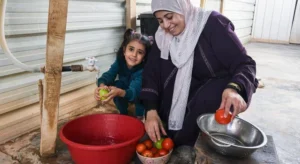
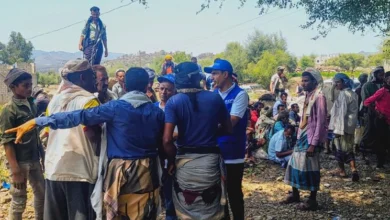
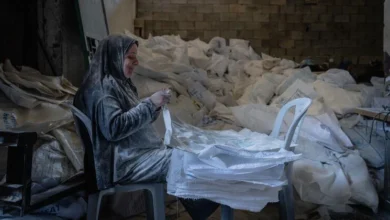
The human reality behind these macroeconomic figures is starkly visible in places like Kabul Province, Afghanistan. Mr. Shafi, a refugee whose leg injury severely limits his ability to work, crossed the border and received a single, one-off cash grant from the UNHCR. Today, his family survives in a makeshift shelter constructed with stone-patched walls and plastic-sheet windows. "When there is little food, I give it to the children. If they are hungry, they cry," Shafi said. "We have nothing prepared for winter. If someone helps, we can manage. If no one helps, we have nothing."
Shafi’s plight is emblematic of a wider systemic failure. The UNHCR warns that the international community’s financial commitments have failed to keep pace with historically high levels of global displacement, leaving humanitarian agencies structurally hollowed out and unable to meet even the most fundamental human needs.
Chronology of a Funding Crisis: A Steep Downward Trajectory
The crisis unfolding across UNHCR operations is not a sudden anomaly, but rather the culmination of a multi-year decline in flexible and predictable international funding. To understand the gravity of the current situation, it is necessary to examine the timeline of budgetary degradation that has crippled global refugee response systems.
Between 2024 and 2025, total available funding for the UNHCR plummeted from $5.178 billion to $3.932 billion—a staggering loss of more than $1.2 billion in a single year. Despite this massive contraction in resources, the population under the agency’s mandate remained at historic highs, driven by protracted conflicts, climate shocks, and political instability across multiple continents.
By July of the current funding cycle, the agency had received a mere 32 percent of the $8.5 billion desperately required to sustain its global operations for the year. This widening chasm between operational requirements and incoming revenue has forced the UNHCR to implement drastic austerity measures. In 2025 alone, the agency was forced to cut its global workforce by a third and shutter offices in 140 distinct locations worldwide.
Furthermore, the nature of the funding has shifted detrimentally. The share of donor funding tied to specific, rigid projects—rather than flexible, unrestricted use—has surged from 19 percent in 2022 to 51 percent. This reliance on earmarked funding has severely hampered the UNHCR’s ability to swiftly deploy resources to emerging hotspots or sustain long-term protection frameworks.
The Breaking Point: Regional Impacts and Protection Failures
Unlike food distribution or emergency shelter provisioning, which can theoretically be scaled down or rationed into smaller portions, humanitarian protection cannot be indefinitely diluted. The UNHCR report explicitly warns that "below a certain threshold the system doesn’t shrink, it fails." When protective infrastructure collapses, the precise dangers that forced individuals to flee their homes—including extreme violence, human trafficking, exploitation, and systemic abuse—instantly resurface in displacement settings.
The consequences of these funding shortfalls are already materializing with devastating severity across multiple key operations:
Afghanistan: A Nation Under Strain
In Afghanistan, where more than one million people have returned in 2026 alone, the capacity to absorb and reintegrate returnees has collapsed. The arrival cash grant provided to refugees has been slashed by more than half, dropping from $375 per person down to just $170 per household. Compounding this, comprehensive reintegration grants have reached a mere 175 households so far this year, a sharp and alarming decline from the 5,300 households supported in 2024.
Chad: Documentation and Child Protection at Risk
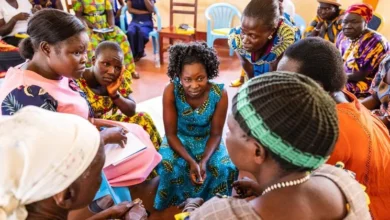
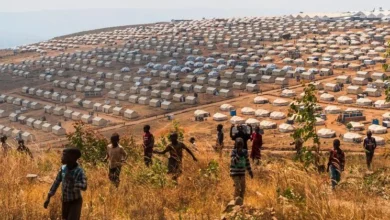
In Chad, approximately 319,000 refugees are facing severe registration delays. Without official documentation, these individuals are left in legal limbo, exposing them to heightened risks of arbitrary detention and restricting their access to basic services. Additionally, up to 200,000 women and girls in the country are at risk of losing access to safe spaces, while around 233,000 children face the imminent loss of critical child protection services.
Ethiopia: Evaporating Support for Survivors of Violence
Ethiopia has witnessed a catastrophic contraction of specialized protection infrastructure. Over the span of just twelve months, the number of safe houses designated for survivors of gender-based violence has more than halved, dropping precipitously from 29 to just 13. Concurrently, child protection coverage in vulnerable regional areas has experienced reductions of up to 85 percent, leaving thousands of minors entirely unprotected.
Sudan: Life-Saving Care Jeopardized
In Sudan, where ongoing conflict has generated immense humanitarian needs, over 50,000 survivors of sexual violence across the Darfur and Kordofan regions are now at severe risk of losing access to life-saving post-rape care and medical intervention, representing an intolerable humanitarian deficit.
Official Responses and the Call for Flexible Financing
As the human cost of underfunding mounts, senior humanitarian leadership is issuing urgent appeals to the international donor community. Dominique Hyde, the UNHCR’s Director of External Relations, underscored the existential nature of the crisis during the release of the report.
"When registration stops, safe houses close or child protection services disappear, the very risks that people fled—violence, exploitation and abuse—reappear in displacement," Hyde stated. She emphasized that institutional survival depends heavily on the structure of donor contributions. "Flexible funding helps us move the right expertise and funds to where they are needed the most," she explained, reiterating that core protection mechanisms cannot be "reduced indefinitely without systems collapsing."
The UNHCR is urgently calling upon governments, private sector partners, and institutional donors to step forward with unearmarked, flexible financial contributions. Without immediate interventions to bridge the multi-billion-dollar funding gap, the agency warns that basic human rights, legal safeguards, and physical security for millions of displaced people will effectively evaporate.
Broader Implications and Future Outlook
The implications of the current underfunding crisis extend far beyond immediate humanitarian metrics, threatening regional stability and international security. When protection systems fail, desperate populations are frequently forced into secondary displacement, dangerous irregular maritime and overland migration routes, and negative coping mechanisms such as child labor and early marriage.
Furthermore, the systematic dismantling of refugee agencies undermines long-term peacebuilding and stabilization efforts in fragile states. As returnees and internally displaced persons find themselves abandoned by the international community in places like Afghanistan, Chad, and Sudan, the potential for renewed social friction, resource competition, and localized conflict increases exponentially.
Ultimately, the UNHCR’s warning serves as an urgent wake-up call to global policymakers. The unfolding tragedy of 8.3 million people losing vital assistance is not merely an operational setback for a single United Nations agency; it represents a profound test of the international community’s commitment to human dignity, international law, and collective responsibility in an era of unprecedented global displacement.