The humanitarian crisis in southwestern Yemen has deteriorated dramatically following a fierce resurgence of military hostilities that has forced nearly 50,000 individuals to flee their homes in a matter of days. According to urgent briefings issued by United Nations agencies, the scale of displacement across the West Coast and Taiz governorates is escalating at an unprecedented pace, with figures multiplying by the hour as frontlines shift into heavily populated territories.
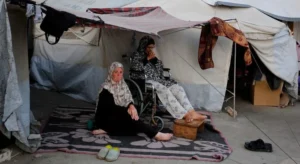
The renewed violence marks a devastating regression for a nation that had experienced a fragile period of relative calm in recent years. International humanitarian organizations are scrambling to respond to an unfolding catastrophe characterized by mass evacuations, critical supply shortages, a crippled healthcare infrastructure, and mounting civilian casualties. Families forced onto the road are frequently finding themselves displaced for the second or third time since the broader regional conflict engulfed the country, leaving them destitute, exhausted, and vulnerable to exposure and disease.
Chronology of the Escalation: From Regional Shockwaves to Domestic War
The roots of the current crisis trace back to a compounding series of geopolitical shocks that shattered Yemen’s fragile truce. Following years of a stalemate between Houthi movement forces and the internationally recognized Yemeni Government—which is backed by a coalition led by Saudi Arabia—the nation was abruptly dragged back into full-scale warfare in July. This domestic flashpoint was inextricably linked to wider regional destabilization triggered in late February by the outbreak of the US-Israeli offensive against Iran, which subsequently sucked peripheral regional actors into a broader theater of confrontation.
Throughout August, hostilities intensified exponentially. Earlier this week, Houthi fighters executed a rapid advance that culminated in their seizure of Mokha, a strategically vital Red Sea port city. The fall of Mokha triggered an immediate mass exodus, with overnight crowds of residents observed fleeing the city laden with whatever meager possessions they could carry.
As the military momentum shifted, fighting spilled deeper into the surrounding districts of Taiz governorate. Entire villages were reported completely emptied in Maqbanah, Jabal Habashi, and Al Ma’afer as artillery fire and ground engagements approached civilian residential sectors. The violence further disrupted vital infrastructure when the primary road linking Mokha to Taiz—an indispensable artery for commercial goods and humanitarian relief—was severed.
Compounding the crisis on the maritime front, pro-government forces reportedly executed a tactical withdrawal on Friday from an island military base situated within the narrow and strategically vital Bab al-Mandab Strait. Concurrently, militant elements vowed to sustain offensive operations against commercial and Saudi shipping lanes traversing the crucial strait, raising serious concerns regarding international maritime security and the uninterrupted flow of global trade.
Devastating Human Toll and Escalating Civilian Casualties
The human cost of the renewed fighting has been catastrophic, affecting combatants and non-combatants alike. According to media reports, clashes over the past week have claimed hundreds of lives on both sides, predominantly among military personnel. However, the toll on the civilian population has also climbed steeply.
On Thursday, the UN Office for the Coordination of Humanitarian Affairs (OCHA) reported that at least 14 civilians, including two young children, had been killed or wounded since the beginning of the month. Concurrently, data compiled by the World Health Organization (WHO) documented an even wider casualty footprint, recording 67 deaths and 288 injuries between August 6 and August 24 across seven distinct governorates. These casualties spanned a vast geographic area, stretching from Marib and Hadramout in the east to Al-Hodeidah in the west, Taiz in the southwest, and Shabwah, Al-Dhale’a, and Lahj in the southern sectors.
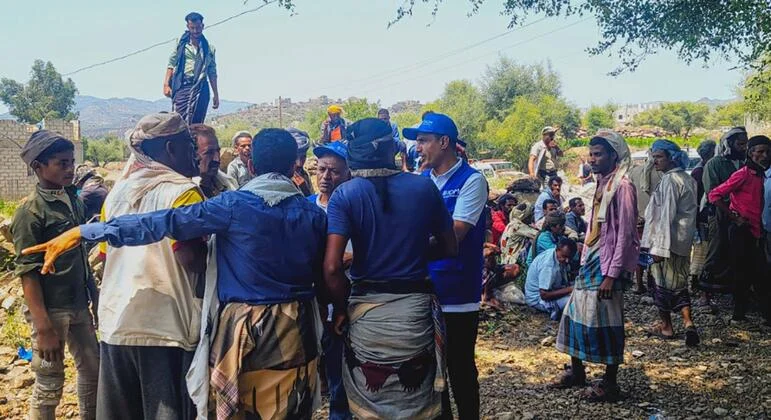
The mass movement of desperate families has placed an unsustainable burden on host communities in neighboring regions. New arrivals have flooded into Lahj and Aden governorates in search of safety, while others have pushed northward toward Ibb. Because many of these internally displaced persons (IDPs) had already been uprooted multiple times over the past decade of war, they possess virtually zero economic reserves or coping mechanisms to endure yet another displacement cycle.
Humanitarian Operations Strained to the Breaking Point
International migration and relief agencies have issued urgent appeals for safe passage and immediate financial support, warning that their operational capacity is being stretched to absolute limits. Amy Pope, Director General of the International Organization for Migration (IOM), underscored the severity of the situation, noting that families are fleeing with almost nothing left and that humanitarian access is becoming dangerously constricted precisely as needs skyrocket.
The operational challenges confronting aid organizations are compounded by prior resource constraints. Emergency stockpiles across Yemen were already heavily depleted following recent relief efforts responding to severe seasonal flooding earlier in the year. Consequently, humanitarian agencies are facing critical shortages of basic necessities, including emergency shelter materials, safe drinking water, nutritious food supplies, household items, and specialized protection services for vulnerable demographics such as women and children.
Furthermore, humanitarian actors are pressing all parties to the conflict to respect international humanitarian law. This includes guaranteeing safe, unhindered, and sustained humanitarian access to conflict-affected zones, ensuring the absolute safety of aid workers and civilian infrastructure, and actively working to restore critical communication networks and transport corridors necessary for the distribution of life-saving cargo.
Healthcare System on the Brink of Collapse
Beyond the immediate crisis of displacement, the military escalation has delivered a severe blow to Yemen’s chronically fragile and under-resourced health system. Hospitals and medical centers situated in regional hubs such as Marib, Hadramaut, and Taiz are currently grappling with an overwhelming influx of trauma patients, pushing emergency departments, surgical suites, and intensive care units past their breaking points.
Statistical assessments provided by the WHO indicate that only 60 percent of health facilities across Yemen remain fully operational. This severe capacity deficit means that medical institutions are simultaneously forced to absorb a massive surge in war-wounded patients while managing day-to-day public health emergencies.
The strain is starkly evident at Marib General Hospital, where administrative officials were forced to temporarily suspend maternity and obstetrics services to repurpose medical supplies, operating theaters, and personnel for the treatment of trauma victims. In a grim illustration of the scale of casualties, morgue capacities at several regional facilities have been entirely overwhelmed, forcing hospitals to seek emergency measures to manage fatalities.
This necessary reallocation of limited medical resources toward acute trauma care has created a profound secondary crisis for patients suffering from chronic illnesses, routine infections, and obstetric emergencies, all of whom are finding it increasingly difficult to access necessary care amid severe shortages of medical staff, hospital beds, and pharmaceutical supplies.
Broader Implications and Outlook
The rapid unraveling of security in southwest Yemen serves as a grim reminder of how deeply local conflicts remain intertwined with volatile regional dynamics. The expansion of hostilities into critical maritime chokepoints like the Bab al-Mandab Strait threatens not only regional stability but also international supply chains, raising the stakes for external powers monitoring the conflict.
Domestically, the humanitarian outlook remains deeply concerning. With the number of displaced individuals climbing exponentially and fighting showing no signs of immediate abatement, the risk of a protracted humanitarian disaster is high. Unless sustained diplomatic pressure can secure an immediate cessation of hostilities and guarantee unfettered humanitarian corridors, the local population will continue to bear the brunt of a conflict that shows devastating resilience in the face of international peace efforts.