The global architecture designed to secure human rights, economic stability, and democratic integrity faces an unprecedented systemic failure, according to a landmark global evaluation published by the United Nations. The Gender Snapshot 2026 report concludes that not a single indicator linked to Sustainable Development Goal 5 (SDG 5)—the international blueprint dedicated exclusively to achieving gender equality and empowering all women and girls—is currently on track to be met by the established 2030 deadline. This sobering reality underscores a profound regression in international human rights commitments, pointing to deep-seated structural barriers, pervasive institutional inertia, and a dangerous contraction in political and financial prioritization worldwide.
The comprehensive assessment evaluates progress across multiple critical dimensions of gender parity. These include the elimination of all forms of discrimination and gender-based violence, the eradication of harmful traditional practices such as child marriage and female genital mutilation (FGM), the guarantee of universal access to reproductive rights and health, and the secure establishment of full economic, land, and political participation for women. Instead of pointing toward transformative progress as the 2030 deadline approaches, the data reveals a stark stagnation—and in many jurisdictions, an alarming reversal—of hard-won mid-century gains.
A Decade of Ambition Met by Structural Stagnation
To understand the gravity of the current landscape, it is necessary to examine the historical trajectory of the Sustainable Development Goals. Adopted unanimously by all United Nations member states in September 2015 as part of the 2030 Agenda for Sustainable Development, the 17 SDGs were designed as an interconnected, universal call to action to end poverty, protect the planet, and ensure prosperity for all. SDG 5 was intentionally integrated not merely as a standalone humanitarian objective, but as a crucial cross-cutting catalyst necessary for the successful fulfillment of virtually every other goal, from poverty eradication (SDG 1) to economic growth (SDG 8) and peaceful, inclusive societies (SDG 16).
During the initial years following the 2015 adoption, international monitoring mechanisms reported incremental, albeit uneven, progress. Governments introduced legislative reforms, and civil society organizations amplified advocacy networks. However, the subsequent convergence of global crises—including the COVID-19 pandemic, compounding geopolitical conflicts, severe inflationary pressures, and the global retreat of democratic norms—exposed the fragility of these early advances. By the halfway mark of the 2030 Agenda in 2023, independent analyses already indicated severe delays. The Gender Snapshot 2026 now provides definitive confirmation that the structural momentum required to achieve gender parity has essentially collapsed, transforming what was envisioned as a decade of delivery into a period of systemic regression.
The Monopoly of Political Power and the Cost of Leadership
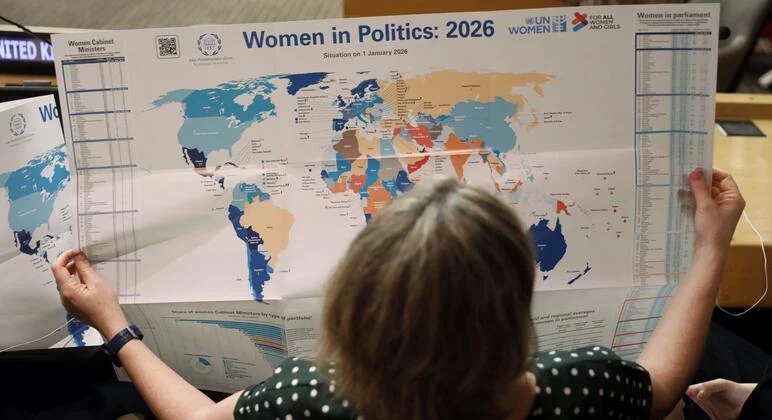
Nowhere is this regression more visible than in the architecture of global political and economic leadership. The report highlights a persistent and formidable concentration of political power among men, revealing that, globally, six out of seven countries are currently led by men as heads of state or government. This vast disparity in executive leadership mirrors a deeply entrenched structural exclusion that begins long before a candidate ever reaches a ballot box.
Financial hurdles act as an immediate gatekeeper. In numerous political systems worldwide, the legitimate cost of mounting a viable electoral campaign can exceed one hundred times a country’s average per capita income. This prohibitive economic barrier systematically screens out marginalized populations, disproportionately disenfranchising women who statistically possess lower accumulated personal wealth and face greater obstacles in accessing political donor networks.
Compounding these financial barriers is a staggering epidemic of public hostility. In several surveyed countries, up to eight out of ten women running for public office report experiencing physical, psychological, or digital violence designed to drive them out of civic life. This gendered political violence functions as an insidious censorship mechanism, deterring qualified female leaders from stepping forward.
Even when women successfully navigate these hostile environments and enter government service, structural sidelining persists. Executive appointments reveal a stark occupational segregation within state cabinets: close to nine in ten defense ministers and more than eight in ten finance ministers globally are men. Critical state portfolios commanding national security, military strategy, and macroeconomic policy remain overwhelmingly male domains. Women ministers are routinely channeled into social welfare, cultural, or familial portfolios—sectors that, while vital, are historically under-resourced and possess significantly less influence over overarching national budgets and strategic state directions.
This systemic exclusion extends decisively into the corporate and judicial spheres. Women currently occupy a mere six percent of Chief Executive Officer positions across the world’s major corporations and lead fewer than 20 percent of the planet’s highest courts. Consequently, the foundational decisions dictating corporate governance, legal interpretation, labor laws, and the global macroeconomic trajectory remain overwhelmingly concentrated in male hands. The UN report warns that this profound imbalance severely undermines modern democracy, as no nation can authentically claim to uphold universal human rights or democratic legitimacy while half its citizenry lacks an equitable voice in supreme leadership and decision-making.
Enduring Crises of Violence, Discrimination, and Legal Protection
Beyond the halls of power, the daily existence of millions of women and girls continues to be blighted by severe physical violence, restrictive legal frameworks, and institutionalized discrimination. The statistical portrait painted by the Gender Snapshot 2026 is both harrowing and urgent.
Despite decades of international advocacy and legal prohibition, nearly one in five girls globally is married before reaching the age of 18, cutting short their education, stunting their economic potential, and exposing them prematurely to maternal health risks. Furthermore, an estimated 230 million women and girls alive today are survivors of female genital mutilation, a deeply entrenched human rights violation practiced across multiple regions.
Domestic and intimate realms remain exceptionally dangerous. Nearly one in three women worldwide has survived partner violence or sexual violence in her lifetime. Demonstrating the persistent, ongoing nature of this crisis, the report notes that in the 12 months preceding the evaluation alone, an astounding 316 million women experienced physical or sexual violence inflicted by an intimate partner. These figures illustrate a pervasive global health and security emergency that routinely operates beneath the threshold of formal criminal justice systems.
Legal systems themselves frequently fail to provide adequate protection. The report’s sobering legal audit reveals that not a single country evaluated has achieved full legal equality between men and women. More than half—51 percent—of the 131 countries studied maintain significant, structural legal gaps in their civil, penal, or commercial codes.
Economic vulnerability is further exacerbated by systemic land inequality. Nearly two-thirds of nations analyzed provide zero or negligible legal protection for women’s land rights, creating formidable barriers to independent land ownership, collateral acquisition, and secure tenure. Less than 30 percent of the nations studied legally mandate joint land registration or guarantee women’s active participation in rural and urban land governance. Without secure property rights, women remain structurally trapped in cycles of economic dependency, highly vulnerable to poverty upon the dissolution of marriage or the death of a spouse.
The Great Disinvestment: Gender Equality Removed from Policy Agendas
Perhaps the most alarming revelation of the 2026 report is the discovery that structural solutions to these crises are being actively deprioritized by national governments and international donors alike. Amid a broader, global contraction in Official Development Assistance (ODA) and tighter national fiscal budgets, programs explicitly dedicated to addressing gender inequality have emerged as among the hardest hit.
International development funding for gender equality initiatives has plummeted to its lowest level since 2021. This financial starvation is replicated at the institutional level: one in four formal institutional mechanisms designed to advance gender equality within state administrations have experienced direct operating budget cuts over the past two years. More insidiously, one in three such entities has watched its institutional authority and legal mandate actively eroded over the same timeframe.
The multilateral system itself is feeling the strain of these political and financial shifts. Faced with severe resource constraints, 42 percent of United Nations entities report a measurable weakening of their operational capacity to execute gender equality programming.
Official Responses and the Economic Imperative of Parity
Reacting to the release of the 2026 findings, senior UN officials offered stark warnings alongside strategic pathways for corrective action.
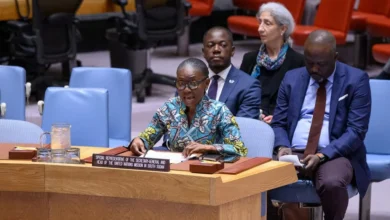
"What the Gender Snapshot 2026 shows is that this is not inevitable," declared Li Junhua, UN Under-Secretary-General for Economic and Social Affairs. "It is the result of choices, made visible through data. Investing in gender equality, institutions, and the statistical systems that hold them to account is not a cost. It is the fastest route back to the 2030 Agenda’s promise of equal power for all."
Independent economic analysts and human rights advocates have echoed these sentiments, pointing out that systemic gender discrimination is not merely a moral failure, but a catastrophic economic miscalculation. Global economic models consistently demonstrate that closing gender gaps in labor force participation, entrepreneurship, leadership, and property ownership could inject trillions of dollars into the global economy, significantly boosting GDPs, fostering innovation, and stabilizing post-crisis recoveries.
Broader Implications for the 2030 Agenda
As the international community confronts the closing years of the current sustainable development cycle, the implications of the Gender Snapshot 2026 extend far beyond women’s rights organizations. The failure to secure SDG 5 signals a fundamental fracture in the entire architecture of global multilateralism.
Without targeted, emergency interventions—including enforceable legal quotas for political representation, emergency funding infusions for gender-based violence response systems, sweeping legal reforms guaranteeing land tenure, and robust accountability mechanisms—the 2030 Agenda risks collapsing under the weight of structural inequality. The report serves as both an indictment of current political choices and an urgent final warning to global leaders that sustainable human progress cannot be achieved while half the world’s population is systematically denied power, safety, and equal justice.