The Independent International Fact-Finding Mission on Iran has released a sweeping and deeply critical report detailing severe human rights violations, systematic state-sponsored violence, and potential war crimes committed amid an escalating multi-layered crisis. Published on 17 September 2026, the comprehensive findings document a landscape of immense civilian suffering inside the Islamic Republic, driven both by the domestic government’s violent crackdowns on mass civil unrest and by foreign military interventions. The report marks a critical milestone in international accountability efforts, bringing to light grave breaches of international humanitarian law that span from nationwide domestic protests to targeted cross-border military strikes involving the United States and Israel.
According to the newly released documentation, investigators found conclusive evidence that civilians in Iran have been subjected to widespread atrocities constituting crimes against humanity, executed directly by state security apparatuses. Simultaneously, the expert panel identified reasonable grounds to believe that the United States military committed war crimes during its ongoing armed conflict with the Iranian government. By examining the dual tracks of domestic suppression and international warfare, the fact-finding mission has underscored an unprecedented humanitarian emergency, calling for immediate global intervention, independent judicial accountability, and unconditional protection for vulnerable populations caught in the crossfire.
Nationwide Crackdowns and Domestic Atrocities
The core of the independent mission’s findings centers on the Iranian government’s brutal suppression of mass protests that swept across the country, beginning in the previous year and continuing into 2026. Investigators reported that lethal force was deployed by security forces on a massive, indiscriminate scale across all of Iran’s provinces. Rather than acting as a measure to restore public order, state responses transformed into a systematic campaign aimed at terrorizing the civilian population into submission.
Among the most harrowing revelations in the report is the confirmed death of at least 221 children, some as young as two years old, who fell victim to the state’s aggressive security measures. The mission documented a systemic strategy by security forces to target medical infrastructure and personnel. Hospitals and clinics were raided, wounded demonstrators were systematically beaten and arrested within medical facilities, and healthcare workers were detained to deter medical professionals from providing life-saving treatments. This deliberate obstruction of medical access left countless injured civilians untreated or forced into hiding, exacerbating the death toll and deepening the humanitarian crisis.
Furthermore, the report highlights the widespread use of arbitrary detention as a tool of political control. Tens of thousands of citizens—including political activists, journalists, human rights defenders, and ordinary participants in the protests—were rounded up and incarcerated. Within detention facilities, detainees routinely faced severe physical and psychological torture, prolonged solitary confinement, and a total denial of access to legal counsel. Families of the detained were routinely left in the dark regarding the whereabouts of their loved ones, giving rise to widespread concerns over enforced disappearances and state-sanctioned abductions.
The judicial system in Iran was heavily implicated in facilitating these abuses through expedited, summary trials that completely bypassed due process. The mission confirmed the execution of at least 29 men in direct connection with the protests, five of whom were executed publicly to maximize societal intimidation. Compounding these horrors, the report warns that more than 70 individuals—including five women and three minor boys—remain on death row and face the imminent risk of execution, pending final judicial sign-offs.
Legal analysts and human rights experts contributing to the report concluded that these collective actions transcend isolated incidents of police brutality. Instead, the panel determined that many of these grave violations legally amount to crimes against humanity—specifically encompassing murder, unlawful imprisonment, severe torture, and other inhumane acts executed as part of a coordinated, widespread, and systematic assault on the civilian populace.
International Military Intervention and Alleged War Crimes
Expanding beyond the domestic sphere, the UN fact-finding mission turned its critical lens toward the international armed conflict that erupted earlier in the year. Following coordinated military attacks launched by the United States and Israel against targets within Iran in February, international investigators scrutinized the conduct of foreign military forces under the framework of international humanitarian law.
The mission concluded that there are "reasonable grounds to believe that the United States committed a war crime by launching indiscriminate attacks that killed or injured civilians or damaged civilian objects." International humanitarian law strictly prohibits attacks that fail to distinguish between military objectives and civilian populations, or that cause incidental civilian loss that would be excessive in relation to the anticipated military advantage.
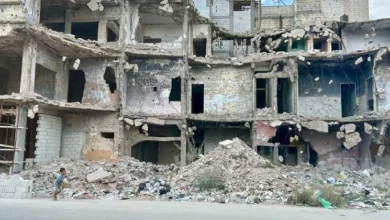
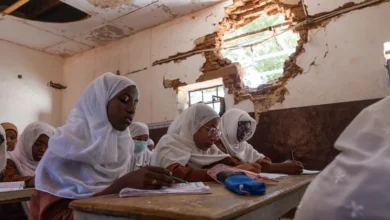
The report highlights specific incidents that formed the basis of these grave allegations. Among them was a devastating Tomahawk cruise missile strike targeting the Tree of Tayyiba Elementary School in Minab. The facility, which was clearly identifiable as a civilian educational institution, was struck during active hours, resulting in the deaths of more than 150 people, approximately 120 of whom were children. In a separate air strike investigated by the panel, precision-guided munitions deployed a dispersion of tungsten pellets—a lethal fragmentation technology—over a densely populated residential area and a clearly marked public sports complex in Lamard. This specific strike resulted in the immediate deaths of 22 civilians.
These findings place intense legal and moral pressure on Washington and its allies, demanding a stringent re-evaluation of targeting protocols, rules of engagement, and accountability mechanisms within modern asymmetrical warfare.
Chronology of the Crisis: From Domestic Unrest to Regional Conflict
To fully understand the gravity of the findings compiled by the fact-finding mission, it is essential to trace the chronological evolution of the crises that have engulfed Iran and the broader region over the past two years:
- Late Previous Year: Widespread socio-economic grievances and demands for political reform spark massive, decentralized street protests across multiple provinces in Iran, drawing participation from diverse segments of society, including students, laborers, and women.
- Late Previous Year to Early Current Year: The Iranian government initiates a violent, nationwide crackdown. Security forces utilize live ammunition, armored vehicles, and mass arrests to suppress demonstrations, resulting in high casualties, including hundreds of children.
- February: Military tensions escalate dramatically as the United States and Israel launch coordinated air strikes against strategic and military installations within Iranian territory, expanding the theater of crisis and resulting in high-profile civilian casualties from precision and missile strikes.
- Mid-Year: Human rights organizations and international bodies document mounting reports of summary executions, enforced disappearances, and systematic torture within Iranian prisons, alongside civilian casualties stemming from foreign military operations.
- 17 September 2026: The Independent International Fact-Finding Mission on Iran formally releases its comprehensive advance report, detailing crimes against humanity by domestic authorities and potential war crimes by the United States.
Structure and Independence of the Fact-Finding Mission
The Independent International Fact-Finding Mission on Iran operates as a specialized, autonomous body mandated by the international community to investigate human rights violations related to the protests and subsequent conflicts. It is crucial to emphasize that the experts comprising this mission are independent investigators; they are not permanent staff members of the United Nations Secretariat, nor do they formally represent any specific member state or political bloc. This structural independence is designed to ensure that their findings, data collection methodologies, and legal conclusions remain entirely objective, impartial, and shielded from political interference.
The methodology utilized in compiling the report involved rigorous evidence gathering, including satellite imagery analysis, forensic pathology assessments, digital verification of video and photographic records, and extensive confidential interviews with eyewitnesses, survivors, escaped detainees, medical professionals, and legal experts. This meticulous approach lends profound credibility to the report’s conclusions, making it difficult for implicated governments to dismiss the findings as politically motivated rhetoric.
Official Responses and Global Implications
The release of the report has triggered immediate reactions from international human rights organizations, legal scholars, and diplomatic circles. While official responses from the governments of Iran and the United States are developing, initial reactions highlight deep geopolitical divisions alongside a unified call from civil society for immediate remediation.
Human rights advocates have seized upon the report to demand immediate action from the United Nations Security Council and the International Criminal Court (ICC). Because Iran is not a state party to the Rome Statute, referring the domestic crimes against humanity to the ICC requires a resolution from the UN Security Council—a pathway historically complicated by geopolitical vetoes. Nevertheless, legal experts suggest that universal jurisdiction principles could allow national courts in third-party states to prosecute individual perpetrators responsible for torture, murder, and enforced disappearances.
Regarding the allegations leveled against the United States, international law groups have called for an independent, transparent Pentagon investigation into the strikes in Minab and Lamard. Accountability advocates stress that adherence to the laws of war must apply universally, regardless of a nation’s geopolitical standing or strategic objectives.
Calls for Peace, Justice, and Non-Repetition
In its concluding remarks, the fact-finding mission issued an urgent, unequivocal appeal to all active combatants and state actors involved in the crises. The independent experts reiterated the global community’s overarching call for an immediate cessation of hostilities and a concerted, good-faith effort toward establishing permanent regional peace.
Furthermore, the report emphasizes that sustainable peace cannot be achieved without comprehensive transitional justice. The mission explicitly urged both the Iranian government and the United States to immediately halt all ongoing human rights violations and breaches of humanitarian law, provide full, unconditioned reparations and financial compensation to surviving victims and their families, and institute structural safeguards to ensure that such catastrophic violations are never repeated.
As the international community digests the staggering data and legal conclusions presented in the report, the pressure mounts on global leaders to translate these findings into concrete diplomatic and legal actions. For the thousands of grieving families, torture survivors, and displaced civilians inside and outside Iran, the report represents both a crucial validation of their suffering and a fragile roadmap toward elusive justice and institutional accountability.