GENEVA, Switzerland – July 21, 2026 – The Democratic Republic of the Congo (DRC) continues to grapple with a rapidly expanding Ebola outbreak, even as UN health teams and their partners race against time to contain its spread amidst pervasive insecurity in the eastern regions where the virus has taken root. As of July 19, the DRC government has officially recorded 2,423 confirmed cases, resulting in a grim tally of 967 deaths and 469 recoveries, painting a stark picture of the ongoing humanitarian crisis. This particular outbreak, declared on May 15, 2026, has been identified as the fastest-growing Ebola outbreak on record, presenting a unique set of challenges due to the specific viral strain involved and the complex geopolitical landscape of the affected areas.
The World Health Organization (WHO) has highlighted the province of Ituri as the undeniable epicenter of this escalating health emergency. Dr. Thierno Baldé, WHO Incident Manager, underscored the severity of the situation, stating, "The outbreak has been reported in five provinces, but the province of Ituri remains the epicentre of the outbreak, accounting for more than 90 per cent of cases and also 80 per cent of deaths." Beyond Ituri, the contagion has also impacted North Kivu, South Kivu, Haut-Uele, and Tshopo, all provinces located in eastern DRC, a region notorious for chronic instability and entrenched conflict. Dr. Baldé, speaking to journalists from Bunia, Ituri’s capital, confirmed that the Bundibugyo virus – the strain responsible for this latest outbreak – is extending its reach to new territories. This expansion is tragically facilitated by the confluence of ongoing conflict, the presence of highly mobile and frequently displaced populations, and deeply ingrained community mistrust, creating fertile ground for the infection to proliferate unchecked.
A Deeper Look at the Bundibugyo Strain
The current outbreak is particularly concerning due to the involvement of the Bundibugyo ebolavirus, a strain less common than the more frequently encountered Zaire ebolavirus, which caused the devastating West African epidemic of 2014-2016. A critical distinction is the lack of an approved vaccine or targeted treatment specifically for the Bundibugyo variant, unlike the Zaire strain for which several promising vaccines and therapeutics have been developed and deployed. This absence significantly complicates containment efforts and patient management, placing immense pressure on healthcare systems already struggling in a fragile environment. Historical data indicates the Bundibugyo virus is highly virulent, having caused fatalities in approximately 30 percent of infected individuals during previous outbreaks in 2007 (Uganda) and 2012 (DRC). The current manifestation of full-blown Ebola disease attributed to this variant is marked by severe bleeding and an estimated fatality rate soaring to around 40 percent, underscoring its deadly potential. The disease typically begins with non-specific, flu-like symptoms, including fever, which can easily mask its true identity in the initial stages, delaying diagnosis and increasing the risk of transmission.
Chronology of a Crisis
The current Ebola crisis in the DRC began with its official declaration on May 15, 2026, in eastern Ituri province. The initial weeks saw a rapid escalation in confirmed cases, quickly surpassing previous outbreak records for its sheer speed of expansion. By early June, the outbreak had already spread beyond its initial focus areas, prompting WHO and partners to scale up their emergency response. The timeline below illustrates the critical junctures of the outbreak:
- May 15, 2026: DRC Ministry of Health, in collaboration with WHO, officially declares an Ebola outbreak in Ituri province. Initial cases are traced to a remote mining community, Mongbwalu.
- Late May 2026: Rapid diagnostic and containment efforts are initiated, but face immediate hurdles due to geographical remoteness and existing insecurity.
- Early June 2026: The virus is confirmed to have spread beyond Mongbwalu, reaching other health zones within Ituri and bordering provinces. The Bundibugyo strain is identified.
- Mid-June 2026: The number of confirmed cases rapidly approaches the thousand mark. WHO warns of the unprecedented pace of this particular outbreak.
- Late June 2026: Emergency response teams, including WHO and Médecins Sans Frontières (MSF), intensify efforts, focusing on contact tracing, safe burials, and community engagement. However, access to certain areas remains severely constrained by armed groups.
- Early July 2026: The outbreak expands to five provinces: Ituri, North Kivu, South Kivu, Haut-Uele, and Tshopo. New cases are reported in major transit hubs, raising alarms about wider dissemination.
- July 19, 2026: DRC government reports 2,423 confirmed cases, 967 deaths, and 469 recoveries.
- July 21, 2026: WHO reports signs of stabilization in specific areas like Mongbwalu and Goma, but emphasizes the overall expansion of the outbreak and the critical need for sustained efforts.
Rampant Insecurity and its Impediments to Response
The eastern DRC is a region plagued by decades of conflict, home to numerous armed groups and widespread insecurity. This volatile environment is perhaps the single greatest impediment to an effective Ebola response. The five affected provinces – Ituri, North Kivu, South Kivu, Haut-Uele, and Tshopo – are all hotspots for rebel militia violence, where communities live in perpetual fear of conflict, displacement, and human rights abuses. This instability directly impacts the ability of health teams to access affected areas, conduct contact tracing, provide care, and ensure safe and dignified burials. Roadblocks, ambushes, and direct threats against healthcare workers are not uncommon, leading to delays in response and increased exposure risk for frontline personnel.
Dr. Baldé acknowledged the formidable challenge posed by this environment, stating, "Let’s be very clear, this outbreak remains ahead of us and we are still in the phase of catching up." He emphasized that the response teams are constantly adjusting and tailoring their strategies to the specific, often dangerous, needs of each affected area, while maintaining a primary focus on containing the situation in Bunia and its surroundings. The humanitarian access challenges are compounded by deep-seated mistrust within communities towards external actors, fueled by years of conflict, political grievances, and misinformation. This mistrust often translates into resistance to public health interventions, including refusal of treatment, hiding of cases, and rejection of safe burial practices, which are critical for breaking chains of transmission.
Strategic Interventions and Early Successes
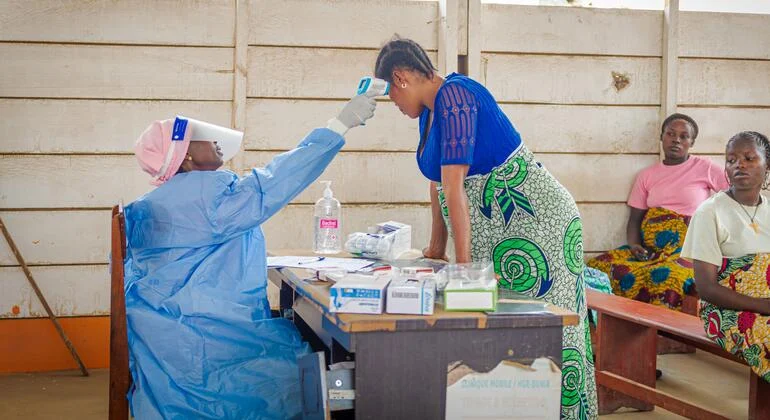
Despite the profound challenges, WHO and its partners are implementing a multifaceted strategy designed to combat the virus. This includes prioritizing the expansion of safe and dignified burials, establishing robust referral systems for suspected cases, and enhancing clinical case management capacity in the most active transmission zones. Community engagement is a cornerstone of this strategy, with teams actively working to build trust, mobilize communities, and encourage acceptance of treatment and follow-up care.
Dr. Baldé highlighted promising results from a "collective strategy" deployed in Kisangani, Tshopo province, where rapid response teams have been instrumental. "No secondary cases have been detected so far in Kisangani," he reported, noting that all five identified cases there were imported from Ituri province. This localized success offers a template for similar interventions. "We intend to roll out a similar rapid response plan in Katwa, Butembo and other emerging areas," he added, indicating a proactive approach to prevent further spread from the epicenters. These rapid response teams focus on immediate isolation of cases, exhaustive contact tracing, and targeted public health messaging.
A novel approach being pursued by the UN health agency is the "Congo River strategy," aimed at reinforcing control measures along this vital waterway. The Congo River serves as a crucial transit route for people and goods across the vast country, making it a high-risk vector for disease transmission. Rapid implementation of control measures at key transit points along the river is deemed essential to prevent the virus from reaching new, potentially more populous, regions. These measures include health screenings, awareness campaigns, and potentially temporary restrictions on movement, all while balancing public health imperatives with the needs of local populations.
Signs of Stabilization Amidst Continued Expansion
Amidst the overarching narrative of expansion and daunting challenges, there are glimmers of hope. Dr. Baldé noted that certain areas are showing signs of stabilization. "Mongbwalu is currently showing some signs of stabilization with a similar trend in Goma, North Kivu province," the WHO Incident Manager observed. Mongbwalu, where the outbreak was initially detected, and Goma, a major provincial capital and transit hub, represent critical locations. Stabilization in these areas suggests that intensive, coordinated interventions, combined with increased community cooperation, can indeed yield positive results. Such stabilization typically means a decrease in the number of new daily cases, a higher percentage of contacts being traced, and improved adherence to public health measures. However, these localized successes must be viewed within the broader context of the virus’s continued expansion across the wider region.
Broader Implications and The Road Ahead
The ongoing Ebola outbreak in the DRC carries profound implications that extend far beyond the immediate health crisis. It places immense strain on an already fragile healthcare system, diverting resources and personnel from other critical public health programs such as routine immunizations, maternal and child health services, and the fight against other endemic diseases like malaria and cholera. This diversion can lead to a rise in morbidity and mortality from these other preventable conditions, creating a compounding humanitarian catastrophe.
Economically, the outbreak threatens to further destabilize a region already struggling with poverty and underdevelopment. Restrictions on movement, disruption of trade, and a general climate of fear can cripple local economies, impacting livelihoods and food security. The international community has a crucial role to play, not only in providing immediate financial and logistical support for the Ebola response but also in investing in long-term health system strengthening and peacebuilding initiatives in eastern DRC. The estimated cost of a comprehensive, multi-sectoral response to an outbreak of this scale can run into hundreds of millions of dollars, requiring sustained commitment from global donors.
The challenge of containing Ebola in a conflict zone is a complex adaptive problem, requiring not just medical expertise but also deep understanding of social dynamics, security protocols, and humanitarian diplomacy. The lessons learned from previous outbreaks, particularly the ongoing battle against the Zaire ebolavirus in other parts of the DRC and Uganda, are invaluable. However, the Bundibugyo strain introduces new variables, demanding constant innovation and flexibility from responders. The intertwined crises of disease and conflict necessitate a holistic approach that addresses both the immediate public health emergency and the underlying drivers of vulnerability and instability. Without sustained peace and security, the cycle of outbreaks and humanitarian crises in eastern DRC is likely to persist. The current situation demands urgent, coordinated, and resilient action to protect lives and prevent further regional destabilization.
Related posts: