Senate Blocks No Fakes Act After Ted Cruz Objects Over First Amendment and Satire Concerns

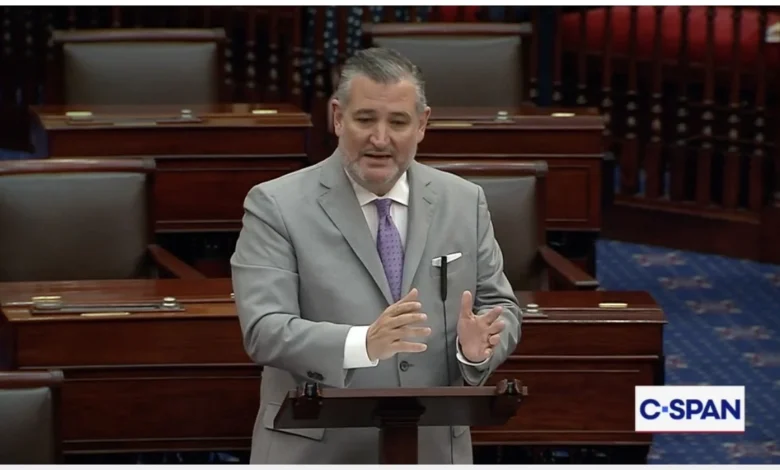
The legislative push to regulate unauthorized artificial intelligence deepfakes suffered a significant setback on Wednesday when Senator Ted Cruz (R-TX) blocked the passage of the No Fakes Act in the United States Senate. The bipartisan bill, designed to protect individuals from the non-consensual digital replication of their likeness and voice, was halted over concerns regarding its potential impact on political commentary, satirical publications, and protected free speech.
The objection from the Texas senator derailed efforts by key sponsors to fast-track the legislation before the Senate recessed for the midterm campaign period. While the bill had previously cleared the Senate Judiciary Committee in June with Cruz’s vote, unresolved tensions surrounding the boundaries of digital satire and the enforcement powers of major technology platforms ultimately prompted the procedural block.
Core Mechanics and Objectives of the No Fakes Act
The No Fakes Act establishes a federal intellectual property right, ensuring that every individual—whether a celebrity, a politician, or a private citizen—has the legal authority to control the commercial exploitation of their digital replica. In an era where generative AI tools have democratized the creation of hyper-realistic video, audio, and imagery, the legislation aims to combat malicious deepfakes, unauthorized digital endorsements, and non-consensual pornography.
Proponents drafted the text with a series of explicit statutory exemptions. These carve-outs protect traditional forms of media and expression, including news reporting, documentaries, sports broadcasting, and biographical works. Furthermore, the bill includes provisions intended to safeguard creative expression for purposes of comment, criticism, and parody.
Despite these safeguards, the legislation’s intersection with modern political discourse and digital publishing proved to be a major stumbling block on the Senate floor.
Senator Cruz’s Objections and Free Speech Concerns
Addressing the chamber, Senator Cruz voiced deep reservations regarding how the bill would be interpreted and enforced in the digital age. He argued that the current drafting left too much interpretive power in the hands of major technology companies rather than constitutional courts.
"One of my concerns about how this bill is drafted right now is it will apply to websites like the Babylon Bee or The Onion, and it leaves the decision as to whether someone’s use of a likeness falls within the exception," Cruz stated during the proceedings. He criticized the framework for creating an exemption for bona fide parody while allegedly forcing big tech platforms to act as arbiters of protected speech.
Cruz also highlighted contemporary examples of political media that utilize digital alterations, questioning how the legislation would treat political communication. Specifically, he pointed to Los Angeles mayoral candidate Spencer Pratt’s campaign material—which featured an AI-generated deepfake of opponent Karen Bass styled as Batman villain The Joker—as well as various AI-generated images deployed by Donald Trump in political communications.
While maintaining that he ultimately supports the underlying intent of the bill, Cruz insisted that additional safeguards are required to protect satirical and political speech from overzealous censorship or chilling effects. He expressed a desire for his staff to collaborate with the bill’s sponsors over the coming weeks to strengthen First Amendment protections.
Pushback from Key Sponsors and Defenders of the Bill
The procedural block drew immediate responses from the legislation’s primary architects, who insisted that the bill has already been thoroughly vetted by constitutional scholars and First Amendment experts.
Senator Marsha Blackburn (R-TN), a leading sponsor of the measure, strongly defended the current text, asserting that the protections Cruz is demanding are already securely embedded within the legislation.
"This bill contains the necessary broad exceptions for entire categories of speech," Blackburn stated. She emphasized that the determination of what constitutes protected speech belongs firmly in the hands of the judiciary, not corporate tech platforms. "We have worked with First Amendment legal experts in drafting the bill, and we are confident that it is First Amendment compliant. We have even doubled down on this language."
Blackburn further elaborated on the dispute-resolution mechanism built into the bill. Under the current provisions, if an individual or entity believes that content has been improperly removed under the act, they can submit a counter-notice. This action triggers a mandatory judicial review within a 14-day window if the complaining party wishes for the material to remain suppressed. Should no legal action be taken within that timeframe, the disputed content is permitted to be reinstated.
Senator Chris Coons (D-DE), another foundational co-sponsor of the legislation, urged pragmatism in the face of legislative perfectionism, remarking, "We should not let the perfect be the enemy of the good."
Broad Coalition of Support Across Industries
The No Fakes Act has cultivated a wide-ranging coalition of stakeholders who view federal regulation as an urgent necessity. The entertainment industry, including major Hollywood guilds, labor unions, prominent film studios, and major record labels, has mobilized heavily in favor of the bill. These groups argue that existing state-level publicity rights are fragmented, outdated, and entirely inadequate for addressing the global, instantaneous nature of generative artificial intelligence.
Simultaneously, major technology companies—including OpenAI and Google/YouTube—have offered varying degrees of support for the legislative framework. Technology firms are increasingly eager for clear federal guidelines to navigate the complex landscape of copyright infringement, deepfakes, and content moderation liabilities.
The urgency from the creative sector stems from a wave of high-profile incidents where actors, musicians, and public figures have seen their likenesses hijacked by unauthorized AI models to promote products, endorse political viewpoints, or generate explicit material without their consent.
Broader Implications and the Path Forward
The impasse highlights the delicate legislative tightrope required to regulate emerging technologies without infringing upon foundational constitutional rights. As generative AI models become increasingly sophisticated and accessible to the general public, lawmakers face mounting pressure to establish guardrails before the technology outpaces the legal system entirely.
The debate over the No Fakes Act underscores a persistent tension in modern tech policy: balancing the protection of individual dignity and intellectual property against the preservation of robust, uninhibited political satire and criticism.
Although Cruz voted in favor of sending the bill out of the Senate Judiciary Committee in June, his insistence on addressing political satire prior to floor consideration ultimately stalled its momentum. With the Senate preparing to depart for the midterm recess, substantive negotiations between Cruz’s office and the bill’s bipartisan sponsors are expected to resume in the coming weeks. Whether both sides can bridge the gap on First Amendment compliance and tech platform liability will determine whether the legislation can be revived when lawmakers return to Capitol Hill.