Nicolas Cage Compares the Marvel Cinematic Universe to a Glorified WWE in Viral Fan Expo Remarks

Oscar-winning actor Nicolas Cage has ignited a widespread industry debate following a candid critique of the Marvel Cinematic Universe during an appearance at Fan Expo Dallas. Speaking before an audience of convention attendees, the veteran actor did not hold back his thoughts on the current state of modern superhero blockbusters, famously likening the multi-billion-dollar franchise to a high-budget professional wrestling enterprise. While Cage’s remarks quickly circulated across social media platforms, dividing fan bases and sparking industry-wide commentary, the critique arrives at a fascinating crossroad in the actor’s own career, given his extensive, complicated, and enduring relationship with comic book properties on both the big and small screens.
The controversy began when Cage was asked about his views on the contemporary landscape of comic book adaptations. Offering a preliminary disclaimer that his words were delivered without malice, the actor painted a vivid picture of what he perceives as a monotonous formula dominating Hollywood studios.
When I see these 50-plus and otherwise intelligent and remarkably gifted thespians putting on these ridiculous outfits and getting ready for the fight — let’s face it, it’s all cutting to the fight — it’s hard for me not to be reminded that the MCU is becoming a well-funded and glorified WWE, Cage told the convention crowd.
The comparison immediately drew both vehement agreement from cinema purists who have long lamented the dominance of superhero franchises in theaters and sharp skepticism from defenders of the genre. Critics pointed out the apparent irony of Cage’s statement, given his own high-profile ventures into the realm of comic book adaptations over the past two decades.
Contextualizing Cage’s Superhero Legacy
To fully understand the weight and irony of Cage’s commentary, one must examine his long-standing footprint within the superhero genre. Although Cage has never officially starred in a film within the mainline Marvel Cinematic Universe, his association with Marvel intellectual property spans multiple eras of Hollywood filmmaking.
In 2007, Cage took on the role of Johnny Blaze in the supernatural action film Ghost Rider, directed by Mark Steven Johnson. The film was a commercial success, grossing over $228 million worldwide against a production budget of approximately $110 million. Despite receiving mixed reviews from critics, the movie’s financial performance warranted a sequel, 2012’s Ghost Rider: Spirit of Vengeance, which grossed an additional $132 million globally.
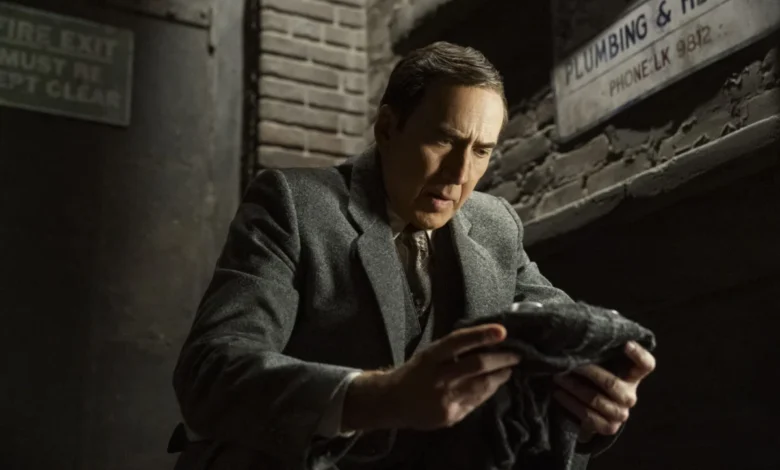
More recently, Cage entered the television landscape by headlining Sony’s Marvel-derived series Spider-Noir. Developed for Amazon Prime Video, the series positioned Cage as Ben Reilly, a gritty, down-on-his-luck private investigator operating in 1930s New York during the Great Depression. The show was envisioned as an ambitious stylistic departure from standard comic book fare, blending elements of classic film noir, German expressionism, and Roy Lichtenstein pop-art aesthetics. However, despite high anticipation prior to its premiere, Amazon Prime Video ultimately canceled the series after a single eight-episode season.
Meanwhile, the character of Ghost Rider—which Cage once famously embodied—is officially scheduled to be integrated into the Marvel Cinematic Universe. Marvel Studios announced that Ryan Gosling will take over the iconic flaming-skull mantle in an upcoming feature film directed by Shawn Levy. The studio has slated the MCU’s Ghost Rider project for a theatrical release on July 28, 2028, setting the stage for a new generation of fans to experience the supernatural antihero.
The Genesis and Execution of Spider-Noir
Cage’s journey with Spider-Noir provides critical insight into how the actor approaches comic book material, contrasting sharply with his critique of the broader MCU assembly line. Based on the Marvel Comics character Spider-Man Noir and adapted for television by showrunner Oren Uziel, the series was designed to break the conventional visual molds associated with superhero television.
Speaking in depth to media outlets prior to the show’s debut, Cage revealed that his primary attraction to the project was not its superhero lineage, but rather the opportunity to experiment with stylized, mid-century cinematic techniques. The actor intentionally studied and channeled the performances of legendary old-world Hollywood actors to craft his portrayal of the 1930s investigator.
I wanted to try to create an essence of some of my favorite old world actors because I wanted to embody that style — Bogart, Cagney, Edward G. Robinson — and designed my performance to fit within the black-and-white format, Cage explained during promotional rounds.
He admitted that committing to a serialized television format was a daunting professional risk. The actor expressed continuous anxiety throughout production, fearing that his unconventional choices might result in termination.
It was scary, and it was risky, Cage noted. I was constantly worried that I was going to get fired, because I was doing this thing of channeling old actors and colliding it with Stan Lee’s masterpiece that is Spider-Man to create this Roy Lichtenstein pop-art sensation of sorts. I didn’t know until I finally saw the eight episodes whether it was going to work.
Ultimately, while Spider-Noir received praise from critics for its bold artistic choices and Cage’s dedicated lead performance, Amazon’s decision not to renew the series for a second season underscored the commercial challenges of marrying niche artistic experimentation with high-cost streaming budgets.
The Broader Industry Implications of the WWE Comparison
Cage’s characterization of the MCU as a well-funded and glorified WWE touches upon a growing sentiment among industry veterans and film critics regarding blockbuster fatigue and narrative homogeneity. Over the past decade and a half, the Marvel Cinematic Universe has produced dozens of interconnected films and television series, generating tens of billions of dollars at the global box office. However, this output has occasionally invited criticism regarding formulaic storytelling, predictable structural beats, and an overreliance on computer-generated imagery (CGI) climax battles—elements that critics argue prioritize spectacle over character development.
By comparing the franchise’s reliance on meticulously choreographed, stunt-heavy showdowns to professional wrestling, Cage inadvertently highlighted a structural reality of modern action filmmaking. In both mediums, narrative arcs frequently serve as a runway designed to lead audiences toward a predictable, high-intensity physical confrontation.
Industry analysts note that while Cage’s comments may sting for staunch defenders of the superhero genre, they reflect an ongoing tension between traditional cinematic artistry and the demands of modern intellectual property management. Studios increasingly rely on recognizable comic book properties to guarantee box office returns in an unpredictable theatrical market, sometimes at the expense of creative risks.
Public and Social Media Reaction
The response to Cage’s remarks across social media platforms has been swift and sharply polarized. On platforms such as X (formerly Twitter) and Reddit, film enthusiasts praised the actor for his candor, arguing that his assessment accurately diagnoses the creative fatigue present in contemporary franchise filmmaking. Many users highlighted the irony of aging, critically acclaimed actors donning specialized wardrobe items primarily for green-screen combat sequences.
Conversely, dedicated fans of the MCU defended the franchise’s creative team and actors, emphasizing the immense physical discipline, stamina, and emotional weight required to anchor multi-film arcs. Critics of Cage’s stance also reiterated that the actor has willingly participated in comic book adaptations throughout his career, suggesting that his critique carries a degree of contradiction.
Conclusion and Future Outlook
As the entertainment industry continues to evolve, comments from prominent figures like Nicolas Cage serve as a barometer for shifting attitudes toward franchise dominance. Whether Cage’s critique prompts a broader reflection within major studios regarding how action sequences and narrative structures are developed remains to be seen.
What is certain is that the dialogue surrounding superhero cinema is far from resolved. With major shifts on the horizon—including Marvel Studios’ upcoming integration of characters like Ghost Rider under the direction of filmmakers like Shawn Levy—the tension between artistic risk-taking and blockbuster formula will undoubtedly remain a central theme of modern cinematic discourse. Cage, meanwhile, continues to navigate a diverse and unpredictable career path, cementing his status as one of Hollywood’s most outspoken and distinctive voices.