Naomi Watts Receives Prestigious Donostia Award at San Sebastian Film Festival and Credits David Lynch for Her Illustrious Career

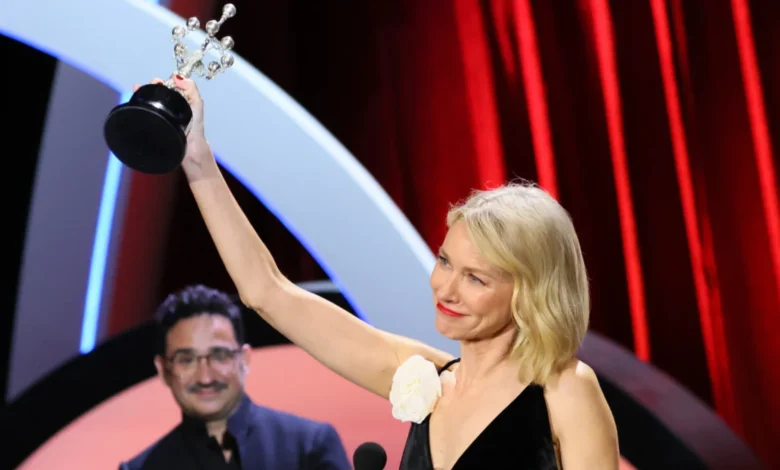
The San Sebastian International Film Festival, one of the most significant cultural events in the European cinematic calendar, reached a poignant zenith on Saturday evening as British actress Naomi Watts was presented with the Donostia Award. The accolade, which serves as the festival’s highest honor for lifetime achievement, was bestowed upon Watts in recognition of a career defined by its remarkable versatility, ranging from gritty independent dramas to high-budget global blockbusters. The ceremony, held in the historic Spanish coastal city, served not only as a celebration of Watts’ body of work but also as an emotional reflection on the resilience required to survive in the competitive landscape of international cinema.
A Tribute to a Creative Catalyst
During her acceptance speech, the 57-year-old actress pivoted away from a traditional list of acknowledgments to offer a heartfelt tribute to the legendary filmmaker David Lynch. It was Lynch who, in 2001, cast Watts in the surrealist masterpiece Mulholland Drive, a role that served as the catalyst for her transition from a struggling actor to a globally recognized talent.
Watts recounted the decade of persistent rejection that preceded her breakthrough, noting that many in the industry had dismissed her potential early on. According to Watts, Lynch’s intervention was transformative. “He saw me, and all those wounds from all that rejection now appeared as growth,” she told the audience. She credited the director with teaching her the value of trusting her instincts, embracing the unknown, and maintaining a commitment to the strange and the unexplained. “He believed in something in me before I fully believed in myself,” Watts remarked, dedicating the award to Lynch, who she noted has been an indispensable pillar of her artistic development.
The Bond with J.A. Bayona and The Impossible
The evening was further enriched by the presence of Spanish filmmaker J.A. Bayona, who introduced Watts to the stage. Their professional relationship, forged during the production of the 2012 disaster drama The Impossible, remains a cornerstone of Watts’ career. The film, which depicts a family’s harrowing experience during the 2004 Boxing Day tsunami, earned Watts her second Academy Award nomination for Best Actress.
Bayona’s introduction was marked by deep personal warmth. He reflected on the challenges of helming a massive, emotionally draining production as a young director, describing Watts as the “best travel companion” he had ever encountered. The director’s praise highlighted the mutual respect that often defines high-level cinematic collaborations, noting that the lessons learned from Watts continue to influence his approach to working with actors today.
For her part, Watts recalled the physical and emotional intensity of the shoot, which involved grueling sessions in water tanks. She fondly remembered her co-star, a young Tom Holland, who made his live-action debut in the film at age 15. While Holland famously likened the production environment to a “water park,” Watts offered a wry contrast, labeling the experience as “pure pain,” yet expressing immense pride in the final product, which grossed over $198 million worldwide.
Defying Industry Narratives on Aging
A significant portion of Watts’ address was dedicated to the systemic issues facing women in Hollywood, particularly the expiration dates often imposed on actresses. Reflecting on her career trajectory, she recalled being told at the age of 31—just as Mulholland Drive was launching her to fame—that her career would effectively conclude by the time she reached 40.
“I’m grateful beyond words to be part of shifting that narrative,” Watts stated. She emphasized that the industry’s archaic views on age are increasingly incompatible with the demands of the modern audience. As a consumer base, women play a critical role in the film industry, and Watts argued that there is a growing, non-negotiable demand to see authentic reflections of women of all ages on screen. By continuing to secure complex, lead roles well into her fifties, Watts is positioning herself as a key figure in the movement toward greater age inclusivity in professional acting.
A Diverse Portfolio of Cinematic Contributions
The Donostia Award recognizes a career that spans over three decades of international work. Watts’ filmography is notable for its refusal to be typecast. Her career trajectory can be categorized into several distinct phases:
- The Breakthrough Period (Late 1990s–2001): Characterized by a period of intense struggle and eventual vindication with the critical success of Mulholland Drive.
- The Critical Acclaim Era (2003–2010): Marked by her first Oscar nomination for Alejandro González Iñárritu’s 21 Grams and collaborations with auteurs such as David Cronenberg (Eastern Promises) and Michael Haneke (Funny Games).
- The Blockbuster and Genre Expansion (2005–2015): A period defined by high-profile projects like Peter Jackson’s King Kong and the box-office success of The Impossible.
- The Current Chapter (2016–Present): A focus on prestige television and sophisticated independent projects, such as The Housewife, directed by Ben Shirinian.
In The Housewife, set in 1964 New York, Watts stars alongside Tye Sheridan, Michael Imperioli, and Luke Evans. The film, which centers on a journalist’s investigation into a suspected Nazi officer, showcases Watts’ continued interest in narratives that blend historical tension with psychological depth.
Contextualizing the San Sebastian Film Festival
The San Sebastian International Film Festival remains a vital node in the global festival circuit, often serving as a barometer for European cinematic trends and a launching pad for international awards contenders. Under the leadership of director José Luis Rebordinos, the festival has navigated a complex landscape, balancing the need for commercial appeal with a mandate to highlight political and social issues.
The 2026 edition, which runs from September 18 to 26, continues this tradition. The inclusion of figures like Werner Herzog and Fatih Akin alongside Watts underscores the festival’s commitment to honoring both established legends and contemporary voices. The festival’s decision to honor Watts specifically for her ability to navigate both independent film and large-scale productions acknowledges the evolving nature of the industry, where the lines between art-house and mainstream cinema are increasingly porous.
Broader Implications for the Industry
The recognition of Naomi Watts at San Sebastian carries implications that extend beyond the individual award. It highlights a shift in how the industry values longevity and the “lived experience” of its performers. As the global box office continues to fluctuate, the reliance on established, high-caliber actors who can anchor both prestige dramas and mid-budget thrillers is becoming a strategic priority for studios and streaming services alike.
Furthermore, Watts’ vocal stance on ageism serves as a rallying cry for an industry currently undergoing a period of intense self-examination. By aligning her personal success with a broader critique of the “dried up at 40” trope, she is contributing to a growing body of evidence that suggests the most compelling performances are often those delivered by actors who have navigated the complexities of life and career longevity.
As the festival continues through its closing days, Watts’ presence has set a tone of reflection and ambition. Her promise to the audience—that she has “lots more in me” and is “still reaching for the stars”—underscores a career that, despite its already immense achievements, shows no signs of stagnation. The Donostia Award is not merely a retrospective look at a career finished; it is a recognition of a trajectory that continues to evolve, influencing the next generation of actors who, like Bayona, look to Watts as a benchmark for professionalism, instinct, and endurance.
Related posts: