Two infants enter the world on the exact same day, yet their prospective life trajectories could not be more divergent. Neither child chose the geographical, economic, or social circumstances of their birth. Yet, statistical probability dictates that one will likely live decades longer, secure a significantly higher lifetime income, and retain a meaningful voice in the political and social decisions that govern their everyday existence. The other will face systemic barriers, constrained opportunities, and the compounding burdens of generational poverty.
To the United Nations, this glaring gulf is not merely an unfortunate byproduct of global economics, nor is it simply a statistical unfairness. Rather, it is classified as a direct violation of a fundamental human right: the right to development. For four decades, the international community has grappled with the premise that development is not a discretionary act of benevolence or foreign aid, but an inalienable entitlement belonging equally to all individuals and nations.
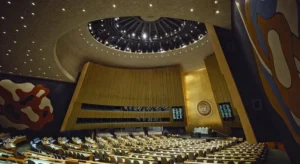
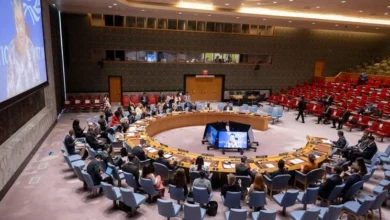
As world leaders prepare to convene at the United Nations headquarters in New York on September 23 to mark a significant milestone for the foundational 1986 Declaration on the Right to Development, the global community faces a critical juncture. Amid compounding crises—including escalating climate shocks, protracted conflicts, mass migration, and widening wealth disparities—the core tenets of equity, empowerment, and systemic justice are under unprecedented strain.
Understanding the Evolution of the Right to Development
To comprehend the modern urgency of the right to development, one must examine its historical and legal evolution within the international framework. For decades following the Second World War, mainstream economic policies largely equated development with gross domestic product (GDP) growth. The prevailing assumption was that rising national wealth would naturally trickle down to the most vulnerable segments of society, lifting all boats in the process.
However, the post-war decades demonstrated that unmanaged economic growth frequently exacerbates inequality rather than curing it. Wealth accumulated at the top while marginalized communities within and across nations remained trapped in cycles of deprivation. Recognizing this systemic flaw, developing nations, spearheaded by the Non-Aligned Movement, began pushing for a new international economic order in the 1970s. They argued that global trade rules, financial architectures, and colonial legacies systematically disadvantaged the Global South.
This advocacy culminated on December 4, 1986, when the United Nations General Assembly adopted Resolution 41/128, promulgating the Declaration on the Right to Development. Though non-binding in a strictly treaty-law sense, the Declaration established a groundbreaking paradigm: it defined development as a comprehensive economic, social, cultural, and political process aimed at the constant improvement of the well-being of the entire population and of all individuals. It explicitly recognized that every human person and all peoples are entitled to participate in, contribute to, and enjoy economic, social, cultural, and political development, in which all human rights and fundamental freedoms can be fully realized.
Furthermore, the 1986 framework introduced the principle of people’s sovereignty over their natural wealth and resources, asserting that nations and communities must retain the ultimate authority to direct their own economic destinies without external coercion.
The Contemporary Crisis of Inequality
Forty years after the adoption of the landmark Declaration, the promise of equitable global development remains largely unfulfilled. According to the World Inequality Report, supported by the UN Development Programme (UNDP), the structural imbalances within the global economy have reached staggering proportions.
Data from the report indicates that the poorest half of the global population owns a mere two percent of total global wealth. In stark contrast, the wealthiest 0.001 percent—comprising the global billionaire class of roughly 56,000 individuals—hold three times more wealth than the bottom 50 percent combined. This obscene concentration of capital illustrates the exact phenomenon that the UN Human Rights Office (OHCHR) warns against: a relentless widening of inequality both within sovereign states and across international borders.
When growth is divorced from equity, the societal consequences manifest as systemic instability. Unchecked inequality fuels chronic poverty, internal unrest, irregular mass migration, and a profound erosion of public trust in democratic and international institutions. The OHCHR has consistently emphasized that sustainable peace and security are fundamentally unattainable without inclusive development that addresses the root causes of marginalization.
Case Studies in Marginalization and Empowerment
The real-world implications of upholding—or violating—the right to development are neither abstract nor theoretical. They are measured in the daily survival, dignity, and agency of real communities.
When development leaves people behind, the consequences are devastating. In Kenya, the Endorois, an indigenous community numbering approximately 60,000 people who had inhabited the fertile lands surrounding Lake Bogoria for centuries, experienced a profound rights violation when their ancestral territory was gazetted into a wildlife game reserve. Done without their free, prior, and informed consent, this administrative decision stripped them of their traditional grazing pastures. Denied a fair share of tourism revenues or meaningful consultation, the community watched helplessly as their pastoralist livelihood collapsed, resulting in the mass mortality of their cattle and deep social destitution.
A similarly stark illustration of systemic failure emerged during the COVID-19 pandemic. Global vaccine distribution exposed deep geopolitical and economic inequalities, as wealthy nations hoarded pharmaceutical supplies while developing countries struggled to secure basic doses. A prominent UN human rights official noted during a Human Rights Council session that more than 600,000 deaths could have been prevented in developing regions if all countries had reached the World Health Organization’s vaccination targets by the end of 2021. Experts characterized this inequitable distribution not merely as a public health miscalculation, but as a tragic and profoundly immoral failure of international cooperation and the right to development.
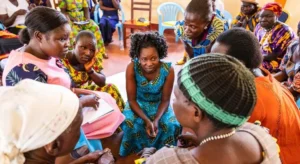
Conversely, when the principles of the right to development are properly operationalized, they yield transformative results. In Morocco, targeted vocational-training initiatives supported by international and domestic human rights frameworks are actively assisting women in launching sustainable, income-generating activities, thereby enhancing their financial independence and household decision-making power.
In Colombia, indigenous and marginalized groups have been systematically integrated into the nation’s peace accords, ensuring that the rebuilding of post-conflict society incorporates the voices of those historically excluded from governance. Similarly, grassroots community projects in regions as diverse as Afghanistan, India, and Palestine have demonstrated that when local populations are equipped with the knowledge and tools to manage communal resources collaboratively rather than competitively, social cohesion and economic resilience improve markedly.
Structural Barriers to Progress
Despite clear evidence of the benefits of rights-based development, significant roadblocks continue to impede its global implementation. Analysts and diplomats point to several persistent obstacles:
- Geopolitical Disagreements: Member States remain deeply divided over the legal nature of the right to development. While developing nations largely advocate for a legally binding international convention to enforce accountability, many industrialized Western nations express skepticism, citing concerns over state sovereignty, vague legal definitions, and the potential financial liabilities associated with international cooperation mandates.
- Weak International Cooperation: Global solidarity frequently falters in the face of national self-interest. Issues such as international tax evasion, illicit financial flows, unjust debt burdens, and protectionist trade barriers continue to siphon resources away from developing economies, leaving them with insufficient fiscal space to invest in public health, education, and sustainable infrastructure.
- Lack of Political Will: Domestically, ruling elites in various nations often prioritize short-term political survival or elite enrichment over inclusive economic policies, failing to institutionalize transparent governance, anti-corruption measures, and meaningful public participation.
The Imperative for Renewal
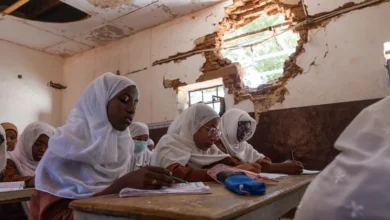
As the international community approaches the high-level commemorative events at the United Nations in New York on September 23, the relevance of the right to development is more acute than ever. Modern humanity faces an unprecedented convergence of systemic shocks. Climate change is displacing millions and destroying agricultural yields in the Global South; protracted geopolitical conflicts are straining humanitarian aid budgets; and economic volatility is driving cost-of-living crises across every continent.
Experts argue that treating development as a human right provides the essential normative compass required to navigate these overlapping crises. Unlike charity—which is discretionary, hierarchical, and often temporary—human rights establish enforceable entitlements, governmental obligations, and universal standards of human dignity. Empowerment shifts the paradigm from passive beneficiaries of aid to active agents of change who can claim their rightful share of global prosperity.
As world leaders gather to reflect upon four decades of progress, setbacks, and evolving challenges since the 1986 Declaration, the central question remains whether the international community can summon the political courage to bridge the chasm between rhetoric and reality. Ensuring that every child, regardless of birthplace, inherits a world of equity, opportunity, and hope is not merely an idealistic aspiration; it is the ultimate fulfillment of the human right to development.