The Premier League Withdrawal Symptom: Analyzing the State of English Football Amid the International Break

The Premier League enters a mandatory 19-day hiatus following a frenetic opening sequence of fixtures that saw 30 matches played and 79 goals scored within a 17-day window. This cooling-off period, necessitated by the international calendar, arrives at a moment of profound stasis within the English top flight. While the sheer volume of goals suggests an era of high-octane entertainment, a longitudinal analysis of the first five matchdays reveals a league defined by entrenched hierarchies, tactical homogenization, and a recurring narrative arc that mirrors the previous season with striking precision.
The Anatomy of the Opening Sequence
The first five rounds of the 2026-27 Premier League campaign have been characterized by a familiar pattern of results. Data from the opening month indicates that the gap between the traditional "Big Six" and the emerging "middle-class" clubs—such as Brighton, who recently secured a decisive victory over the reigning champions, Arsenal—is narrowing, yet the structural dominance of the established elite remains largely intact.
Statistically, the league has seen a higher frequency of transition-based goals compared to the 2023-24 season. Tactical analysts note that the influence of the "Omniball" philosophy—a hybrid of Cruyffian possession play and high-intensity Gegenpressing—remains the industry standard. However, the implementation of these tactics has evolved. Teams are increasingly prioritizing verticality, with inverted wingers and rapid transitions serving as the primary mechanisms for breaking down low-block defenses.
Manchester United and the Crisis of Identity
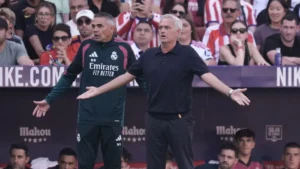
At the center of current discourse is Manchester United. Under the stewardship of Michael Carrick, the club’s recent performances have sparked a rigorous debate regarding the team’s long-term trajectory. Observers note that the team’s current state is emblematic of a broader cultural shift within the club: a reliance on historical prestige rather than a coherent, modern footballing strategy.
United’s recent struggles are not merely a matter of tactical failure but appear to be symptomatic of a deeper institutional malaise. With the club currently navigating a complex transition period, internal and external stakeholders have voiced concerns regarding the sustainability of the current management model. In post-match press conferences, the focus has shifted from specific tactical errors to the overarching inability of the squad to meet the physical demands of contemporary Premier League football. The club’s reliance on "tourism and memories" has become a central critique, with pundits suggesting that the current iteration of the team lacks the competitive urgency required to challenge for top-tier honors.

Tottenham Hotspur: A Study in Stagnation
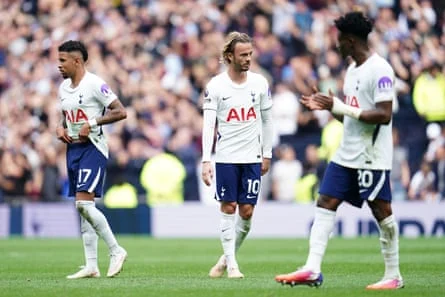
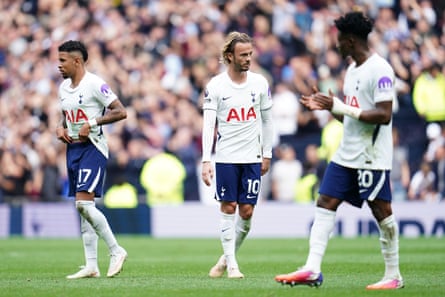
Tottenham Hotspur remains perhaps the most enigmatic subject of the current season. Currently positioned in the lower reaches of the table, the club’s struggles have evolved from a period of acute crisis to a state of perpetual, numbing mediocrity. Analysts suggest that the current roster, characterized by a lack of cohesive intent, is struggling to integrate new signings into a system that appears increasingly detached from the demands of the league.
There is a growing consensus among data analysts that unless there is a significant shift in recruitment strategy and a departure from the current "post-goal" tactical vacuum, the club risks becoming a permanent fixture in the bottom half of the table. The frustration among the fanbase is palpable, yet the consistent nature of these failures has, in some ways, desensitized the broader footballing public to the club’s predicament.
The Brighton Phenomenon: Can the Middle Class Disrupt?
The most significant tactical development of the early season has been the performance of Brighton. Their victory over Arsenal was not merely an upset; it was a demonstration of superior physical conditioning and tactical discipline. Brighton’s ability to outmuscle a team of Arsenal’s caliber raises a pertinent question for the remainder of the season: can a well-run, mid-table entity sustain a challenge to the established order?
Historical precedent—most notably the 2015-16 Leicester City campaign—suggests that such disruptions require a rare alignment of squad depth, tactical flexibility, and an absence of European fixture congestion. However, the current landscape of the Premier League is significantly more unforgiving. Brighton, like many of its peers, faces the immediate challenge of managing a squad that is being actively scouted by larger, Champions League-level clubs. The "collective individualism" of players looking for career-defining moves often threatens to undermine the long-term stability of these ambitious clubs.
Tactical Homogenization and the Future of the Product
A significant concern for the league’s long-term health is the creeping homogenization of tactical approaches. As more clubs adopt the high-press, high-transition model, matches are beginning to feel increasingly formulaic. The reliance on physical duels and "wanting it more" as a metric for success indicates that, at the current level of parity, the margins for victory are becoming increasingly thin.
This trend is also visible in the evolution of player roles. The universal expectation for players to be comfortable in multiple positions has led to a standardisation of talent. While this ensures a high floor of performance across the league, it arguably lowers the ceiling for tactical innovation. There is a palpable risk that, should the tactical stalemate continue, the Premier League could reach a point of "robotic" equilibrium, where teams effectively neutralize each other through identical systems, resulting in a decline in creative offensive output.
The International Break: A Necessary Reset?
The 19-day break serves as a critical juncture for managers like Thomas Tuchel, who has inherited a squad currently facing questions regarding its technical foundations. Tuchel’s arrival has already sparked debate regarding the "cultural weaknesses" of English football. His focus on possession retention and tactical nuance is expected to be a primary area of development during the training sessions held throughout the hiatus.
However, the break is unlikely to solve the fundamental issues facing the league’s struggling clubs. The "contrast effect"—the psychological shift from the high-adrenaline weekends of the Premier League to the often more sedate rhythm of international fixtures—often leaves a vacuum that is difficult to fill.
Implications for the Remainder of the Season
As the league prepares to resume in October, the focus will inevitably shift toward the following key performance indicators:
- Squad Depth and Injury Management: With the high-intensity nature of the current tactical landscape, the teams with the most robust rotation strategies are expected to pull away from the pack.
- Tactical Adaptability: The ability of managers to adjust to the "bait-the-press" systems that have become prevalent will be the primary driver of success.
- The "Audition" Factor: The motivation of players at middle-tier clubs to secure transfers to "elite" institutions will continue to influence team cohesion and performance.
The Premier League remains a global juggernaut, a "mega-product" that thrives on the very drama and volatility that it currently lacks. While the first five rounds have provided entertainment, they have also exposed the structural limitations of the current era. The challenge for the clubs over the remaining 87% of the season will be to transcend the current state of stasis. Whether through tactical evolution, significant investment, or a fundamental shift in club culture, the teams that can break the pattern of the last twelve months will ultimately define the outcome of the 2026-27 campaign.
For now, the league enters a period of quiet reflection. The fans, the media, and the participants alike are left to contemplate the current state of affairs, waiting for the return of the domestic calendar to provide the next chapter in what remains a compelling, if repetitive, narrative of English football.