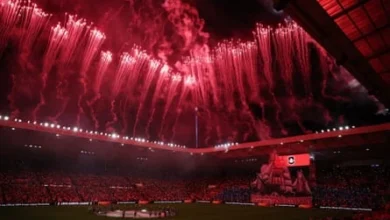
Northern Ireland’s pursuit of a perfect start to their UEFA Nations League Group B2 campaign hit a roadblock on Tuesday evening as they were held to a scoreless draw by a disciplined Hungarian side at Windsor Park. Despite a dominant first-half performance and a high-intensity tactical approach that unsettled their higher-ranked opponents, Michael O’Neill’s men were unable to convert their territorial advantage into a decisive goal. The result, while preserving an impressive home defensive record, left a sense of "what might have been" for the Green and White Army, who welcomed international football back to Belfast for the first time in 315 days.
A Tactical Battle of Wills
The match, played under the crisp Belfast night air, was characterized by a distinct contrast in philosophies. Northern Ireland, buoyed by a narrow 1-0 victory over Georgia in Tbilisi just four days prior, sought to utilize the fervent home atmosphere to disrupt Hungary’s rhythmic build-up play. From the opening whistle, O’Neill’s side employed an aggressive high press, forcing the visitors into uncharacteristic errors in their own defensive third.
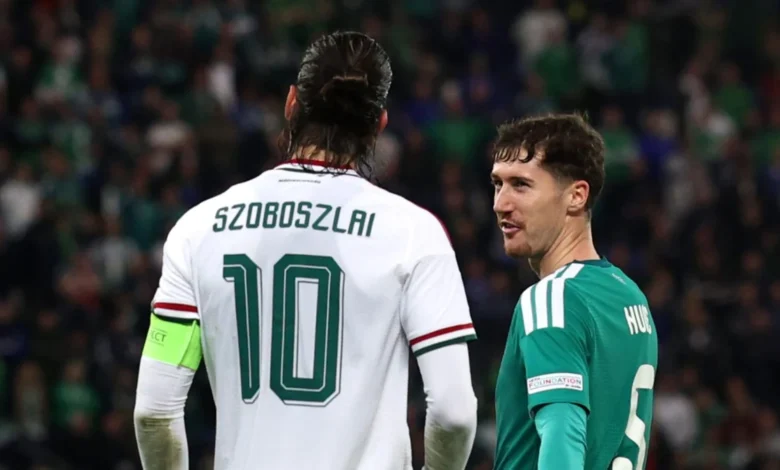
Hungary, boasting a squad laden with European-level talent—most notably Liverpool captain Dominik Szoboszlai—found themselves forced onto the back foot. For long stretches, the visitors struggled to establish any meaningful rhythm, with Szoboszlai largely reduced to a peripheral figure, his most significant involvement being an attempt to galvanize the travelling support rather than orchestrating a breakthrough on the pitch.
Chronology of a Frustrating Evening
The first half belonged entirely to the hosts. The midfield engine room of Ethan Galbraith and Isaac Price dictated the tempo, repeatedly finding gaps in the Hungarian defensive line. Trai Hume signaled Northern Ireland’s intent early with a speculative effort from the edge of the penalty area that shaved the post, a warning shot that Hungary failed to heed.
The primary frustration of the evening centered on Patrick Kelly. The Barnsley midfielder found himself at the heart of the two most significant missed opportunities of the match. Just after the 30-minute mark, a sublime through-ball from Price left Kelly with a clear path to goal; however, his attempt to chip the advancing Balazs Toth lacked the necessary elevation, allowing the Blackburn goalkeeper to smother the chance. Minutes later, a long throw-in from Ciaron Brown caused chaos in the box. A flick-on from Tom Atcheson found Kelly, whose off-balance, looping effort clipped the top of the crossbar, leaving the home crowd in audible agony.
As the second half progressed, the nature of the contest shifted. Hungary, sensing a vulnerability in the Northern Irish legs, began to commit more bodies forward. Midfielder Andras Schafer provided a reminder of the visitors’ quality with a sharp snapshot inside the box, followed by a long-range effort that drifted wide. The closing stages transformed into a defensive rearguard action for the hosts. Ruairi McConville proved instrumental, throwing his body in the way of a goal-bound strike from Willi Orban, while goalkeeper Pierce Charles solidified his growing reputation by denying Bournemouth’s Alex Toth with a vital save.
The Discipline Factor
A notable subplot of the evening was the officiating of Ricardo De Burgos. The Spanish referee presided over a physically demanding contest, brandishing yellow cards with regularity. The disciplinary tally reached a tipping point as the game progressed, with Shea Charles, Jamie Donley, Isaac Price, and Ethan Galbraith all finding themselves in the referee’s notebook.
The tension spilled over into the technical area, with Michael O’Neill receiving a caution for his vocal dissatisfaction with several officiating decisions. The friction reached a crescendo just before halftime following a heavy aerial collision between Shea Charles and Daniel Lukacs, sparking a brief but intense confrontation between the two sets of players. The disciplinary record is a factor that O’Neill will need to monitor closely as the campaign progresses, as the accumulation of cards could lead to suspensions for key personnel in upcoming fixtures.
Supporting Data and Statistical Analysis
The draw reinforces a burgeoning trend for Northern Ireland at Windsor Park. Under O’Neill’s current tenure, the team has lost only one of their last 10 competitive fixtures in Belfast, a testament to the side’s defensive resilience. Statistically, the match was a success for the hosts in terms of containment; Hungary managed only one shot on target over the course of 90 minutes.
For Pierce Charles, the clean sheet marked his fifth in seven competitive international appearances, an impressive milestone for a young goalkeeper establishing himself on the senior stage. Despite the lack of goals, the underlying metrics of the performance—high press success rates and defensive interceptions—suggest that the team’s tactical evolution is beginning to take root. However, the conversion rate remains the primary concern. In their last two outings, Northern Ireland has scored only once from a significant number of high-quality chances, a ratio that will need to improve if they are to challenge for the top spot in Group B2.
Broader Implications for Group B2
The result leaves the group finely poised. While Northern Ireland would have preferred the three points to maintain a 100% record, a point against a side of Hungary’s pedigree is a credible outcome. Hungary, despite their struggles in Belfast, remain a formidable outfit with the technical capacity to dismantle other group opponents.
For Northern Ireland, the focus must now shift to maintaining the intensity shown in the first 45 minutes across a full 90-minute cycle. O’Neill, in his post-match assessment, was understandably frustrated by the missed chances but quick to praise the squad’s defensive discipline. "We showed we can go toe-to-toe with high-ranked teams," an internal source suggested, reflecting the sentiment within the dressing room. The objective remains clear: to build on this foundation and secure the points necessary to climb the Nations League standings.
Looking Ahead
The Nations League format offers a grueling schedule, and the impact of the physical nature of this draw will be felt in the coming days. The squad faces a quick turnaround, and the manager will need to manage player fatigue carefully. The focus will now shift to tactical refinement in the final third, specifically regarding the composure of young attacking talents like Kelly and Price.
As the dust settles on the draw at Windsor Park, the consensus is that Northern Ireland is heading in the right direction. The integration of young talent into the starting XI has provided a necessary injection of energy, and the defensive unit looks as robust as it has at any point in the last decade. While the goal-scoring drought in this specific fixture is a frustration, the overall performance against a side like Hungary—a team that frequently competes at the European Championship level—provides a positive blueprint for the remainder of the campaign.
The Green and White Army left Windsor Park disappointed by the scoreline but encouraged by the resilience of their team. In a tournament where every point is contested with fierce intensity, Northern Ireland has proven that they are not merely participating, but competing. As they prepare for the next international break, the tactical blueprint is established; the missing piece remains the clinical edge that could turn these hard-fought draws into decisive victories.
Related posts: