Cody Gakpo strikes late to deny Jurgen Klopp winning start as Germany and Netherlands play out dramatic Nations League draw

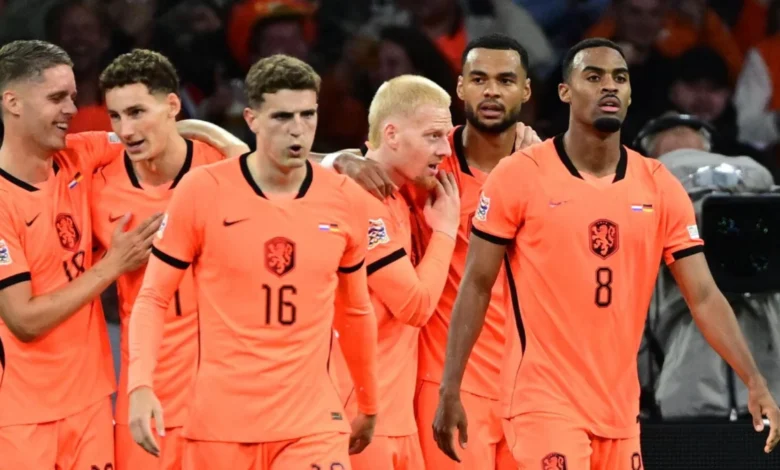
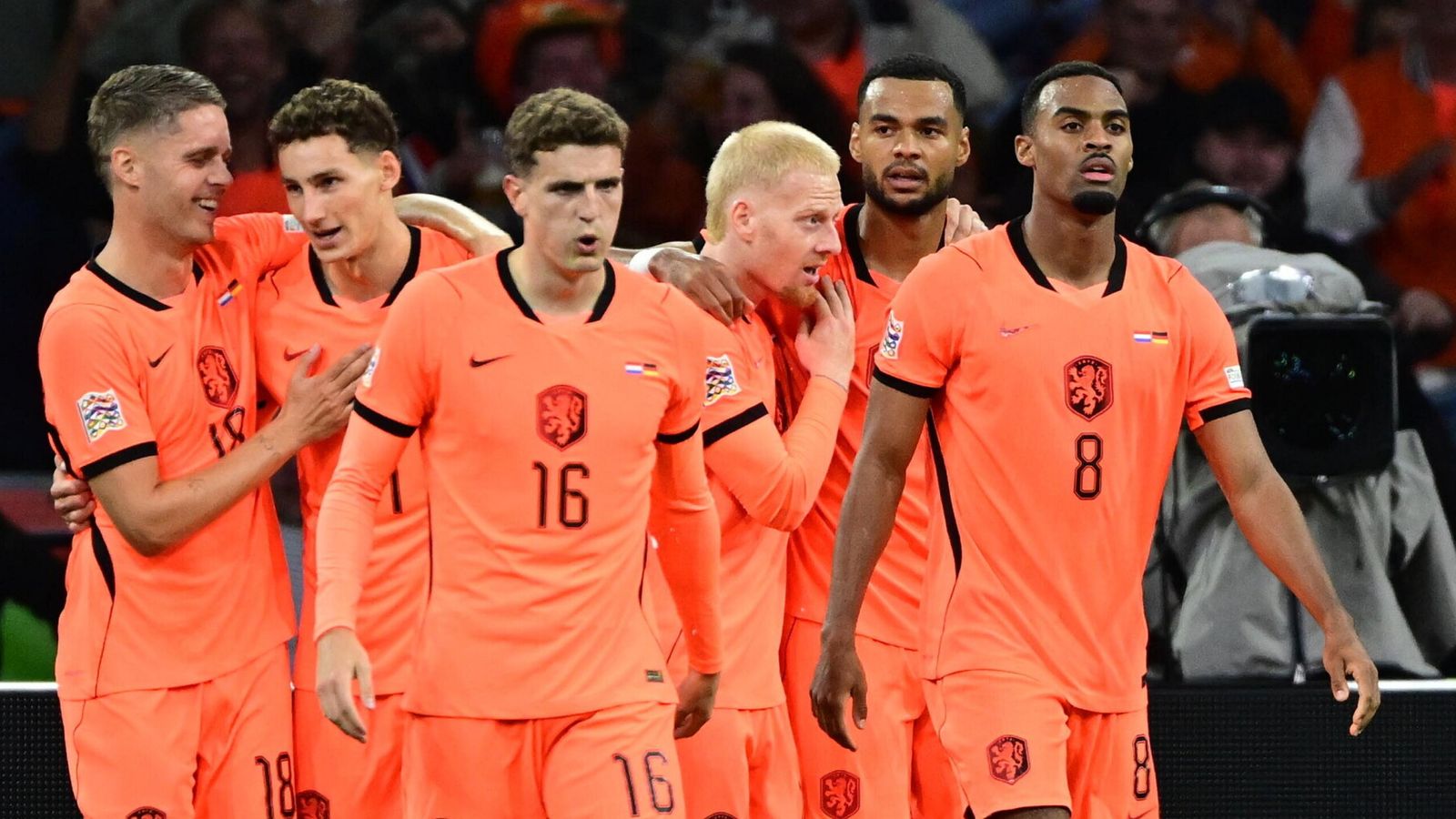
The opening night of the UEFA Nations League Group A2 campaign delivered high drama at the Amsterdam Arena, as a stoppage-time equalizer from Cody Gakpo salvaged a 1-1 draw for the Netherlands against Germany. The result served as a baptism of fire for new Germany manager Jurgen Klopp, who saw his side’s lead evaporate in the dying seconds of a match defined by tactical intrigue, injury setbacks, and VAR controversy.
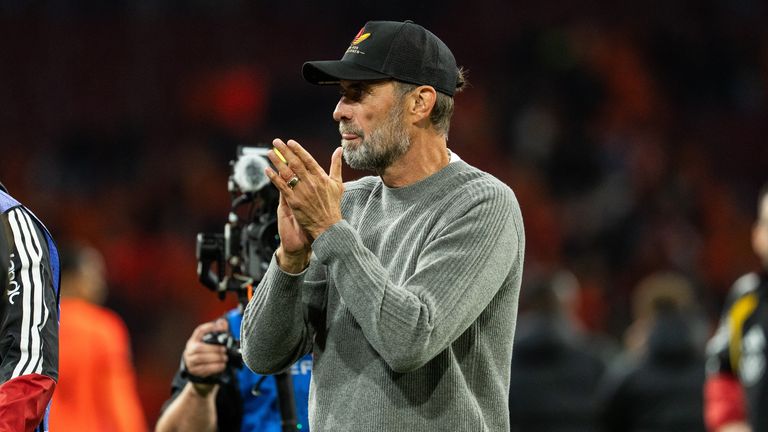
For both nations, this fixture represented the beginning of a new era. Jurgen Klopp, the former Liverpool manager, assumed the reins of the German national team in July following a tumultuous period that saw the side suffer an early exit in the Round of 32 at the recent World Cup under Julian Nagelsmann. Conversely, the Netherlands entered the match under the stewardship of Xavi Hernandez, who was appointed in August after Ronald Koeman’s departure following a parallel disappointment in the global tournament.
A Match Defined by Early Disruptions and Tactical Shifts
The atmosphere in Amsterdam was charged from the outset, though the quality of the spectacle was immediately threatened by a series of physical setbacks. Germany suffered a significant pre-match blow when playmaker Jamal Musiala was ruled out due to acute muscle pain. His absence forced a reshuffle of the attacking structure, leaving the German midfield to navigate a high-press environment without their primary creative outlet.
The match began with an aggressive Dutch approach, which appeared to yield results within the first fifteen minutes. Virgil van Dijk, charging forward for a set-piece, successfully headed the ball into the back of the net, sending the home crowd into a frenzy. However, the celebrations were short-lived. A comprehensive intervention by the Video Assistant Referee (VAR) determined that the Dutch captain had committed a foul on goalkeeper Marc-Andre ter Stegen during the aerial challenge. The goal was subsequently disallowed, a decision that proved pivotal in the context of the match’s tight margins.
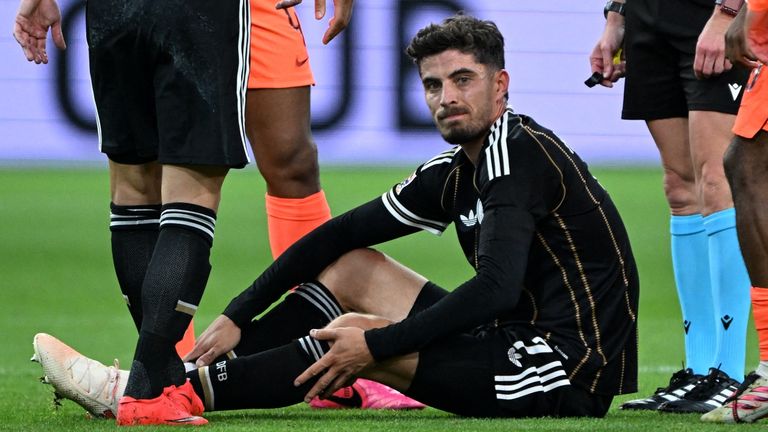
The physical toll of the encounter continued to mount shortly after the half-hour mark. Arsenal’s Kai Havertz, tasked with leading the German line, was forced off the pitch with an injury, further compounding Klopp’s personnel headaches. Despite the setback, Germany demonstrated resilience. Just two minutes after Havertz’s exit, a precise cutback from Philipp Treu navigated the Dutch penalty area, finding Felix Nmecha, who clinically slotted the ball home to break the deadlock.
The Second Half: Dutch Persistence vs. German Resolve
Trailing by a goal, the Netherlands returned from the interval with increased urgency. Xavi Hernandez, seeking to make a statement in his managerial debut, encouraged his side to press higher and maintain possession in the final third. The Dutch assault on the German goal was sustained, forcing Marc-Andre ter Stegen into a series of high-level saves.
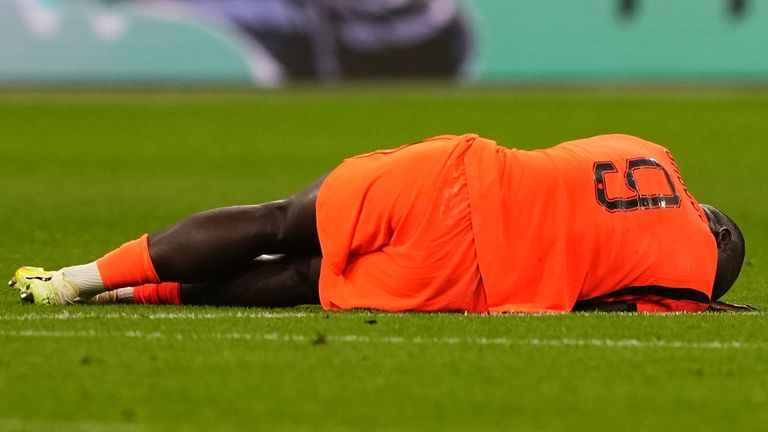
The German defensive block remained disciplined, anchored by an organized backline that absorbed waves of pressure. However, the physical intensity of the game took its toll on both squads. The Netherlands suffered an injury blow of their own when Sunderland forward Brian Brobbey was substituted, appearing to sustain a hamstring strain that will likely sideline him for the upcoming fixtures.
As the match approached its conclusion, Karim Adeyemi had a golden opportunity to effectively seal the points for Germany. Finding himself unmarked inside the six-yard box, the forward failed to make proper contact, firing wide and letting the Dutch off the hook. It was a miss that would haunt the visitors, as the momentum shifted decisively in favor of the hosts during the final minutes of stoppage time.
With the match ticking into the final seconds, a swift transition play orchestrated by the Dutch midfield allowed Cody Gakpo to find space. His expertly executed volley pierced the German defense, beating Ter Stegen and securing a draw that felt like a victory for the home side while leaving Klopp’s squad reflecting on missed opportunities.
Contextual Analysis: The Road Ahead for Klopp and Xavi
The tactical battle between Klopp and Xavi marks a significant shift in European football philosophy. Klopp, known for his "heavy metal" pressing style, is tasked with rejuvenating a German squad that has struggled for consistency on the international stage. His first game in charge highlighted both the potential of his tactical setup and the vulnerability of a squad prone to injury.
For Xavi, the draw offers a solid foundation upon which to build. His emphasis on controlled possession was evident, though the reliance on late-game heroics suggests that the Dutch still require refinement in their final-third efficiency. Statistically, the match was closely contested; while the Netherlands dominated in terms of shots on target and overall possession, Germany’s defensive organization under pressure remains a hallmark of their traditional tactical approach.
The result leaves both teams with a point, trailing behind the early leaders in Group A2. With the competition format favoring high-stakes encounters, the margin for error remains razor-thin for both managers as they head into the next international break.
Haaland Powers Norway to Victory in Oslo
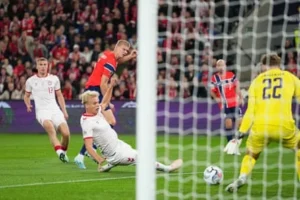
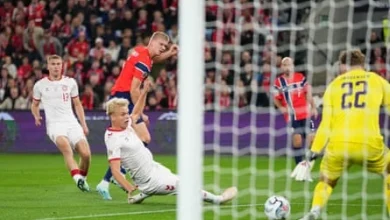
While the headlines in Amsterdam were dominated by the tactical standoff, Group A4 of the UEFA Nations League witnessed a more explosive encounter in Oslo. Norway secured a thrilling 3-2 victory over Denmark, largely thanks to a brace from Erling Haaland.
The match was an exhibition of offensive efficiency. Oscar Bobb opened the scoring for Norway in the 14th minute, and Haaland doubled the lead just four minutes later, highlighting Norway’s early dominance. Denmark, however, refused to fold. A stunning free-kick from Brentford’s Mikkel Damsgaard halved the deficit before halftime, and former Manchester United striker Rasmus Hojlund leveled the scores at 2-2 on the hour mark.
The decisive moment arrived with 16 minutes remaining, as Haaland struck his second of the night to put Norway back in front. The win, and specifically Haaland’s individual performance, serves as a testament to his continued dominance in international football. Having now reached 64 senior international goals in just 56 appearances, the striker’s efficiency remains at a historical level.
Implications for the Nations League Tournament
The outcomes of these opening fixtures underscore the unpredictable nature of the current Nations League cycle. The tournament, designed to replace traditional international friendlies with competitive matches, continues to serve as a vital metric for national teams preparing for the next qualification cycle.
For Germany, the challenge will be to integrate the lessons from their draw in Amsterdam into a cohesive strategy for the remainder of the group stage. Klopp’s ability to manage player fatigue and navigate injury crises will be tested in the coming weeks. For the Netherlands, the ability to secure a late point against a side of Germany’s caliber provides a psychological boost that may prove vital in the final standings.
As the dust settles on the opening matchday, the focus shifts to the tactical adjustments required to navigate a grueling schedule. With the return of domestic league football pending, both Klopp and Xavi will monitor their players closely, knowing that the physical demands of the current season will likely influence the squad selections for the subsequent Nations League fixtures in October. The parity shown in the opening round suggests that the battle for the top spot in Group A2 will likely go down to the final matchday, with every goal and every point carrying significant weight in the broader narrative of European football development.