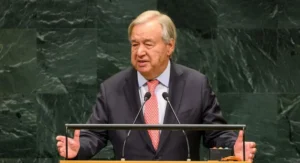
As world leaders converge on United Nations Headquarters in New York for the high-level debates of the General Assembly, the international community faces a complex web of compounding geopolitical crises, fragile ceasefires, and escalating cross-border conflicts. Against this turbulent global backdrop, United Nations Secretary-General António Guterres used the occasion of the International Day of Peace to issue a stark and urgent reminder that global security is not a passive state of affairs, but an active, deliberate choice. Under this year’s core guiding theme, "Invest in Peace," the UN leadership has sought to pivot global discourse away from fatalistic acceptance of endless war and toward structural investments in diplomacy, multilateral cooperation, and grassroots peacebuilding.
The International Day of Peace, observed annually on September 21, was established by a unanimous United Nations General Assembly resolution in 1981 to dedicate measures reinforcing the ideals of peace both within and among all nations and peoples. Decades later, the relevance of this observance has only intensified. As conflicts grow increasingly protracted, asymmetrical, and internationalized—often drawing in proxy actors, triggering severe humanitarian displacement, and shattering fragile regional infrastructures—Mr. Guterres emphasized that lasting peace requires far more than the mere absence of war. It demands an active, sustained financial, political, and social commitment to sustainable development, institutional resilience, and the unyielding protection of human rights.
The Chronology of Multilateral Peace Architecture
To understand the weight of the Secretary-General’s appeal, it is necessary to examine the historical evolution of the international peace architecture. The modern framework for global peace was forged in the immediate aftermath of the Second World War, a catastrophic global conflict that claimed tens of millions of lives and devastated entire continents. In 1945, representatives of 50 countries met in San Francisco at the United Nations Conference on International Organization to draw up the UN Charter. The primary mandate entrusted to this new global body was unequivocal: to save succeeding generations from the scourge of war.
In the ensuing decades, the UN’s mechanisms for maintaining international peace and security expanded significantly. By 1948, the UN Security Council authorized its very first peacekeeping missions, initially conceived as traditional observer missions monitoring ceasefires between sovereign states. Over the next seventy-eight years, this mandate evolved dramatically. Peacekeeping operations transformed into complex, multidimensional missions tasked not only with separating warring parties but also with disarming combatants, protecting civilian populations, facilitating the delivery of humanitarian aid, supporting the return of refugees, and assisting in the establishment of sustainable governance structures through democratic elections and legal reform.
Throughout its history, the UN Security Council has authorized more than 70 peacekeeping operations across four continents. While the scale of these deployments fluctuates in response to the ebbs and flows of global conflict—with 11 active missions currently operating globally—the fundamental challenge remains constant: securing adequate political will and financial resources from Member States to sustain these critical operations in increasingly hostile environments.
The Imperative of Grassroots Voices and Intergenerational Dialogue
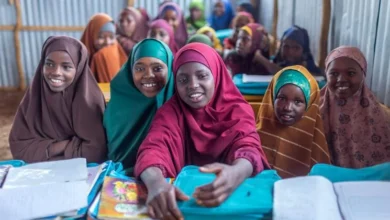
While high-level diplomacy and Security Council resolutions form the superstructure of international peace efforts, the UN has increasingly emphasized that top-down measures are insufficient without deep, foundational roots in local communities. This philosophy took center stage during the official observances held at the United Nations Office at Nairobi (UNON) in Kenya, where youth leaders, students, and civil society advocates gathered to articulate their vision for a more stable and inclusive world.
The dialogue in Nairobi highlighted a profound disconnect frequently experienced by the younger demographic: while youth constitute the majority of the population in many conflict-affected regions, they are routinely sidelined from formal peace processes. Benedict Wambuya, an agriculture and technology student at Jomo Kenyatta University, voiced a widespread sentiment among youth advocates regarding structural exclusion and domestic civil unrest. Reflecting on recent deadly crackdowns in his home country—where young citizens felt their fundamental human rights were infringed upon by state authorities—Wambuya stressed that sustainable peace cannot be decreed from above while domestic grievances go unaddressed.
“As young people, we are hardly ever involved in peace discussions around the world,” Wambuya stated during the Nairobi peace forum. “We are not participating enough in maintaining peace around the world. We should seek to understand our leaders, come together, work together and maintain peace.”
Echoing these remarks, Benedict Kioko, another Kenyatta University student, emphasized that structural peace is fundamentally predicated on communication and empathy. He noted that contemporary conflicts frequently erupt or persist because systemic channels for dialogue break down, allowing polarization and mutual distrust to fester between opposing factions. Festus Musau, a student at the Technical University of Kenya, broadened the perspective further, arguing that macro-level stability is inextricably linked to individual accountability. For peace to thrive nationally or internationally, he observed, it must begin at the individual level through daily choices of tolerance, inclusion, and constructive engagement.
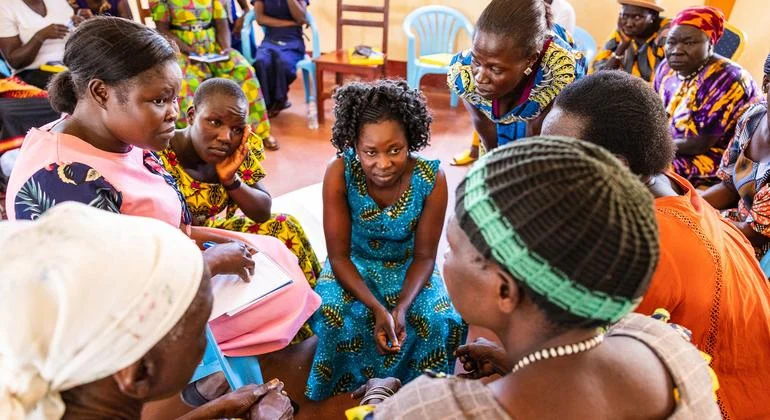
These grassroots perspectives are directly informing ongoing UN initiatives, including the "Hear Us. Act Now for a Peaceful World" campaign and its associated Peace Circles. These platforms are designed to integrate youth contributions into forthcoming independent progress studies examining the tangible impact of young people on conflict prevention and post-conflict reconstruction.
Global Challenges and the Evolving Definition of Security
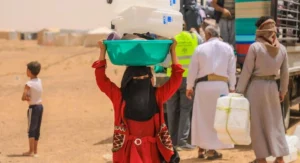
The urgent calls for investment in peace arrive at a time when traditional notions of international security are undergoing profound stress tests. Modern conflicts rarely respect national borders; instead, they generate cascading transnational crises. Civil wars routinely spill over into neighboring states, destabilizing entire regions, fueling illicit arms trafficking, empowering violent extremist networks, and triggering unprecedented waves of forced migration and displacement.
Compounding these kinetic threats are systemic, non-traditional security challenges. Climate change acts as a "threat multiplier," exacerbating resource scarcity, intensifying food insecurity, and driving communal violence over arable land and water supplies. Furthermore, the persistent threat of nuclear proliferation, cyber warfare, and the weaponization of disinformation further complicate the global security landscape.
During his address, Secretary-General Guterres did not shy away from acknowledging the strain currently placed on international solidarity. In an era marked by rising geopolitical friction, trade fragmentation, and nationalist retrenchment, the multilateral consensus required to resolve complex protracted conflicts has frayed. Yet, rather than capitulating to despair, the UN chief pointed to the quiet, persistent work of civil society as proof that alternative trajectories remain possible.
“Around the world, people are showing that we are not powerless,” Mr. Guterres said. “Volunteers, advocates, civil society leaders, peacekeepers and peacemakers are bridging divides, uniting communities, and pushing for dialogue. Action by action, they are building peace from the ground up.”
Fact-Based Analysis of Implications: The Cost of Underinvestment
Economists and security analysts have long pointed to the staggering asymmetric costs of conflict versus the relatively modest investments required for peacebuilding and preventive diplomacy. According to data compiled by international financial institutions and peace research institutes, violent conflict drains trillions of dollars annually from the global economy through the destruction of infrastructure, the disruption of global supply chains, the loss of human capital, and the immense financial burden of emergency humanitarian response.
Conversely, studies conducted by the United Nations and the World Bank consistently demonstrate that investments in preventive diplomacy, mediation, and early-stage peacebuilding yield exponentially higher returns. Every dollar invested in preventing violent conflict saves billions in subsequent military expenditures, humanitarian relief, and post-war reconstruction costs. However, despite these well-documented economic and humanitarian benefits, preventive diplomacy and peace operations historically face chronic underfunding, as domestic political cycles often prioritize immediate, reactive security measures over long-term structural investments.
The High-Level Week and the Global Architecture of Diplomacy
The Secretary-General’s appeal serves as a foundational touchstone for the broader deliberations of the UN High-Level Week. As heads of state, foreign ministers, and international delegates address the General Assembly, the themes of institutional reform, enhanced mediation capabilities, and predictable financing for peacebuilding will remain central to multilateral negotiations.
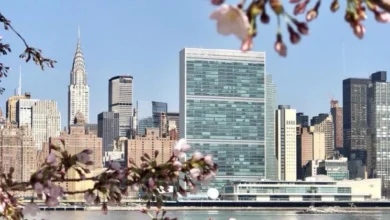
The physical environment of United Nations Headquarters in New York itself stands as a permanent architectural and artistic testament to this shared mission. From the monumental Peace Bell—forged from coins donated by children across more than 60 nations—to the iconic "Non-Violence" sculpture (commonly known as the Knotted Gun) created by Swedish artist Carl Fredrik Reuterswärd and gifted by the government of Luxembourg in memory of John Lennon, the compound is a visual reminder of humanity’s collective aspiration to move beyond the barbarism of war.
Ultimately, the 2026 observance of the International Day of Peace and the ongoing debates in New York deliver a clear message to the international community: peace is not a utopian abstraction, nor is it a permanent historical guarantee. It is a fragile asset that requires constant maintenance, institutional reinvention, and deliberate, courageous financial and political investment. As global crises continue to test the resilience of the international order, the collective warning from Nairobi to New York remains unequivocal—building a sustainable future requires choosing dialogue over destruction, and investing in peace before the drums of war drown out the possibility of a shared tomorrow.