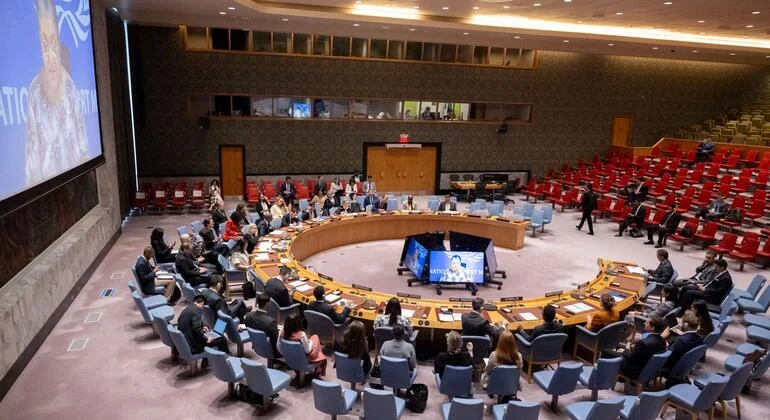
The United Nations Security Council has issued a resounding endorsement of a landmark political agreement reached by Libyan stakeholders, describing the accord as a critical turning point for a nation fractured by more than a decade of conflict, institutional division, and political instability. In a formal statement released on Tuesday, council members praised the August 30 breakthrough—negotiated under a specialized format known as the "Smaller Convening"—and called upon Libyan political figures to capitalize on this narrow window of opportunity to restore national unity, establish a single, unified government, and pave the way for long-delayed national elections within a two-year framework.
The diplomatic breakthrough, brokered painstakingly by the United Nations Support Mission in Libya (UNSMIL), successfully untangles two of the most contentious structural disputes that have repeatedly derailed previous peace initiatives. Specifically, the agreement provides a clear mechanism for the reconstitution of the board of Libya’s High National Elections Commission (HNEC), ensuring equitable representation across the country’s three historic regions: Tripolitania in the west, Cyrenaica in the east, and Fezzan in the south. Furthermore, the accord amends the deeply disputed legal framework linking the success of parliamentary elections to the concurrent staging of presidential polls—a procedural bottleneck that previously guaranteed mutual destruction and stalemate whenever one process encountered resistance.
Background Context and Historical Stalemate
To fully understand the gravity of the August 30 agreement, one must examine the protracted crisis that has paralyzed North Africa’s largest oil producer. Libya’s contemporary turmoil is rooted in the 2011 NATO-backed uprising that led to the overthrow and death of long-ruling dictator Muammar Gaddafi. While the popular revolt initially promised democratic transition, the sudden collapse of centralized state authority triggered a chaotic power vacuum.
In the years following 2011, Libya fractured along tribal, regional, and ideological lines. The governance crisis deepened dramatically in 2014 with the emergence of rival administrations: an internationally recognized government in the capital, Tripoli, in the west, and a parallel authority aligned with the Libyan National Army (LNA) command under military strongman Khalifa Haftar in the east. This institutional bifurcation extended far beyond the legislature, splintering security apparatuses, central banking systems, and management of the nation’s vast hydrocarbon wealth.
Repeated international efforts to bridge the divide—including the high-profile Libya-wide elections originally scheduled for December 2021—collapsed at the eleventh hour precisely because political elites could not agree on foundational election laws, candidate eligibility, or the security conditions necessary for a fair vote. Since then, the country has languished in a recurring cycle of temporary truces, localized clashes, and deadlocked negotiations, with ordinary citizens bearing the economic and social brunt of the paralysis.
The UNSMIL Strategy: Inclusive Multilateral Diplomacy
The breakthrough announced this week represents a strategic pivot in how the United Nations approaches the Libyan stalemate. Speaking to UN News, Special Representative of the Secretary-General and Head of UNSMIL, Hanna Tetteh, explained that rather than engaging exclusively with the two entrenched legislative bodies—the Tripoli-based High Council of State and the eastern-based House of Representatives—UNSMIL broadened the negotiating table.
The "Smaller Convening" brought together representatives from the Government of National Unity (GNU), the LNA command, and both parliamentary chambers to thrash out compromises jointly. This inclusive format was informed by a rigorous, months-long structured dialogue conducted by UNSMIL between December 2025 and June 2026. During this period, the mission consulted roughly 120 diverse Libyans from across the country’s various regions, civil society organizations, and local communities, ensuring that grassroots perspectives fed directly into high-level political mediation.
Ms. Tetteh highlighted that the new agreement successfully "helped overcome issues that had stood in the way for many years." She noted that the diplomatic milestone affords the international community "an initial opportunity to engage more with Libyan stakeholders and build trust in the process we are working with them to achieve."
Despite the optimism surrounding the deal, the UN envoy offered a sobering assessment of the prevailing domestic climate, warning that trust remains fragile. This skepticism is not merely a reflection of hardened hostility among political elites, but runs deep among the wider Libyan populace, many of whom have witnessed multiple false dawns over the past thirteen years.
Broader Challenges: Security, Institutions, and Public Buy-In
As Libya looks toward the implementation phase of the election deal, international observers and UN officials have identified several critical hurdles that could threaten the fragile peace process if left unmanaged.
Chief among these challenges is the necessity of achieving broad public buy-in. While political leaders in the east and west may sign off on institutional restructuring in structured negotiation rooms, translating that agreement into genuine enthusiasm among citizens weary of political posturing remains a monumental task. Furthermore, the structural reunification of Libya remains incomplete. The country continues to grapple with fragmented security structures, rival armed groups holding localized domains of power, and a divided economic architecture.
Regarding security, Ms. Tetteh observed that while the threat of armed confrontation persists—concentrated primarily in the volatile western regions of the country—local leaders and commanders have demonstrated a pragmatic willingness to cooperate with UNSMIL. These local interlocutors have increasingly shown an interest in defusing tensions before minor skirmishes cascade into wider military escalations, signaling a potential shift toward local stability even before macro-level security sector reform is achieved.
However, institutional reform must also contend with the insidious impact of digital harassment and political intimidation, particularly directed against women seeking to participate in public life. UNSMIL data underscores the severity of this issue: women comprised 35 percent of the participants in the 2025-2026 structured dialogue, playing an invaluable role in shaping community-level reconciliation frameworks. Yet, these women frequently face intense online hate speech, harassment, and targeted smear campaigns orchestrated by opponents of civic openness. Ms. Tetteh has explicitly called for robust legal protections to shield women in public service, emphasizing that silencing female voices fundamentally undermines the democratic aspirations of the broader Libyan population.
Timeline of Recent Developments
To trace the trajectory leading to the current diplomatic breakthrough, a review of key recent milestones highlights the gradual momentum built by international and domestic actors:
- December 2025 – June 2026: UNSMIL conducts an intensive nationwide structured dialogue, consulting approximately 120 citizens from diverse regions, professional backgrounds, and civil society groups to identify core grievances and public priorities for a renewed political roadmap.
- August 30, 2026: Libyan political factions participating in the UN-brokered "Smaller Convening"—incorporating representatives from the GNU, the LNA command, and both rival legislative chambers—reach a comprehensive agreement resolving the composition of the High National Elections Commission board and amending the legal frameworks for presidential and parliamentary polls.
- Early September 2026: Special Representative Hanna Tetteh briefings UN News, outlining how the accord successfully bypassed years of institutional deadlock and detailing the strategies required to build sustainable public trust.
- Mid-September 2026: The UN Security Council issues an official statement formally welcoming the August 30 agreement, offering its "full support" to UNSMIL and urging Libyan leaders to seize the moment by implementing the pact under a single, unified government framework within a two-year timeline.
Implications and Outlook for the International Community
The Security Council’s unanimous backing of the Libya election deal signals a renewed, coordinated international resolve to stabilize North Africa and curb the illicit trafficking, migration pressures, and economic vulnerabilities that have flourished in the vacuum of Libyan state authority.
By tying the prospect of elections to the formation of a single, unified government, the international community is signaling that it will no longer tolerate or recognize parallel administrative structures that use legitimacy disputes as a pretext for perpetual delay. The establishment of an inclusive HNEC board ensures that technical preparations for a national vote can proceed with regional buy-in, minimizing the risk of localized electoral boycotts or challenges to the final outcome.
Nevertheless, experts caution that the road ahead is fraught with potential pitfalls. The two-year timeline agreed upon by Libyan parties is ambitious, requiring continuous, good-faith mediation by UNSMIL and unwavering diplomatic pressure from regional and global powers. Spoilers within Libya’s complex network of armed factions and political elites could still attempt to derail the process if their narrow financial or territorial interests are threatened by the prospect of a unified state and transparent elections.
In her concluding remarks to the international press and UN bodies, Ms. Tetteh reiterated the fundamental philosophy guiding the mission’s current mandate: "We are not here to replace the Libyan people, but to support them in achieving their political aspirations toward good governance, unity, peace, and security."
Whether Libyan leaders possess the political will to transcend personal and factional ambitions for the greater good of the nation remains the defining question of this fragile new chapter. For now, the United Nations and the international community have provided the scaffolding; it rests entirely upon the shoulders of Libya’s political actors and citizens to build a lasting, unified future.