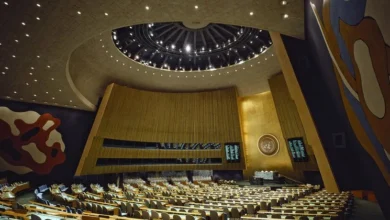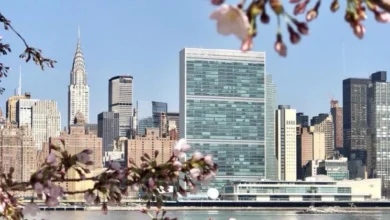
The United Nations Security Council convened an urgent session on 21 July 2026, placing the deeply fractured nation of Syria once again under the international spotlight, even as Secretary-General António Guterres embarked on his inaugural visit to Damascus as the UN chief. The high-stakes meeting unfolded against a backdrop of escalating regional tensions, with fresh reports of an Israeli attack in occupied Syrian territory, alongside the nascent construction of a multi-national oil pipeline designed to circumvent the now-closed, strategically vital Strait of Hormuz – a focal point of the protracted US-Iran conflict. Independent UN investigators concurrently presented findings underscoring the persistently fragile security conditions across southern Syria, painting a grim picture of humanitarian and political stagnation.
A Decades-Long Crisis: Syria’s Enduring Anguish
The Syrian conflict, now in its sixteenth year, has evolved into one of the most complex and devastating humanitarian crises of the 21st century. What began in 2011 as a series of peaceful protests demanding democratic reforms rapidly devolved into a multi-faceted civil war, drawing in regional and international powers. The initial uprising was met with a brutal crackdown by government forces, leading to the proliferation of armed opposition groups, the rise of extremist organizations like ISIS, and the fragmentation of the country into various zones of control. Russia, Iran, and Hezbollah have provided crucial military support to the Syrian government, while the United States, Turkey, and various Gulf states have backed different opposition factions, further entrenching the conflict.
By 2026, the country remains carved up: the government, supported by its allies, controls the majority of the populated areas; Turkish-backed forces hold swathes of the north; a US-backed Kurdish-led administration governs much of the northeast; and various rebel groups, including hardline factions, maintain pockets of influence, particularly in Idlib. This intricate web of alliances and antagonisms has rendered any comprehensive political solution elusive, despite repeated efforts by UN Special Envoys. The human cost has been staggering, with over half a million lives lost, millions internally displaced, and millions more forced to seek refuge abroad, creating the world’s largest refugee crisis. Infrastructure lies in ruins, the economy is shattered, and the social fabric deeply torn, leaving a generation scarred by war and uncertainty. The international community’s capacity to address the crisis has been hampered by deep divisions within the Security Council, with geopolitical rivalries often overshadowing humanitarian imperatives.
Security Council Deliberations: Addressing Immediate Threats and Stalled Progress
During the Security Council session, delegates heard from the UN Special Envoy for Syria, Geir Pedersen, who outlined the urgent need for a renewed commitment to a political solution based on Security Council Resolution 2254. Pedersen emphasized that while large-scale front-line fighting has largely subsided in some areas, the country is plagued by persistent localized violence, economic collapse, and a humanitarian emergency that shows no signs of abating. He specifically highlighted the "dangerous interplay" between internal dynamics and broader regional flare-ups.
Representatives from various member states voiced their concerns. The Permanent Representative of the United States condemned the continued disregard for Syria’s sovereignty and called for accountability for all actors violating international law. Russia’s envoy reiterated the Syrian government’s right to defend its territory and criticized external interference, particularly regarding the ongoing Israeli actions. China called for de-escalation and stressed the importance of humanitarian aid delivery without politicization. European nations underscored the urgent need for humanitarian access across all of Syria and a revival of the political process, warning against the destabilizing effects of ongoing regional conflicts spilling further into Syria. The Council’s discussion notably pivoted on the urgent implications of the reported Israeli strike and the geopolitical ramifications of the new oil pipeline, illustrating the profound interconnectedness of the Syrian crisis with wider Middle Eastern security.
Secretary-General Guterres’ Landmark Visit to Damascus
Secretary-General António Guterres’ arrival in Damascus marks his first visit to Syria since assuming office, a trip laden with immense diplomatic and symbolic significance. His agenda is understood to focus on several critical objectives: assessing the humanitarian situation firsthand, advocating for unimpeded humanitarian access to all parts of the country, engaging with Syrian government officials on the stalled political process, and discussing regional de-escalation efforts. This visit comes at a crucial juncture, aiming to inject renewed momentum into a peace process that has largely been moribund for years.
The Secretary-General’s itinerary is expected to include meetings with President Bashar al-Assad and Foreign Minister Faisal Mekdad, where he will likely press for concrete steps towards implementing Resolution 2254, which calls for a new constitution, UN-supervised elections, and a political transition. Guterres is also anticipated to meet with representatives of UN agencies and non-governmental organizations operating on the ground, gaining direct insights into the challenges faced by aid workers and the millions of Syrians dependent on humanitarian assistance. His presence in Damascus sends a powerful message that the United Nations remains committed to finding a peaceful resolution to the conflict and addressing the profound suffering of the Syrian people, despite the formidable geopolitical obstacles. The visit is a delicate balancing act, requiring careful navigation of the complex political landscape and the various interests of internal and external actors.
Escalating Regional Tensions: Israeli Strikes in Occupied Territories
The Security Council’s discussion was significantly shaped by recent reports of an Israeli military strike in occupied Syrian territory. While details remained sparse at the time of the UN session, such incidents have become a recurring feature of the Syrian conflict, profoundly complicating regional stability. Israel has consistently stated its policy of preventing Iran and its proxies, particularly Hezbollah, from establishing a permanent military foothold in Syria or transferring advanced weaponry to Lebanon. These strikes frequently target Iranian-linked militias, weapons depots, and military infrastructure, often near Damascus or in the country’s south.
The latest reported attack, if confirmed, underscores the persistent danger of escalation. Syria has routinely condemned these strikes as violations of its sovereignty, while Iran has vowed retaliation, albeit often through proxy actions. The international community, including UN officials, has repeatedly called for restraint from all parties, warning that such actions risk igniting a broader regional conflagration. The legal and ethical implications of strikes in occupied territory also remain a contentious point, raising questions about international law and the rights of sovereign nations amidst ongoing conflict. The repeated nature of these strikes, often met with limited international condemnation beyond calls for de-escalation, highlights the perceived impunity of certain actors in the fragmented Syrian battlespace and the deepening regional power struggles.
The Multi-National Oil Pipeline: A Strategic Response to the Strait of Hormuz Crisis
Perhaps the most significant new development discussed by the Security Council was the emergence of a multi-national oil pipeline project, conceived as a critical bypass for global energy flows in the wake of the closure of the Strait of Hormuz. The Strait, a narrow maritime chokepoint between the Persian Gulf and the Gulf of Oman, had been rendered impassable due to the ongoing, full-scale US-Iran war. This conflict, which escalated dramatically in the mid-2020s over Iran’s nuclear program and its regional proxy activities, had paralyzed global oil markets, sending crude prices to unprecedented levels and triggering a worldwide energy crisis. The closure of Hormuz, through which approximately 20% of the world’s petroleum transits, had forced a frantic search for alternative export routes.
The proposed multi-national pipeline, reportedly backed by a consortium of Gulf states, European energy companies, and potentially with Russian or Chinese strategic interests, aims to transport crude oil from the Gulf region to the Mediterranean Sea. While specific details of its route remain confidential for security and strategic reasons, analysts speculate that it would likely traverse through Iraq and potentially utilize a corridor in eastern Syria, ultimately reaching a port on the Syrian or Lebanese coast. Such a route would necessitate complex agreements with the various authorities controlling territory in Iraq and Syria, highlighting the profound geopolitical implications of the project. For Syria, hosting a segment of such a pipeline could represent a significant, albeit politically fraught, economic lifeline, potentially attracting investment and revenue in a nation otherwise starved for resources. However, it also introduces new layers of geopolitical competition and security risks, making the pipeline a potential target for various armed groups or rival state actors. The project is a stark testament to the global economic vulnerability to Middle Eastern instability and the desperate measures being undertaken to secure energy supplies in a world increasingly fractured by conflict. Its construction signals a fundamental shift in global energy logistics and the strategic calculus of major powers.
Humanitarian Crisis Deepens in Southern Syria
Adding to the complexity, UN independent investigators presented sobering findings on the security conditions in southern Syria, particularly in Daraa and Quneitra provinces. Despite formal "reconciliation" agreements reached years prior, the region remains highly volatile. The investigators reported a persistent pattern of assassinations, kidnappings, and sporadic clashes between government forces, former opposition fighters, and remnants of extremist groups. This continued insecurity severely impedes humanitarian access and exacerbates the suffering of local populations.
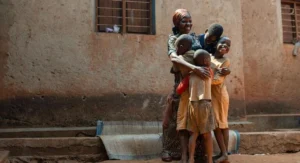
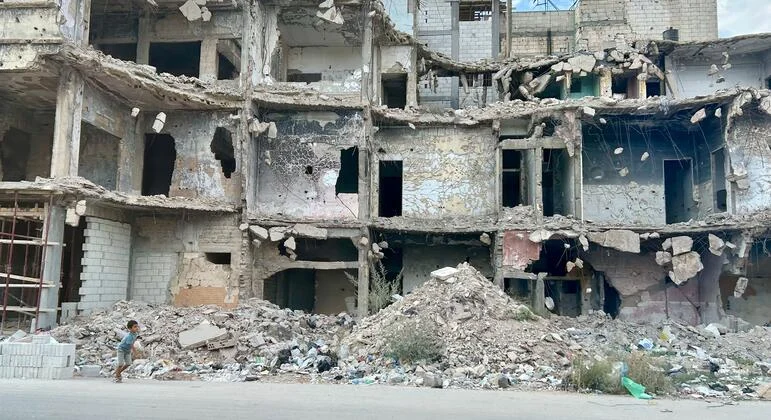
Access to basic services like healthcare, clean water, and education remains critically inadequate. Displacement continues, albeit on a smaller scale than previous years, as families flee localized violence or economic hardship. The UN Office for the Coordination of Humanitarian Affairs (OCHA) reported that over 3.5 million people in southern Syria were in dire need of assistance, with food insecurity reaching critical levels due to drought, economic collapse, and market instability. Children, as depicted in the image of Homs, are particularly vulnerable, facing malnutrition, lack of schooling, and profound psychological trauma from years of conflict. International aid organizations struggle with funding shortfalls and bureaucratic hurdles, further limiting their capacity to respond effectively to the escalating humanitarian catastrophe.
Broader Implications and the Path Forward
The convergence of these critical developments – the Security Council’s debate, the Secretary-General’s visit, persistent Israeli strikes, the unprecedented multi-national oil pipeline, and the deepening humanitarian crisis – underscores the multi-layered challenges facing Syria and the wider Middle East in 2026. The US-Iran war and the closure of the Strait of Hormuz have not only triggered a global energy crisis but have also profoundly reshaped regional alliances and priorities, injecting new elements of volatility into the Syrian theatre.
The path forward for Syria remains fraught with peril. A sustainable resolution necessitates a comprehensive approach that addresses the root causes of the conflict, ensures accountability for atrocities, and facilitates a genuine political transition. The international community, despite its divisions, must redouble efforts to support the UN-led political process, guarantee unimpeded humanitarian access, and work towards de-escalating regional tensions that continuously threaten to ignite a broader conflict. Secretary-General Guterres’ visit offers a glimmer of hope for renewed diplomatic engagement, but its success will ultimately depend on the political will of all parties involved to prioritize peace and the well-being of the Syrian people over narrow strategic interests. The construction of the multi-national oil pipeline, while a testament to global adaptability in a crisis, simultaneously highlights the deep strategic value of Syria as a transit country and the continued fragility of a region embroiled in an enduring struggle for power and resources.
Related posts: