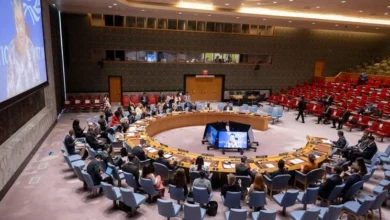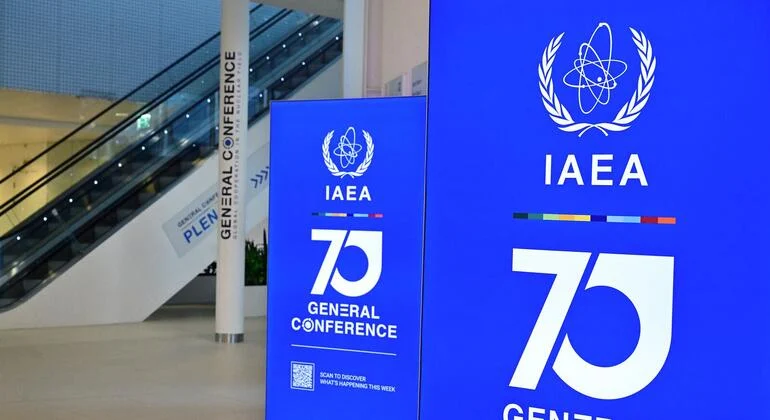
Opening against a backdrop of deep geopolitical friction and accelerating technological transformation, the International Atomic Energy Agency (IAEA) convened its flagship annual policy-making gathering in Vienna with a resounding call to preserve multilateralism, nuclear safety, and rigorous verification standards. Rafael Mariano Grossi, the Director General of the IAEA, addressed approximately 4,000 delegates, diplomats, and nuclear experts gathered for the high-level week. His remarks balanced urgent warnings regarding ongoing global flashpoints with immense optimism over the rapid expansion of peaceful nuclear technologies in energy, medicine, and environmental protection.
The conference, serving as the primary deliberative body of the global nuclear watchdog, unfolds during a week marked by heightened international anxiety over nuclear proliferation, direct military threats to civilian atomic infrastructure, and shifting energy paradigms. Delivering a stark assessment of the international landscape, United Nations Secretary-General António Guterres cautioned that the agency’s mission is unfolding at a "moment of profound global turbulence and uncertainty." The Secretary-General’s message, conveyed to the assembly by Monica Juma, Director-General of the United Nations Office at Vienna, highlighted that attacks on nuclear facilities are on the rise, nuclear proliferation risks are accelerating, and foundational verification safeguards are increasingly eroding.
Despite these grave headwinds, leadership from both the UN and the IAEA emphasized that nuclear science and technology are entering a renaissance. From powering next-generation artificial intelligence data centres to revolutionizing cancer care in the developing world and driving deep decarbonization across industrial economies, the peaceful applications of the atom have never been more sought after—or more complex to monitor.
The Frontlines of Crisis: Ukraine, Zaporizhzhia, and Regional Diplomacy
At the heart of the IAEA’s operational focus remains the war in Ukraine and the persistent threat of a catastrophic nuclear accident. Throughout the conflict, the agency has maintained a continuous physical presence of nuclear safety and security experts stationed directly at vulnerable facilities across the country. Mr. Grossi singled out these frontline specialists for praise, noting their unwavering courage in mitigating risks on active battlefields.
A central operational achievement highlighted during the conference was the successful brokering of a seventh local truce around the Zaporizhzhia Nuclear Power Plant (ZNPP). Working in delicate coordination with authorities in both Moscow and Kyiv, IAEA negotiators secured local ceasefires to execute critical engineering repairs after the facility’s external power supply was severed for the tenth time in June. Maintaining external power is a non-negotiable prerequisite for running the cooling systems necessary to prevent core meltdowns and subsequent radioactive releases. Mr. Grossi framed these localized agreements as proof that technical diplomacy can carve out humanitarian and safety corridors even amid intense geopolitical hostilities.
Beyond Eastern Europe, the IAEA continues to deploy multilateral verification frameworks to resolve long-standing compliance cases. Mr. Grossi pointed to ongoing verification efforts regarding Syria’s nuclear safeguards obligations as a prime example of how sustained multilateral engagement can systematically move intractable problems "from the column of concerning issues to the column of normalcy."
Navigating Complex Safeguards: The Stance on Iran
Addressing the deeply strained relationship between the international community and Iran, Mr. Grossi adopted a tone characterized by resolute determination rather than despair. Acknowledging the profound difficulties, lingering security concerns, and political volatility surrounding Tehran’s nuclear programme, the Director General admitted that the diplomatic environment remains exceptionally fragile.
"We will not have a predictable situation—or reassurances, trust, and confidence—unless we can work together again," Mr. Grossi told the plenary session.
While validating the need to understand Iran’s complex security environment, he maintained that there is no substitute for rigorous, intrusive safeguard measures that deliver absolute empirical assurances regarding the exclusively peaceful nature of the country’s nuclear undertakings. Underscoring the agency’s steadfast commitment to diplomacy, he added, "We are stubbornly optimistic that we are going to get that done as well."
Echoing this sentiment, UN Secretary-General Guterres used his opening address to urge Iranian authorities to grant the IAEA unhindered cooperation and access, stressing that full compliance is essential to restoring international confidence and stabilizing regional security architectures.
The Global Nuclear Renaissance: Energy Security, AI, and Decarbonization
Shifting from crisis management to future horizons, the IAEA General Conference placed heavy emphasis on the surging global demand for peaceful nuclear technology. Developing and developed nations alike are increasingly viewing nuclear energy as an irreplaceable cornerstone for economic growth, energy independence, and climate change mitigation.
Revised long-term projections released by the agency indicate that global nuclear power capacity could more than triple by the year 2060. This dramatic upward revision is driven by an unprecedented convergence of industrial demands. Nations are racing to secure reliable, baseload clean electricity to offset fossil fuel dependency, meet surging power demands from rapidly expanding artificial intelligence (AI) data centres, and chart credible pathways to decarbonize heavy industries such as maritime shipping, which currently accounts for roughly 80 per cent of global trade volume.
To ensure these benefits are equitably shared, the IAEA continues to champion capacity-building, technology transfer, and specialized training programmes. Mr. Grossi emphasized that the agency’s technical assistance is indispensable for establishing a "level playing field so everybody can benefit from it."
This commitment extends far beyond electricity generation. The agency plays a pivotal role in global health and environmental stewardship. Through initiatives such as "Rays of Hope," the IAEA assists nations—particularly across Africa—in expanding access to radiotherapy and training oncologists to bridge stark global disparities in cancer care. Similar multilateral efforts are deployed to combat zoonotic diseases, protect marine ecosystems, and deploy nuclear techniques for agricultural adaptation in the face of climate change. Mr. Grossi described these multi-faceted responsibilities as "the noblest mission that can exist," urging member states to bolster their political and financial backing.
Financing the Future and Institutional Resilience
As the IAEA’s mandate expands to meet 21st-century technological and geopolitical demands, institutional sustainability has emerged as a critical point of discussion. During the high-level debates, representatives underscored the vital importance of the IAEA’s Technical Cooperation Fund, through which developing nations receive direct assistance for peaceful nuclear projects.
UN Secretary-General Guterres made a direct appeal to the international community to provide predictable, sustainable, and unencumbered funding to the agency. He noted that the world cannot afford to underfund an institution that serves as the ultimate global guarantor of nuclear safety and non-proliferation.
"More than ever, our world needs the IAEA’s professionalism, impartiality, and technical excellence," Guterres stated. "And we need Member States to stand with you as you carry out your vital work."
As the week-long General Conference proceeds with committee hearings, technical exhibitions, and bilateral diplomatic consultations, the overarching message from Vienna is clear. The international nuclear order is navigating a turbulent transitional phase defined by acute conflict risks, complex proliferation challenges, and a historic technological revolution. Yet, through the persistent, often unheralded efforts of its inspectors, scientists, and diplomats, the IAEA remains the indispensable anchor ensuring that the immense power of the atom is harnessed exclusively for human progress and security.