Trump Administration Accused of Manipulating Iran War Death Toll, Citing Phantom Ceasefire Amidst Mounting Scrutiny

The integrity of official casualty reporting by the United States military has been called into question following allegations that the Trump administration directly intervened to remove four servicemember deaths from the official tally attributed to the ongoing conflict with Iran. This controversial action, reportedly predicated on the existence of a unilaterally declared "ceasefire" that seemingly no other party recognized, has ignited a fierce debate over transparency, accountability, and the administration’s narrative surrounding its military engagements abroad. The Pentagon’s official roll of servicemember deaths, which had previously listed 18 fatalities in the Iran conflict, suddenly dropped to 14, a change The New York Times reported was the result of direct administrative action.
The Disputed Casualty Count and the ‘Phantom Ceasefire’
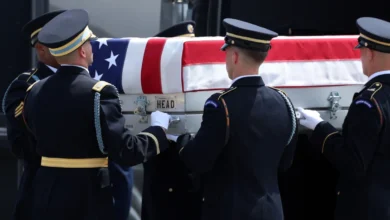
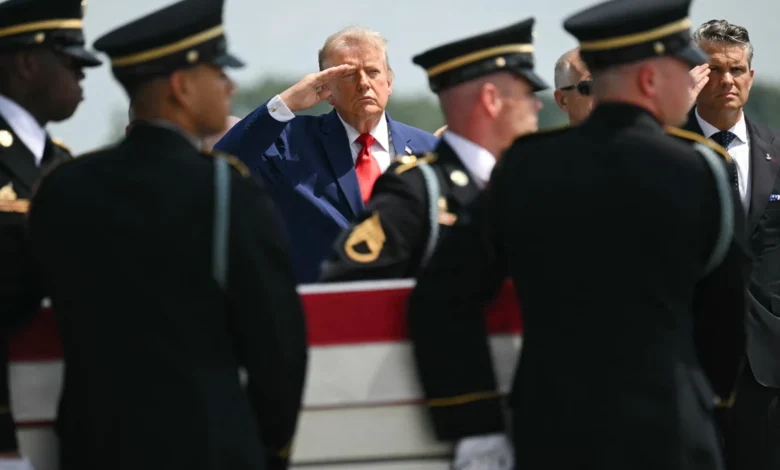
On a Thursday, the public observed a perplexing alteration to the Pentagon’s official website tracking military casualties. Four names were inexplicably removed from the list of servicemembers killed in the Iran conflict, reducing the total from 18 to 14. This revision immediately raised alarms among observers and journalists. Subsequent reporting by The New York Times shed light on the alleged rationale behind this change: the Trump administration asserted that these four servicemembers, who had been killed in attacks at bases in Jordan and Iraq the previous weekend, should not be counted towards the Iran conflict death toll. The administration’s justification was that their deaths occurred after President Trump had declared a "ceasefire" in late April, effectively severing the causal link between their sacrifice and the declared conflict.
This declaration of a "ceasefire" was met with widespread confusion, as there was no apparent reciprocal cessation of hostilities from the Iranian side or its proxies. Indeed, military actions and retaliatory strikes continued in the region, undermining the very premise of a ceasefire. Critics quickly pointed out the paradoxical and seemingly absurdist logic at play: the U.S. was ostensibly at war, yet "not technically at war" due to a unilateral ceasefire, which itself was not being observed by either party. The deaths of American soldiers in active combat zones further complicated this narrative, creating a disconnect between the administration’s public pronouncements and the grim realities on the ground.
Chronology of Escalation and the Reporting Discrepancy
To fully grasp the significance of this alleged manipulation, it is crucial to understand the broader context of the U.S.-Iran relationship under the Trump administration. Tensions escalated significantly following the U.S. withdrawal from the Joint Comprehensive Plan of Action (JCPOA), commonly known as the Iran nuclear deal, in May 2018. This was followed by the re-imposition and intensification of economic sanctions against Iran, leading to a period of heightened friction in the Persian Gulf.
- May 2018: U.S. withdraws from the JCPOA, beginning a "maximum pressure" campaign against Iran.
- 2019: A series of incidents in the Strait of Hormuz, including attacks on oil tankers and the downing of a U.S. drone, further escalate tensions. The U.S. deploys additional troops and military assets to the region.
- January 2020: A U.S. drone strike kills Iranian Major General Qassem Soleimani in Baghdad, prompting Iranian retaliatory missile strikes against U.S. bases in Iraq, including Al-Asad Airbase, resulting in traumatic brain injuries to over 100 U.S. servicemembers.
- Throughout 2020-2026: Continued proxy attacks, maritime incidents, and regional instability characterize the conflict, with the U.S. maintaining a significant military presence.
- Late April 2026: President Trump reportedly declares a "ceasefire" in the Iran conflict, a declaration not publicly acknowledged or reciprocated by Iran or its allied forces.
- Weekend preceding the Pentagon website change (July 2026): Four U.S. servicemembers are killed in attacks on military bases in Jordan and Iraq, regions directly impacted by the ongoing U.S.-Iran proxy conflict.
- Thursday, July 23, 2026: The Pentagon’s official casualty website is updated, showing a reduction of four deaths from the Iran war tally, bringing the total from 18 to 14.
- Friday, July 24, 2026: The New York Times reports on the alleged administrative intervention, citing unnamed military officials. The Pentagon website reportedly still listed only 14 deaths as of Friday afternoon, despite a military spokesperson’s claim that the site would be "fixed."
This timeline highlights the active nature of the conflict, making the administration’s "ceasefire" claim and subsequent casualty reclassification particularly contentious.
Official Responses and Conflicting Narratives
In the wake of The New York Times report, the Pentagon issued a statement attempting to address the discrepancy. A military spokesperson told the Times that the website would soon be corrected to reflect the true casualty numbers, attributing the initial change to "temporary data disruptions." However, this official explanation directly contradicted claims from multiple military officials, who reportedly stated that the change had been explicitly requested by the Trump administration.
This divergence between the public statement and internal reports raised significant questions about the transparency of military reporting and the potential for political interference in official data. The initial refusal to acknowledge the four deaths as part of the Iran conflict, followed by a vague explanation of "data disruptions," fueled accusations that the administration was attempting to control the narrative surrounding the war, particularly concerning its human cost.
Historical Context of Casualty Counts and Public Opinion
The American public has a long and sensitive relationship with military casualty counts, a sensitivity deeply rooted in historical experiences, most notably the Vietnam War. The escalating death toll in Vietnam profoundly impacted public opinion, eroding support for the conflict and ultimately shaping a generation’s appetite for foreign military interventions. This historical precedent has instilled a unique vigilance in the American populace regarding the human cost of war, making casualty figures a critical barometer for public support and governmental accountability.
Since Vietnam, every administration has navigated the delicate balance of informing the public about military losses while managing the political implications of those figures. The reverence for fallen servicemembers as heroes is a deeply ingrained aspect of American culture, transcending the political justifications of any given conflict. Any perceived attempt to obscure or manipulate these numbers, therefore, touches a raw nerve, threatening to undermine public trust in the institutions responsible for conducting war and reporting its consequences.
President Trump himself has frequently compared his administration’s conflicts to past wars, often emphasizing that his casualty numbers, even in a relatively short-term engagement, were "lower" than those in protracted conflicts like Vietnam or Iraq. While such comparisons often lack proper contextualization regarding the scale, intensity, and duration of different conflicts, they underscore the administration’s awareness of public sensitivity to casualty figures. The alleged removal of four deaths from the official tally, however, risks transforming these comparisons from attempts at reassurance into perceived acts of deception, further eroding the credibility of official statements.
Broader Context of US-Iran Tensions and Regional Stability
The alleged manipulation of casualty figures cannot be isolated from the broader geopolitical context of the U.S.-Iran conflict. The "Iran war," as it is often colloquially referred to, encompasses a complex web of proxy conflicts, economic warfare, and strategic competition that extends across the Middle East. The U.S. has maintained a significant military footprint in the region, ostensibly to counter Iranian influence, protect allies, and ensure the free flow of oil through critical waterways like the Strait of Hormuz.
The administration’s approach to Iran has been characterized by a hawkish stance, with President Trump repeatedly asserting his right to pursue military objectives with unilateral power. Defense Secretary Pete Hegseth, for instance, has publicly praised the president’s handling of the conflict, despite its growing unpopularity. The administration’s recurring assurance that the war is "almost over" stands in stark contrast to the persistent violence and instability in the region.
The implications of this protracted conflict extend beyond the immediate military engagements. It has profoundly impacted the global economy, particularly oil markets, given Iran’s strategic location and control over vital shipping lanes. More significantly, the Iranian people bear the brunt of this violence, suffering under severe economic sanctions and the constant threat of military escalation. The ongoing instability exacerbates humanitarian crises, displaces populations, and fuels radicalization, creating a perpetual cycle of violence with far-reaching consequences for regional and international security.
Allegations of War Crimes and International Law
Further escalating concerns, President Trump has made public statements threatening to target Iranian civilian infrastructure in retaliation for any attacks on shipping in the Strait of Hormuz. In a post on Truth Social, he declared: "From this point forward, any time the Islamic Republic of Iran shoots at a ship in the Strait of Hormuz, whether it be by Missile, Rocket, Drone, or any other device or weapon, the United States will bomb and destroy ONE BRIDGE OR POWER PLANT."
Such threats immediately drew criticism from legal experts and human rights organizations, who pointed out that intentionally targeting civilian infrastructure, such as bridges and power plants, constitutes a war crime under international law. The Geneva Conventions and their Additional Protocols explicitly prohibit attacks on civilian objects and infrastructure that are not legitimate military targets. Threatening or carrying out such actions would not only violate international humanitarian law but could also have severe diplomatic and legal ramifications for the United States.
This particular red line—protecting oil tankers in the Strait of Hormuz—highlights what critics perceive as the administration’s priorities. While the lives of servicemembers are allegedly subject to statistical manipulation, the economic interests tied to global energy supply chains appear to be non-negotiable, even to the point of threatening actions that could be construed as war crimes. This apparent disparity in concern further fuels public skepticism and questions the moral compass guiding the administration’s foreign policy.
Implications for Public Trust and Accountability
The alleged manipulation of casualty figures carries profound implications for public trust in government and military institutions. Transparency in reporting military losses is a cornerstone of democratic accountability, allowing citizens to make informed judgments about the costs and justifications of war. When these numbers are perceived to be altered for political expediency, it erodes the credibility of official statements, fosters cynicism, and undermines the public’s faith in its leaders.
For the families of the fallen servicemembers, such actions can be particularly devastating. To have their loved ones’ sacrifices reclassified or removed from an official count can feel like a profound dishonor, diminishing their service and questioning the very purpose of their ultimate sacrifice. It can also create a sense of injustice and further complicate the grieving process.
Moreover, such actions raise serious questions about accountability within the military command structure and the executive branch. If casualty figures can be arbitrarily adjusted based on political narratives, it sets a dangerous precedent for future conflicts and could embolden administrations to conceal uncomfortable truths from the public. This lack of transparency can make it more difficult to assess the true human and financial costs of war, hindering public debate and oversight.
In conclusion, the controversy surrounding the alleged removal of four servicemember deaths from the Iran war tally, based on a dubious "phantom ceasefire," is more than just a statistical discrepancy. It represents a critical challenge to the principles of transparency, accountability, and the integrity of official reporting in a democracy. As the U.S. continues to navigate complex geopolitical landscapes, maintaining public trust through honest and accurate communication about the human cost of conflict remains paramount. The ongoing debate underscores the American public’s enduring sensitivity to military casualties and its demand for unwavering truthfulness from those who wield the power of war.
Related posts: