The United States concludes its twenty-three-year military engagement in Iraq as the final contingent of American forces departs the region.

The withdrawal, confirmed by Pentagon spokesperson Sean Parnell on Wednesday, marks a definitive end to a military presence that began with the 2003 invasion. The conclusion of operations—officially categorized as the final phase of the mission against the Islamic State (ISIS)—brings a close to two decades of fluctuating troop levels, shifting strategic objectives, and significant geopolitical transformation in the Middle East.
A Chronology of Conflict and Withdrawal
The trajectory of the U.S. presence in Iraq has been defined by cyclical attempts at exit and subsequent redeployment. The initial invasion, launched in March 2003, was predicated on intelligence reports—later proven to be erroneous—that the regime of Saddam Hussein possessed active weapons of mass destruction (WMD) programs.
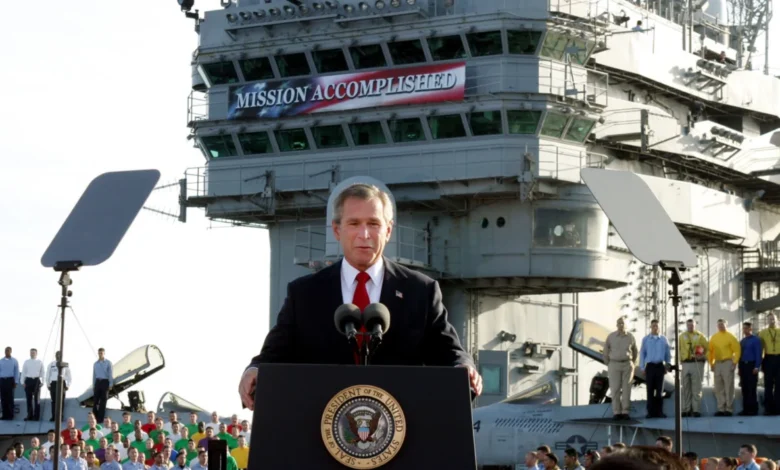
By May 2003, the early phase of conventional combat operations was declared complete by President George W. Bush aboard the USS Abraham Lincoln. However, the ensuing power vacuum and the subsequent dissolution of the Iraqi army catalyzed a persistent insurgency that would entangle American forces for years.
In 2011, the Obama administration oversaw a formal withdrawal of U.S. combat troops, aiming to transition security responsibilities entirely to the Iraqi government. Yet, the rise of the Islamic State in 2014 necessitated a reversal of this policy. Under the banner of "Operation Inherent Resolve," the United States launched an expansive air campaign and returned thousands of special operations and support personnel to Iraq to assist local forces in reclaiming territory seized by the extremist group.
The mission evolved again in 2021, when the Biden administration announced a transition from a combat role to an advisory and training capacity. This shift kept roughly 2,500 personnel in-country, tasked with intelligence sharing and military mentorship. With the final departure this week, the Pentagon has declared these advisory roles redundant, citing the increased self-sufficiency of the Iraqi Security Forces (ISF).
The Human and Economic Toll
The legacy of the Iraq War is measured not only in geopolitical shifts but in profound human and economic costs. Estimates regarding the total number of Iraqi civilian casualties vary widely due to the difficulty of gathering data in active conflict zones; however, organizations such as the Costs of War Project at Brown University have documented hundreds of thousands of civilian deaths resulting from direct violence, structural collapse, and the secondary effects of war.
For the United States, the financial burden has been staggering. While precise accounting remains a subject of debate due to the complexity of Pentagon budgeting and veteran healthcare obligations, conservative estimates place the total cost of the Iraq War at over $1 trillion. This figure encompasses direct military funding, long-term care for disabled veterans, and the interest on the debt used to finance the conflict.
The 2002 prediction by then-Secretary of Defense Donald Rumsfeld—who famously suggested the conflict would last "five days or five weeks or five months" but not longer—is now widely cited by historians and military analysts as a seminal failure in intelligence assessment and strategic planning. The inability to predict the duration of the occupation became a recurring theme in the war’s later years, as policy shifts forced repeated deployments for U.S. service members.
Official Responses and Regional Perspectives
The departure of the final U.S. troops has been met with a measured response from Baghdad. Iraqi Prime Minister Ali al-Zaidi characterized the withdrawal as a milestone for national autonomy.
"A new phase has begun, characterized by Iraq’s sovereignty, the strength of its institutions, the readiness of its forces, the unity of its decision-making, and balanced partnerships with its friends," al-Zaidi stated in a press release following the final troop movements.
The sentiment within the Iraqi government reflects a desire to pivot away from a security-dependent relationship with Washington toward a more diversified foreign policy. However, regional observers note that this transition is not without internal challenges. The influence of various political factions and militias within Iraq, some of which maintain close ties to neighboring Iran, remains a complex variable that the Iraqi central government must navigate without the presence of a U.S. military buffer.
From Washington, the narrative remains focused on the "successful conclusion" of the mission. Pentagon officials emphasize that the training provided to Iraqi forces over the last decade has created a professionalized military capable of defending the state against remnants of insurgent groups.
Strategic Implications and Future Outlook
The exit from Iraq leaves a void in the U.S. regional military footprint that many analysts argue will fundamentally alter the balance of power in the Middle East. With the United States no longer providing a direct security presence on the ground, regional powers—including Turkey, Iran, and Saudi Arabia—are expected to exert increased influence over Iraq’s internal affairs.
For the United States, the end of the mission represents the closure of a chapter that has deeply polarized the American electorate. The war in Iraq became a central point of contention in domestic politics, shaping the rise of anti-interventionist sentiments within both major political parties.
Furthermore, the withdrawal prompts a re-evaluation of the U.S. military’s long-term strategy of "counter-insurgency and nation-building." Critics of the intervention argue that the twenty-three-year timeline highlights the limitations of using military force to impose political stability in foreign nations. Supporters, meanwhile, argue that the U.S. presence was essential in preventing the total collapse of the Iraqi state during the rise of the Islamic State and provided necessary, albeit prolonged, security support.
Analysis: A New Era for Iraqi Sovereignty
The long-term success of this withdrawal will depend on the Iraqi government’s ability to maintain internal security and manage the diverse interests of its populace. The removal of foreign troops removes a common rallying point for insurgent recruitment, which could potentially lower the temperature of domestic unrest. However, it also removes a check on the influence of non-state actors who have frequently challenged the authority of the central government.
The withdrawal also forces a transition in the U.S.-Iraqi bilateral relationship. Future cooperation is expected to focus on diplomatic, economic, and intelligence-sharing agreements rather than the physical presence of combat troops. This shift mirrors a broader trend in U.S. foreign policy, which has increasingly moved toward "over-the-horizon" capabilities—a strategy that relies on air power and intelligence rather than large-scale troop occupations.
As the last convoy clears the border, the historical assessment of the Iraq War is likely to remain contested. Whether it is viewed as a necessary defense against terrorism or a strategic misadventure, the departure marks the end of a pivotal era. The stability of the region will now be the sole responsibility of the institutions built and trained over two decades of intense, and often volatile, partnership with the United States.
The "Mission Accomplished" banner that once symbolized the premature optimism of the war’s early stages now rests in the archives of history, alongside a conflict that has defined a generation of American foreign policy and changed the course of Iraqi history forever. The silence left by the departing troops signifies a new, uncertain chapter for Iraq, as it attempts to forge a path as a fully sovereign nation in a volatile region.