The rapid ascent of artificial intelligence as a cornerstone of the American economy has triggered a massive infrastructure expansion, centered on the construction of gargantuan data centers. While tech executives and policymakers debate the abstract risks of superintelligence, a growing coalition of former Environmental Protection Agency (EPA) officials, public health experts, and environmental advocates is raising alarms about a more immediate, tangible threat: the public health consequences of an deregulated energy-hungry data infrastructure. As of late 2026, the United States is in the midst of a historic build-out, with approximately 3,000 active data centers and over 1,500 more in various stages of development. However, this expansion is occurring against the backdrop of a systematic dismantling of federal environmental guardrails, leaving communities vulnerable to the pollution generated by the power plants tasked with fueling the AI revolution.
The Stargate Oracle Initiative and the Infrastructure Boom
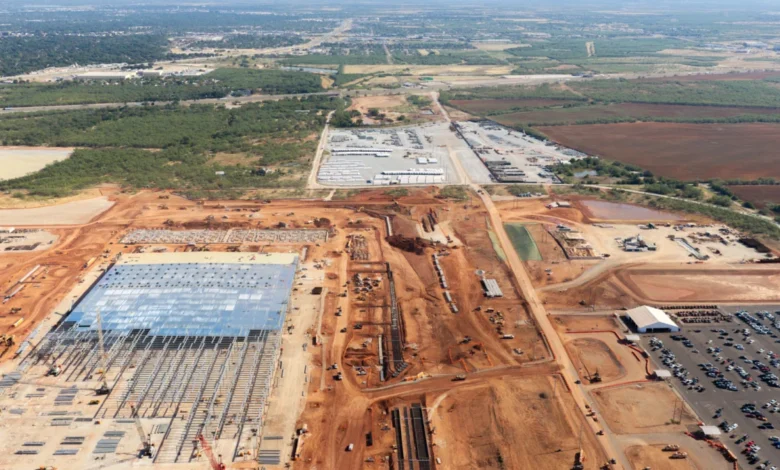
The physical manifestation of this growth is nowhere more visible than in Abilene, Texas. The Stargate Oracle AI data center, a project facilitated by OpenAI and operated by Oracle, serves as the current bellwether for the industry. Spanning roughly 4 million square feet, the site is a gargantuan consumer of electricity. As the facility prepares to go fully operational by the end of 2026, it has become a focal point for the broader debate regarding the strain on the Texas power grid.
The pressure has become so acute that Governor Greg Abbott has taken the extraordinary step of pausing approvals for new large-scale data center loads connecting to the state grid. This intervention highlights a growing tension between the promise of technological dominance and the reality of localized infrastructure collapse. While the industry touts these centers as "digital engines of growth," local communities are increasingly concerned about property rights, the skyrocketing cost of electricity, and the depletion of local resources, particularly water, which is required in massive quantities for cooling server arrays.
Chronology of Deregulation: The Post-2025 EPA Shift
The current regulatory environment represents a stark departure from the policy trajectory of the early 2020s. Since the inauguration of President Donald Trump in January 2025, the EPA has undergone a fundamental transformation. According to a report published by the Environmental Protection Network—a group composed of former agency staffers—the EPA has initiated at least 30 distinct actions since early 2025 to weaken pollution safeguards, permitting processes, and inspection norms.
The timeline of this shift began in early 2025 with the reassignment of key administrative roles, followed by the mid-year dismantling of the EPA’s central research office. By late 2025, EPA Administrator Lee Zeldin issued a formal memo outlining the administration’s intent to position the United States as the global leader in AI. The memo signaled a departure from traditional environmental compliance, framing regulation as a hindrance to national competitiveness.
In 2026, the strategy crystallized into specific policy changes:
- Early 2026: Proposed rules were introduced allowing developers to initiate construction on data centers and associated power plants prior to securing final air pollution permits.
- Mid-2026: Directives were issued to enforcement staff to prioritize the avoidance of "unduly burdening" energy production, effectively deprioritizing the enforcement of existing Clean Air Act standards.
- Late 2026: Continued reliance on aging coal-fired power plants to meet the immediate, high-wattage demands of hyperscale computing facilities, reversing previous decarbonization commitments.
The Scientific Toll: Analyzing the Health Impacts
The shift in regulatory philosophy has drawn sharp rebukes from those who spent decades building the agency’s scientific credibility. Dan Costa, a 35-year veteran of the EPA, characterizes the current strategy as a reckless abandonment of the agency’s mandate. "For decades, toxicologists, chemists, and atmospheric scientists worked in concert with academic colleagues on behalf of the American people—not on behalf of industry," Costa stated during a recent press briefing.
The concerns are not merely theoretical. A study cited by the Environmental Protection Network suggests that the surge in emissions related to the AI-driven energy demand could lead to an estimated 1,300 additional premature deaths annually. These deaths are linked to the increased output of particulate matter, nitrogen oxides, and sulfur dioxide resulting from the reliance on fossil-fuel-powered turbines and the continued operation of coal plants.
Dr. Lynn Goldman, a physician and former EPA administrator, emphasizes that the health impacts are not limited to long-term chronic illness. "Some health impacts of increased data center pollution might be felt quickly—heart attacks or premature births associated with particulate exposure," Goldman noted. "The AI industry’s race for advantage should not be a matter of life or death. Families shouldn’t have to pay for the AI boom with their health."
Official Responses and Industry Positioning
The official stance of the current administration remains fixed on national security and economic supremacy. Administrator Zeldin’s 2025 memo serves as the foundational justification for the current deregulatory path, explicitly linking the necessity of "cutting heavy-handed regulations" to the goal of "Making America the AI Capital of the World."
Industry representatives argue that the rapid deployment of AI is essential for maintaining a competitive edge against international rivals. Furthermore, developers contend that the infrastructure being built today will eventually transition to cleaner energy sources. However, environmental groups point out that there is currently no legal or regulatory mechanism ensuring that this transition will occur, particularly now that the EPA has eased the requirements for onsite fossil-fuel-powered generation at sites like xAI’s Colossus facility.
Broader Implications: A Grid Under Siege
The implications of this policy shift extend far beyond the immediate environment. The concentration of massive power loads in specific regions, such as West Texas or Northern Virginia, places an unprecedented burden on regional power grids. This creates a feedback loop: as the grid becomes less stable due to the massive demand, developers are increasingly looking to "behind-the-meter" power generation, such as natural gas turbines located directly on their properties.
By bypassing centralized utility oversight and the environmental permitting processes associated with public power projects, these private energy solutions effectively remove public health considerations from the planning phase. The result is a patchwork of unregulated, high-pollution power generation that serves the private sector while offloading the health costs onto the surrounding population.
Future Outlook and Political Polarization
As the 2026 midterm elections approach, data centers have emerged as a polarizing issue. Conservatives, particularly those in rural areas, have focused on the erosion of property rights and the impact of local land-use decisions on their communities. Meanwhile, Democrats and environmental advocacy groups have coalesced around the issues of water usage, pollution, and the integrity of the national power grid.
The impasse between the need for technological advancement and the preservation of public health protections remains unresolved. While the federal government continues to incentivize the rapid build-out of data infrastructure, the erosion of the scientific capacity to monitor and mitigate the associated environmental harms suggests that the long-term costs of the AI boom may be significantly higher than initial economic projections accounted for.
As the Stargate Oracle project in Abilene approaches full operation, it stands as a testament to the scale of the AI ambition—and a warning of the environmental challenges that remain unaddressed. Without a return to rigorous, science-based regulation, the path toward becoming the "AI Capital of the World" may well be paved with the deteriorating health of the communities upon which that infrastructure is built. The debate over the coming months will likely focus on whether the administration can justify the health toll in the name of technological progress, or if the mounting public pressure will force a recalibration of these newly weakened environmental guardrails.