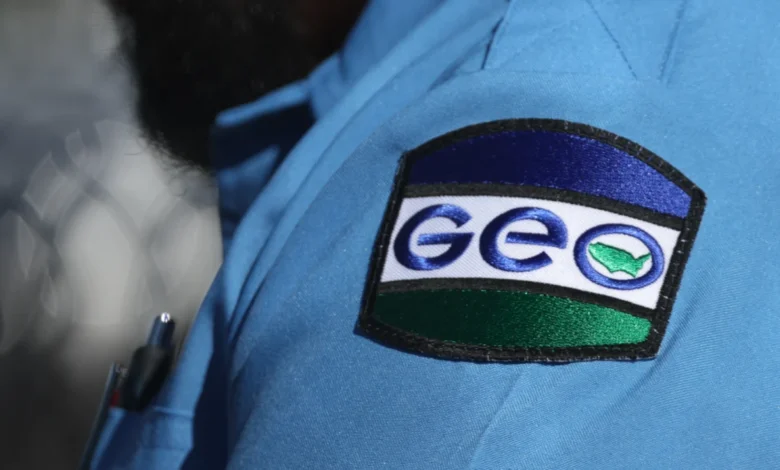
A GEO Group employee was arrested on Thursday night, July 16, 2026, in connection with a shooting incident that occurred outside an Immigration and Customs Enforcement (ICE) detention facility in Aurora, Colorado, following a protest. The center, a significant operational hub for immigration detention in the region, is managed by the GEO Group, a prominent private prison firm and the largest recipient of private contracts with ICE for operating such facilities across the United States. The incident has intensified scrutiny on the conduct of private detention center staff and the broader implications of privatized immigration enforcement.
Details of the Aurora Shooting Incident
According to a statement released by the Aurora Police Department (APD) on Friday, July 17, 2026, Brandon Booth, an employee of the GEO Group, was taken into custody on suspicion of attempted second-degree murder and additional charges. The shooting unfolded shortly before 7:30 p.m. on Thursday evening in the 3100 block of N. Nome Street, an area adjacent to the ICE Processing Center.
Investigators reported that Booth and other GEO Group staff were attempting to enter the facility but were impeded by a group of protesters. The protest, which had gathered outside the detention center, aimed to draw attention to various concerns related to immigration detention. As the confrontation unfolded, two women, identified by police as participants in the protest, engaged in an argument with the GEO Group employees. Following the verbal altercation, the women began to walk away, reportedly after taking photographs of the employees’ vehicles.
It was at this point that Brandon Booth allegedly produced a personal firearm and discharged one shot. The bullet struck one of the women in her lower body. The second woman, who was accompanying the victim, was unharmed. Booth then re-entered his vehicle and departed the scene. Emergency services were immediately dispatched, and the injured woman was transported to a local hospital. Her injuries, while serious, are not considered life-threatening, and she is expected to recover. The swift response by the Aurora Police Department led to Booth’s arrest and the initiation of a comprehensive investigation.
The GEO Group: A Dominant Force in Private Detention
The GEO Group stands as a global leader in the design, development, financing, and operation of correctional, detention, and reentry facilities. Headquartered in Boca Raton, Florida, the company manages a vast portfolio of facilities, primarily serving government agencies across the United States, the United Kingdom, Australia, and South Africa. In the U.S., GEO Group’s operations are deeply intertwined with the federal government’s immigration enforcement strategy, making it the largest private contractor for ICE. This extensive partnership has fueled significant profits for the company, with reports indicating a record $254 million profit after securing numerous new ICE contracts, as highlighted by Prison Legal News in March 2026.
The company’s business model relies heavily on contracts with federal and state governments to manage facilities that house incarcerated individuals and civil detainees, including asylum seekers and undocumented immigrants. Proponents argue that private companies like GEO Group offer cost efficiencies and specialized services that public entities might struggle to provide. Critics, however, contend that the profit motive inherent in private detention incentivizes maximizing bed occupancy and can lead to cost-cutting measures that compromise the safety, welfare, and human rights of detainees and staff alike. The Aurora facility itself, officially known as the ICE Processing Center, has been a frequent target of protests, reflecting broader societal debates about immigration policy and the ethics of private involvement in detention.
Official Responses and Corporate Accountability
Following Booth’s arrest, both the GEO Group and the Aurora Police Department issued statements addressing the incident. A spokesperson for the GEO Group confirmed their awareness of the shooting. "We are aware that an off-duty Aurora ICE Processing Center employee was involved in a shooting incident," the spokesperson stated. They further clarified the company’s immediate action: "This individual has been placed on unpaid administrative leave, and we will fully cooperate with law enforcement." This immediate administrative action is standard procedure for corporations facing allegations involving employee misconduct, particularly when criminal charges are pending. However, it does not absolve the company of potential broader liability or responsibility for ensuring the safety protocols and conduct of its personnel, especially those in security-sensitive roles.
Aurora Chief of Police Todd Chamberlain emphasized the department’s commitment to a fair and thorough investigation. "We remain committed to ensuring an ethical, thorough, objective, and comprehensive review of this case," Chief Chamberlain affirmed in his statement. He also underscored the importance of upholding constitutional rights while condemning violence: "Violence of any kind will not be tolerated in Aurora. Constitutional rights are a pivotal part of a just society—violence is not." These statements aim to reassure the public of the authorities’ dedication to justice and accountability, particularly in a high-profile case involving a government contractor and a protest event.
A Pattern of Alleged Violence and Misconduct
The shooting in Aurora is not an isolated incident and appears to fit into a disturbing pattern of allegations involving GEO Group employees and incidents of violence against protesters and detainees. This recurring theme raises serious questions about the training, oversight, and corporate culture within the private detention industry.
One notable precedent occurred just last month, in June 2026, at Delaney Hall, another immigration detention center operated by GEO Group in Newark, New Jersey. In that incident, an employee allegedly struck a protester with his car during a Father’s Day vigil outside the facility. Court records from New Jersey indicate that the employee, Thomas K. Brown, claimed protesters caused him to drive his red Dodge Challenger into the woman who was struck, alleging they had hit the driver’s side of his vehicle. This incident, while different in its specifics, echoes the tension and potential for violence that can arise between facility staff and protesters.
Beyond interactions with external protesters, conditions and staff conduct inside GEO Group facilities have also drawn severe criticism. At Delaney Hall, staff have been accused of egregious abuses against detainees. Allegations include beating and punishing detainees for speaking out and organizing protests against the conditions within the facility. Specifically, employees, sometimes in conjunction with federal immigration agents, were accused of denying medical care, deliberately turning off ventilation, and deploying pepper spray against detainees. Advocates and human rights organizations have consistently reported that despite labor and hunger strikes by detainees and significant media attention, along with scrutiny from lawmakers in June, conditions at Delaney Hall have not shown marked improvement. Salon reported in July 2026 that "at Delaney Hall, the struggle persists after cameras left," indicating a deeply entrenched problem that resists external pressure. These allegations paint a grim picture of a system where the rights and well-being of detainees are reportedly compromised, and dissent is met with harsh reprisals.
Health Crises and Lack of Transparency
Further compounding the concerns surrounding GEO Group’s operations is an ongoing public health crisis at the very Aurora facility where the shooting occurred. Earlier in July 2026, the Adams County Health Department publicly stated that GEO Group was obstructing its efforts to conduct a health investigation into a possible tuberculosis outbreak, an investigation mandated by state law. This lack of cooperation from a private entity operating a public service facility immediately sparked alarm among health officials and public advocates.
On Tuesday, July 14, 2026, The Guardian reported that at least 12 detainees at the Aurora ICE facility had tested positive for tuberculosis. One detainee provided a harrowing account to the newspaper, stating that those affected by the outbreak were being isolated in areas devoid of air conditioning, exacerbating their suffering and potentially hindering recovery. Initially, ICE denied any active tuberculosis cases at the facility. However, the very next day, Wednesday, July 15, 2026, local officials confirmed to Denver7 that at least one person who had tested positive had been "treated, cleared, and removed from the country." This sequence of events—initial denial followed by a qualified confirmation—highlights a critical transparency issue and raises questions about the full extent of the health crisis and the responsiveness of both ICE and its private contractor, GEO Group, in managing it. The obstruction of public health officials by a private entity managing a government contract is a particularly troubling aspect, suggesting a prioritization of operational control over public health and safety.
Broader Implications and the Future of Private Detention
The shooting incident in Aurora, coupled with the pattern of alleged violence at other GEO Group facilities and the health crisis at the Aurora center, casts a long shadow over the future of private immigration detention in the United States. These events underscore several critical issues:
- Accountability of Private Contractors: The incidents highlight the challenges of holding private corporations accountable for the actions of their employees and for the conditions within facilities they manage on behalf of the government. When private entities perform functions traditionally carried out by the state, the lines of responsibility and oversight can become blurred.
- Safety of Protesters: The shooting of a protester, regardless of the specific circumstances, sends a chilling message to those exercising their constitutional right to peaceful assembly and free speech. It raises concerns about the safety of individuals who engage in advocacy around controversial issues, particularly when confronting private security personnel.
- Human Rights and Detainee Welfare: The allegations of abuse, denial of medical care, and unsanitary conditions, exemplified by the tuberculosis outbreak, fuel arguments that the profit motive inherently conflicts with the imperative to ensure humane treatment and adequate care for detainees. International human rights standards often dictate minimum conditions for detention, and consistent reports suggest these are frequently unmet in private facilities.
- Transparency and Oversight: The obstruction of health officials at the Aurora facility demonstrates a critical lack of transparency that can impede public health efforts and undermine public trust. Effective oversight mechanisms are crucial for any system of detention, and their absence or circumvention in private facilities is a significant concern.
- Political and Policy Debates: These incidents will undoubtedly intensify the ongoing political debate about the role of private companies in immigration enforcement. Advocates for detention reform and abolition often cite such events as reasons to end private contracts with ICE and transition to a fully public, more humane system of immigration processing. Conversely, proponents of private detention emphasize the logistical and economic benefits.
The events in Aurora and Newark serve as potent reminders of the complex and often contentious landscape of immigration detention. As investigations continue and legal proceedings unfold against Brandon Booth and potentially others, the outcomes will be closely watched by policymakers, human rights organizations, and the public. The incidents demand a thorough re-evaluation of current practices, oversight mechanisms, and the fundamental ethical considerations involved in entrusting the care and custody of individuals to for-profit entities. The incident in Aurora, in particular, with an employee of a major private contractor facing attempted murder charges stemming from a protest, marks a grave escalation in the tensions surrounding immigration detention, demanding immediate and sustained attention from all stakeholders.