Manhunter The Final Cut: A 40th Anniversary Reappraisal of Michael Mann’s Underappreciated Masterpiece

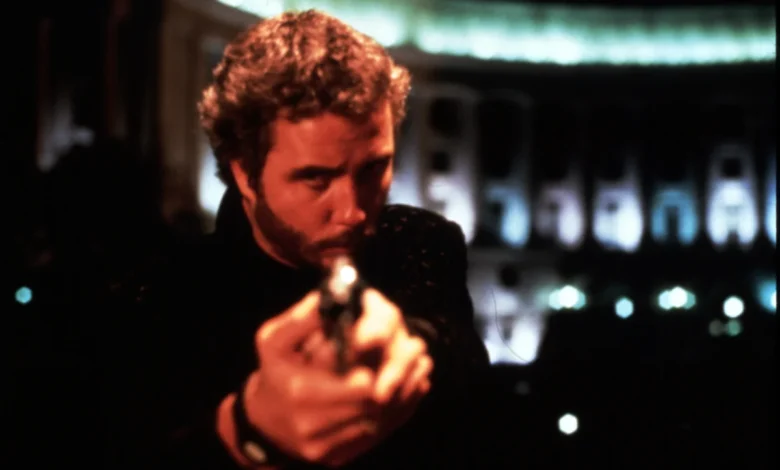
The enduring power of cinema lies in its ability to captivate, to provoke, and to resonate long after the credits roll. For cinephiles and casual viewers alike, certain films achieve a profound impact, becoming touchstones that are revisited time and again. Michael Mann’s 1986 thriller, Manhunter, stands as a prime example of such a film, a work that, despite its initial critical reception and subsequent underappreciation, continues to exert a powerful hold on audiences, particularly as it marks its 40th anniversary with a new theatrical release of Manhunter: The Final Cut. This meticulously restored version, overseen by Mann himself, offers a fresh opportunity to examine the film’s unique artistry and its lasting significance.
A Thriller That Defied Convention
Manhunter, based on Thomas Harris’s 1981 novel Red Dragon, introduced the world to Hannibal Lecter, albeit a different iteration than the one immortalized in The Silence of the Lambs. The film follows FBI profiler Will Graham, portrayed by William Petersen, as he is drawn out of retirement to track down a terrifying serial killer known as the Tooth Fairy. Graham’s method involves immersing himself in the killer’s psyche, a dangerous dance that blurs the lines between hunter and hunted.
From its striking visual palette to its atmospheric sound design, Manhunter established itself as a distinctive entry in the thriller genre. The film’s aesthetic—characterized by its moody cinematography, its use of neon lighting, and its potent synth-driven score—was undeniably of its time, yet Mann imbued it with a timeless quality that sets it apart. This stylistic boldness, however, also contributed to its initial struggle for widespread recognition, often being overshadowed by the subsequent success of adaptations of Harris’s later works.
The Genesis of a Masterpiece: From Novel to Screen
The journey of Manhunter from page to screen is a narrative in itself. Thomas Harris’s Red Dragon was a groundbreaking novel, not only for its chilling depiction of serial criminality but also for introducing the character of Dr. Hannibal Lecter, a brilliant psychiatrist with a penchant for cannibalism. While The Silence of the Lambs (1988) brought Lecter to global superstardom through Jonathan Demme’s acclaimed film adaptation, Mann’s Manhunter predated it, offering a more understated yet equally compelling portrayal of the character.
Michael Mann, already a visionary filmmaker known for his work on the groundbreaking television series Miami Vice, approached Red Dragon with a distinct artistic vision. He aimed to create a forensic thriller that delved into the psychological underpinnings of both the killer and the investigator. His collaboration with cinematographer Dante Spinotti resulted in a visually arresting film that employed a unique blend of sensuality and clinical observation, capturing the dark allure of the criminal mind.
Manhunter: The Final Cut and Its Significance
The release of Manhunter: The Final Cut on July 24th commemorates the film’s 40th anniversary and signifies a renewed appreciation for Mann’s directorial intent. This restored version, presented in 4K, is based on the director’s cut that was previously released on DVD in 2003. While Mann has expressed a general aversion to director’s cuts altering the fundamental identity of a film, this restoration aims to refine rather than reinvent.
The "Final Cut" reportedly adds a few minutes to certain scenes, including Graham’s interaction at the Atlanta police station and his initial encounter with Lecter. However, some subtractions have also been made, such as the memorable splattered condiments during the shootout with Dollarhyde. Mann’s decision to revisit the film underscores his enduring belief in its artistic merit and his desire to present it in its most potent form. This anniversary release provides an opportunity for both long-time admirers and new viewers to experience Manhunter as Mann originally envisioned it, unburdened by the stylistic trends of its era or the shadow of subsequent adaptations.
Beyond the Genre: A Deep Dive into Manhunter‘s Core Themes
The enduring appeal of Manhunter lies in its sophisticated exploration of complex themes, transcending the typical confines of a crime thriller.
The Dawn of Forensic Thrillers and Technological Entanglement
Manhunter is widely considered a pioneering work in the forensic thriller genre. It showcased the nascent investigative techniques of the FBI with a level of detail rarely seen on screen at the time. From infrared analysis to meticulous crime scene reconstruction, the film demonstrated how technology could be used to unravel the most heinous crimes. However, Mann masterfully uses these technological advancements not merely as plot devices but as a lens through which to examine the human condition. The film posits that while technology can illuminate the darkness, it also highlights the inherent complexities and potential for isolation within our increasingly interconnected world. The meticulous gathering of evidence becomes a parable for how modern life, with its constant influx of information, can simultaneously enlighten and overwhelm us.
The Authentic Portrayal of the Serial Killer
A significant aspect of Manhunter‘s critical re-evaluation centers on its authentic portrayal of the serial killer, Francis Dollarhyde, brought to life by the late Tom Noonan. Noonan’s performance is a tour de force, capturing the chilling duality of a man capable of horrific violence yet consumed by a profound sense of damage and longing. His Dollarhyde is not a caricatured monster but a complex, damaged individual whose rage and superiority mask a deep-seated insecurity.
The film’s decision to delve into Dollarhyde’s motivations, to explore the psychological scars that drive his brutal actions, sets it apart from many of its contemporaries. While films like Henry: Portrait of a Serial Killer and Se7en have also explored the darker aspects of the criminal psyche, Manhunter offers a more nuanced and poetic understanding of the damage that fuels such pathology. Noonan’s chilling delivery of lines like "You owe me awe" and his haunting presence throughout the film create a palpable sense of dread that resonates long after viewing. The film’s exploration of Dollarhyde’s fractured identity and his desperate need for love and recognition is both disturbing and deeply empathetic, offering a rare glimpse into the damaged soul of a killer.
Brian Cox’s Mesmerizing Hannibal Lecter
Before Anthony Hopkins became synonymous with Hannibal Lecter, Brian Cox delivered a mesmerizing and arguably more chilling performance as the incarcerated psychiatrist in Manhunter. Cox’s Lecter is a master manipulator, his every word carefully chosen, his gaze conveying both intellectual superiority and a predatory amusement. Confined to a pristine white cell, Cox’s Lecter is a force of nature, his intelligence and cunning evident in every subtle gesture and every carefully crafted line.
His interactions with Will Graham are fraught with tension, as Lecter effortlessly dissects Graham’s psyche while subtly guiding him towards the killer. Cox’s portrayal highlights Lecter’s diabolical intellect and his unsettling understanding of human nature. The famous scene where Lecter uses a piece of Wrigley’s Spearmint gum to jimmy a phone, feigning helplessness to the operator, is a testament to his ingenious deceit. Cox’s Lecter presents a chilling concept: that murder, in its ultimate expression, could be a manifestation of a higher, albeit terrifying, state of being.
William Petersen’s Embodiment of Will Graham
William Petersen’s performance as Will Graham is central to Manhunter‘s profound impact. Graham is not merely a detective; he is a man wrestling with the psychological toll of his profession. His ability to empathize with serial killers requires him to confront the darkest aspects of humanity, often at the expense of his own mental well-being. Petersen masterfully conveys Graham’s internal struggle through his quiet intensity, his contemplative gaze, and his palpable vulnerability.
In an era saturated with misinformation and competing narratives, Graham’s quest to piece together disparate clues and restore order to a chaotic world resonates deeply. His poignant scene with his stepson, Kevin, in a supermarket aisle, where he explains the profound impact of his encounter with Lecter, is a testament to the film’s emotional depth. Petersen’s performance captures the quiet desperation of a good man who has glimpsed the abyss and is struggling to maintain his footing.
The Transcendent Power of the Soundtrack
The musical landscape of Manhunter is as integral to its atmosphere as its visuals. Michael Mann’s masterful use of both original synth scores and carefully selected post-punk songs elevates the film beyond mere genre fare. While unable to secure the rights to Pink Floyd’s "Comfortably Numb," Mann ingeniously incorporated its poignant final chord sequence into the film’s score, creating a hauntingly familiar emotional resonance.
The synth score, with its chilling notes of fear accompanying the killer’s initial intrusions, immediately immerses the audience in the film’s unsettling world. However, it is the judicious use of post-punk tracks that truly distinguishes Manhunter. Shriekback’s "This Big Hush" beautifully underscores the melancholy and yearning within Dollarhyde’s character as he shares a moment with Reba. The Prime Movers’ "Strong as I Am" builds a palpable sense of dread and anticipation as Dollarhyde approaches Reba’s home, his paranoia fueling the escalating tension. And Iron Butterfly’s iconic "In-A-Gadda-Da-Vida" serves as a needle drop that signals the film’s descent into a more unhinged and operatic territory. This sonic tapestry contributes significantly to the film’s emotional weight and its unique, enduring appeal.
Moments of Unforgettable Cinematic Brilliance
Manhunter is replete with indelible moments that showcase Mann’s directorial prowess and the film’s artistic ambition. The accidental revelation of crime scene photos to a fellow passenger on an airplane, the fiery demise of Stephen Lang’s sleazy reporter, and the chilling exchange between Dollarhyde and Reba where he assures her he is smiling despite his stoic demeanor—these vignettes are etched into cinematic memory.
However, the film’s climax, the moment of Graham’s deductive breakthrough, stands as the ultimate realization of its thematic concerns. It is not merely the identification of a killer but the profound understanding of the killer’s desire for love and recognition, a connection forged through fractured mirrors and the coveting gaze. This moment transforms Manhunter from a mere crime story into a profound fable of empathy, where the act of seeing and understanding becomes the ultimate act of connection.
The "Final Cut" Debate: Preservation Versus Revision
While the release of Manhunter: The Final Cut offers a welcome opportunity for renewed engagement with the film, it also reignites a broader discussion about director’s cuts and the sanctity of a finished work. The author of the original piece expresses a general skepticism towards director’s cuts, arguing that they often detract from rather than enhance a film. This perspective emphasizes the idea that a film, once completed, achieves a unique identity and should be preserved in its original form.
The specific changes in Manhunter: The Final Cut, such as the added exposition in the Atlanta police station scene and the inclusion of a scene where Graham visits another family, are viewed by some as detrimental to the film’s original pacing and impact. The author argues that Mann’s decision to tamper with the film, even with good intentions, risks altering its sacred identity. This viewpoint champions the original release as a complete and perfect artistic statement, resistant to posthumous revision.
A Greater Thriller Than Its Successor?
The enduring debate over Manhunter‘s place in film history often pits it against the immensely successful The Silence of the Lambs. While Jonathan Demme’s 1991 film rightfully garnered critical acclaim and numerous accolades, including the Academy Award for Best Picture, Manhunter offers a distinct and, for some, a more profound cinematic experience.
The comparison between Brian Cox’s and Anthony Hopkins’s portrayals of Lecter is subjective, with both actors delivering iconic performances. However, Manhunter arguably presents a more terrifying and complex villain in Francis Dollarhyde, whose internal struggles are explored with a depth that surpasses the motivations of Buffalo Bill in The Silence of the Lambs. As a result, Manhunter is often considered the richer, deeper, and more disturbing film, offering a cathartic experience that speaks directly to the anxieties and complexities of our contemporary world. It is a thriller that, in its unflinching gaze into the darkness, ultimately illuminates the human condition.